
24/7 Customer Support

Free returns

Same-day & Next-day Delivery

Quality Guaranteed

Unlock Your Welcome Offers: FREE Delivery | Up to 80% OFF | Free 30-day JoyPlus trial
Download the APP
Loose letters, invoices and worksheets can quickly take over a desk or kitchen worktop. An A4 wall file holder provides a practical way to use vertical space, but choosing the wrong design may leave you with pockets that are too shallow, weak fixings or a unit that is awkward to access.
This guide explains the key features to check before buying a wall mounted file holder, with suitable options for home offices, classrooms, reception desks and shared workplaces.
A product may be described as A4-compatible, but the internal width and pocket depth still matter. A4 paper measures 21 x 29.7 cm, while folders, punched pockets and overfilled paperwork need additional clearance. Check the stated interior width, slot height and depth rather than relying only on the overall product size.
For example, a narrow pocket may hold loose sheets but struggle with a loaded folder or a thick bundle of post.
A multi-tier file holder can create useful vertical storage, but a tall unit may not suit a small wall, cupboard side or narrow hallway. Measure the mounting area first, allowing room above the holder to insert and remove documents.
Also consider access height. The top pocket of a 10-tier unit may be less convenient for children, seated users or a busy reception desk than the middle tiers of a five-tier organiser.
A metal file organiser can be substantial before documents are added. Plasterboard, masonry and timber walls require different fasteners or anchors, and the supplied screws may not be appropriate for every surface. The holder should be secured firmly, with weight distributed across the pockets.
Avoid treating a wall file pocket as a shelf for heavy objects. Check the product instructions, do not exceed the recommended capacity and inspect the mounting hardware periodically.
Powder-coated metal is commonly used for a durable mesh wall file organiser. The finish can help protect the surface from everyday wear and makes the unit relatively straightforward to wipe clean. However, powder coating does not make a product suitable for persistently damp areas. Keep metal organisers away from excessive moisture and dry them promptly after cleaning.
Look for smooth or carefully finished edges, particularly if the holder will be used by children, students or visitors. A mesh construction also allows you to see document edges while keeping the unit visually lighter than a solid cabinet.
Choose the layout according to how you sort paperwork:
Label plates can make a significant difference when several people use the same organiser. A bottom tray or hooks may also be useful for pens, keys, tape and other small office items, but these features should not replace a dedicated storage solution for heavy equipment.
A wall mounted magazine holder or file organiser should be installed at a comfortable working height. Leave enough clearance for A4 sheets to slide in without bending. Some designs can be fixed separately or grouped together, giving you more flexibility when organising a large wall.
For doors, check the door’s movement, available clearance and fixing method before installation. A heavy metal unit may affect the balance of a lightweight internal door, so a stable wall is often the more suitable location.
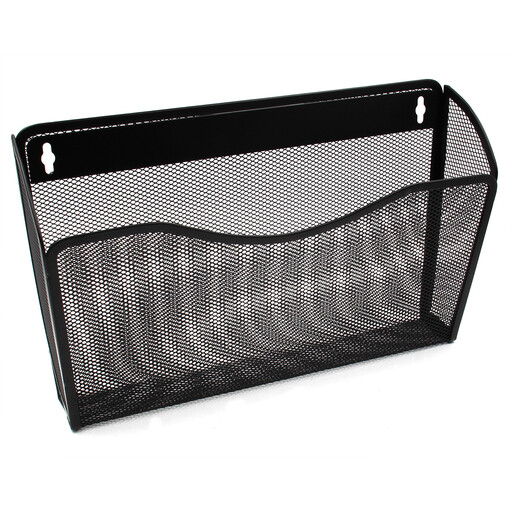
Why This Fits Their Persona: A single pocket is a straightforward starting point for a home office, hallway or small business that needs one clearly defined place for mail or frequently used A4 paperwork.
Its 35.5 x 21.5 x 9.5 cm dimensions are stated clearly, helping buyers match the holder to their available wall space before ordering.
Powder-coated metal construction; supplied with mounting screws; suitable for A4 documents and wall or door organisation.
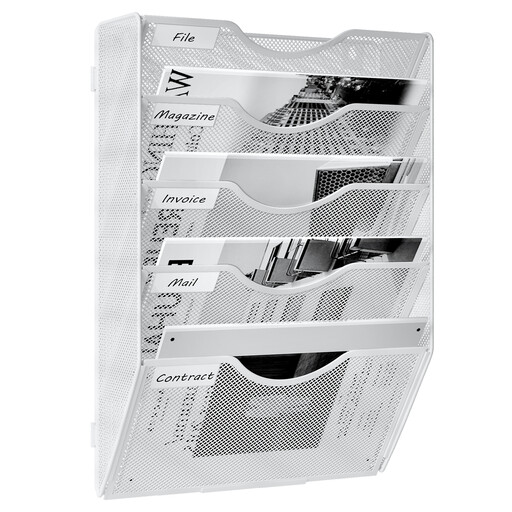
Why This Fits Their Persona: This assembled five-tier design suits users who want a tidy, coordinated document system without spending time putting together separate pockets.
The five-pocket vertical format avoids paying for unnecessary capacity while providing more separation than a single wall file pocket.
White powder-coated metal finish; five A4-sized pockets; supplied with mounting screws and designed for wall or door mounting.
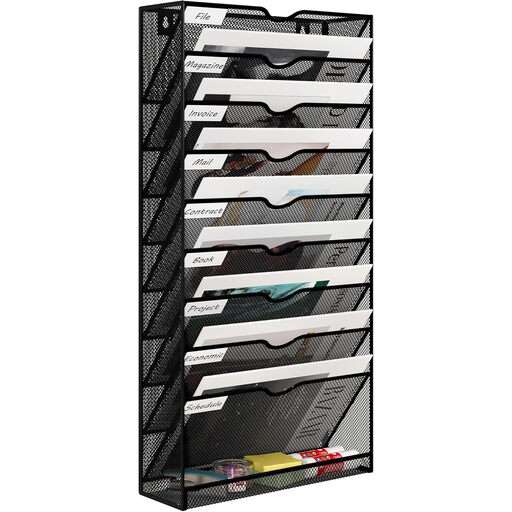
Why This Fits Their Persona: Ten labelled tiers are suited to administrators, teachers, receptionists and shared offices handling several daily categories of paperwork.
Its listed 32 x 10.3 x 62 cm profile makes the vertical footprint clear, while label plates help prevent categories becoming mixed together.
Ten-tier A4 storage; label plates; bottom tray for small items; can be wall-mounted or placed on a desk according to the product description.
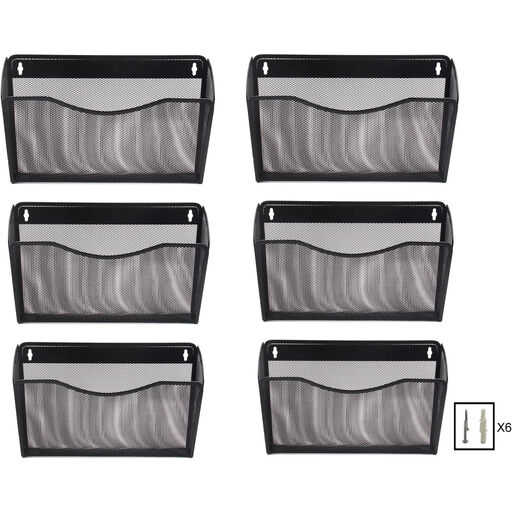
Why This Fits Their Persona: The six-pocket pack works well when you need separate categories across a home office, family paperwork area or small workplace.
The pockets can be mounted together or separately, reducing the risk of being locked into one layout when your storage needs change.
Six individual metal wall pockets; A4 compatibility; mounting screws included; separate or grouped installation options.
Before drilling, mark the fixing points and use a spirit level where possible. Select anchors suitable for the wall construction, then check that the screws are tight before adding paperwork. Avoid placing the organiser above a frequently used seat, bed or walkway where falling contents could cause an injury.
Sort documents by action or frequency rather than vague categories. For example:
For protection inside folders, clear polypropylene punched pockets can complement an A4 wall file holder. The Triplast A4 punched pockets are top-opening, 40-micron sleeves with a reinforced multi-punched spine for standard ring binders and lever arch files. They are separate from wall storage, but useful for keeping important sheets visible and protected before filing.
Some can, but the answer depends on the internal width and pocket depth. Loose A4 sheets usually need less clearance than a lever arch folder or a thick document wallet. Check the product’s internal measurements and avoid overfilling the pocket.
It can be, provided you use fixings designed for the specific plasterboard type and expected load. Do not rely solely on the supplied screws if they are unsuitable for your wall. For heavier multi-tier file holders, fixing into a suitable structural point may provide additional support.
Wipe the surface with a dry or lightly dampened cloth, then dry it thoroughly. Avoid harsh chemicals and prolonged moisture. Periodically check the mounting hardware, especially if the pockets are used every day.
We have compiled a complete, real-time list of products that fully satisfy these strict selection criteria and UK safety regulations.