
24/7 Customer Support

Free returns

Same-day & Next-day Delivery

Quality Guaranteed

Unlock Your Welcome Offers: FREE Delivery | Up to 80% OFF | Free 30-day JoyPlus trial
Download the APP
Whether you're jotting down lecture notes, organising your workday or capturing thoughts in a personal journal, the right notebook can make all the difference. Yet, finding a good one isn't always straightforward. Many of us have faced the frustration of ink bleeding through thin pages, bindings that fall apart after a few weeks or a layout that just doesn't suit our needs.
This guide is designed to help you navigate the options. As a Joybuy Product Recommendation Officer, my role is to provide clear, practical advice to help you choose the right piece of stationery. We'll look at the key features to consider when buying an A5 lined notebook and highlight a few excellent options for different purposes, from academic study to professional task management.
Before you add a notebook to your basket, consider a few key details that will impact its usability and longevity.
The weight of the paper, measured in Grams per Square Metre (GSM), is a crucial factor. Most standard notebooks use 80gsm paper, which is perfectly adequate for quick notes with a ballpoint pen. However, if you prefer using fountain pens, gel pens or markers, you may notice 'ghosting' (where the ink is visible on the reverse side) or 'bleeding' (where ink soaks through the page).
For a smoother and more robust writing experience, look for a 100gsm paper journal. This thicker paper provides a more premium feel and significantly reduces ink bleed-through, keeping your notes clean and legible on both sides of the page.
The way a notebook is bound affects how it opens, lies flat and withstands daily use.
Modern notebooks often come with thoughtful extras. An elastic band closure keeps your notebook securely shut and protects the pages from getting creased. A built-in ribbon bookmark helps you quickly find your place. For those focused on productivity, a dedicated daily planner pad or a things to do today notepad with pre-printed sections can provide the structure needed to stay organised.
Here are a few A5 notebooks that stand out for their quality, design and functionality, catering to a range of needs.
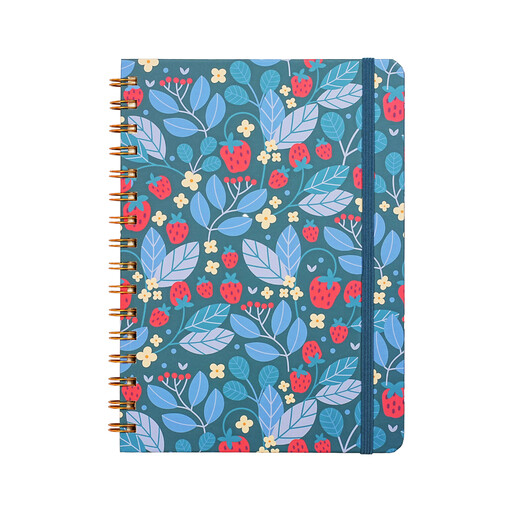
Why It Stands Out: This notebook combines practical design with high-quality materials. The twin-wire spiral binding allows it to lay completely flat, while the durable hardcover protects the 96 sheets of smooth, 100g cream paper inside. The paper quality is a key feature, offering a pleasant writing surface with minimal ink bleed.
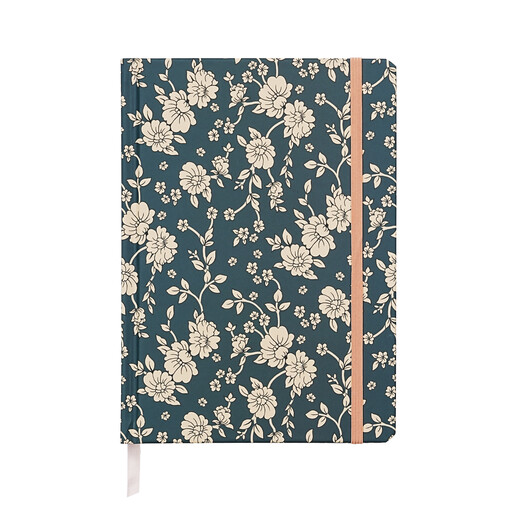
Why It Stands Out: This is a classic hardcover journal designed for those who love the traditional notebook format. It features a sophisticated botanical print on its durable cover and is filled with 96 sheets of high-quality 100g off-white paper. The inclusion of both a ribbon bookmark and an elastic closure adds a layer of convenience.
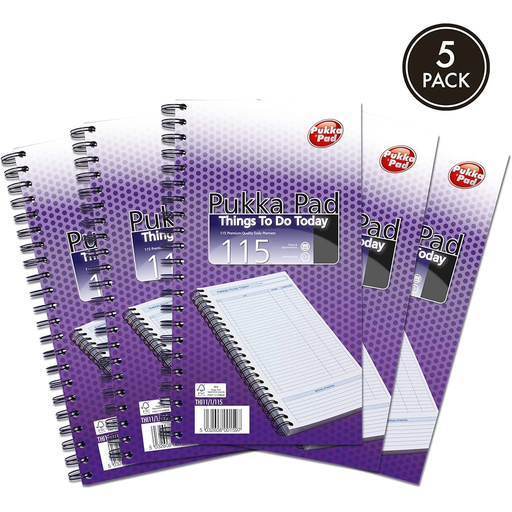
Why It Stands Out: This product is less of a traditional notebook and more of a dedicated productivity tool. Each pad is structured to help you organise your day, with sections for to-do lists, appointments and important notes. The wire-bound top makes it easy to tear off sheets once your day is complete. It uses standard 80gsm paper, which is well-suited for its purpose as a daily task manager.
While a lined notebook is perfect for writing, some tasks like sketching diagrams, creating charts or practising calligraphy benefit from a different format. If you need a grid for your notes or designs, a squared ruled notebook might be a better fit.
For those who work with numbers or prefer a grid layout, explore our collection of Squared Ruled Notebooks to find the perfect match for your needs.
GSM stands for Grams per Square Metre and indicates the density and thickness of the paper. Standard office paper and many notebooks use 80gsm paper, which is fine for everyday writing with ballpoint or rollerball pens. A 100gsm paper journal offers a thicker, more durable page that feels more substantial. Its main advantage is its resistance to ink 'ghosting' and 'bleeding', making it a better choice for fountain pens, markers and heavy note-takers who write on both sides of the page.
This often comes down to personal preference. A spiral notebook is highly practical for a school environment because it can be folded back on itself, saving valuable desk space during lectures. It also lies perfectly flat. A hardcover journal is generally more durable for withstanding being thrown in a backpack and offers a more permanent, book-like feel for important notes. Consider how you take notes and how much you value portability versus a flat writing surface when choosing a notebook for school.
The A5 size (148 x 210 mm) is widely considered the sweet spot for portability and usability. It's compact enough to carry in most bags without being cumbersome, yet large enough to provide ample space for detailed notes or journal entries. The lined ruling provides a clear structure, making it an ideal ruled notebook for writing and keeping your thoughts organised and legible.