
24/7 Customer Support

Free returns

Same-day & Next-day Delivery

Quality Guaranteed

Unlock Your Welcome Offers: FREE Delivery | Up to 80% OFF | Free 30-day JoyPlus trial
Download the APP
An A5 lined notebook is compact enough for a handbag, rucksack or work bag, yet provides more writing space than a pocket notebook. However, attractive covers and phrases such as “premium paper” do not always tell you whether a notebook will suit your daily routine.
Before buying, look beyond the design. Check the paper weight, binding, page count and intended use. A notebook for university lectures has different requirements from a lined journal for reflective writing, while a stationery gift may need more visual appeal than maximum page capacity.
A stylish cover can make a notebook appealing, but it does not guarantee a comfortable writing surface. Lightweight paper may allow darker inks to show through, particularly with gel pens, markers or fountain pens. If you write on both sides of every sheet, check the paper weight and read the specification rather than relying on phrases such as “high quality”.
Some listings describe the interior as 96 sheets, while others quote 196 pages. A sheet has two sides, so the figures are not directly interchangeable. Check whether the listed number refers to sheets or pages before comparing value between a hardcover notebook, spiral notebook or softcover notebook.
A notebook that will be used in lectures or meetings needs to open comfortably and remain manageable with a small footprint. Spiral binding can help pages turn and fold back, while stitch binding may offer a lighter, lay-flat format. Dividers, pockets and elastic closures can also make a practical difference if you carry loose papers or organise several subjects.
Paper weight is measured in gsm, meaning grams per square metre. An 80gsm notebook is usually lighter and economical, making it suitable for everyday notes and carrying several books. A 100gsm notebook generally feels more substantial and may help reduce ink show-through, although results still depend on the ink and pen used.
Ivory-coloured paper can be more comfortable for some users than bright white paper, while ruled lines and margins help keep school, office and journal entries organised. If you use markers or wet ink, check the product information and consider trying one page before committing to a particular writing tool.
A standard A5 format measures approximately 148 × 210mm. This gives enough room for meeting notes, revision summaries, lists and journalling without taking up the space of an A4 book. Check the overall cover dimensions if you plan to store the notebook in a slim laptop bag or smaller handbag.
A 300gsm textured cover offers more structure than a thin card cover and can help protect pages during everyday handling. Hardcover designs are more suitable for frequent transport or desk use, while a softcover notebook is often lighter.
For users who need to organise subjects or projects, repositionable dividers and storage pockets can be more useful than decorative features. An elastic closure is also helpful for keeping a notebook shut in a crowded bag. Always keep paper products dry and avoid bending wire binding or placing heavy objects on padded covers.
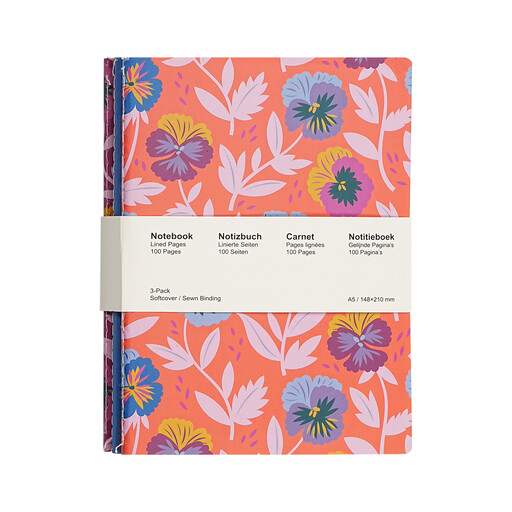
Why This Fits Their Persona: A set of three gives students, new journal users and everyday note-takers separate books for different subjects or routines.
The listing specifies three A5 notebooks, each with 50 sheets of ruled 80g cream-coloured paper, making the quantity clear.
Stitch binding supports lay-flat use, while the lightweight softcover format is easy to carry.
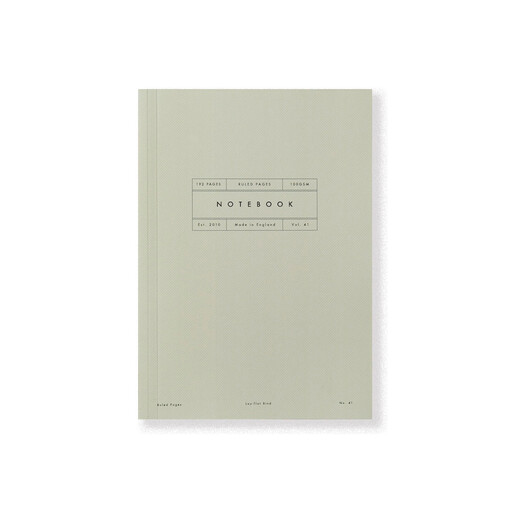
Why This Fits Their Persona: Suitable for professionals, writers and stationery enthusiasts who want a refined notebook for meetings, planning or longer writing sessions.
The specification identifies 196 ruled pages with margins, 100gsm ivory paper and a textured 300gsm cover.
A5 portability combines with a higher paper weight and protective textured cover.
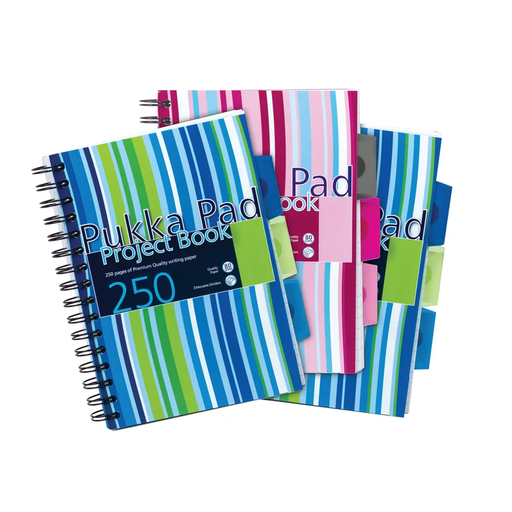
Why This Fits Their Persona: A practical choice for students, teachers and office users managing separate modules, projects or meeting topics.
The listing states 250 pages, 8mm ruling, three repositionable dividers and storage pockets.
The A5 project-book format provides substantial capacity and built-in organisation for separate notes.

Why This Fits Their Persona: Its character-led design suits Lilo & Stitch fans and shoppers seeking a playful stationery gift for notes, doodles or everyday ideas.
The A5 size and plush cover are stated clearly, so its novelty appearance is matched with a usable portable format.
Soft fabric styling adds tactile appeal; the product warning notes that it is not suitable for children under three because of small parts.
We have compiled a complete, real-time list of products that fully satisfy these strict selection criteria and UK safety regulations.
Yes. Its 148 × 210mm format fits most school bags and is large enough for lesson notes, revision lists and homework planning. Models with margins, dividers or pockets can make subject organisation easier.
It can be useful if you prefer a smoother, more substantial writing surface or use darker pens. It may reduce show-through compared with lighter paper, but no paper weight guarantees that every ink will remain invisible on the reverse.
Lifespan depends on page frequency, cover construction, storage and handling. A hardcover or textured cover can offer more protection during transport, while keeping any notebook away from moisture helps preserve the paper and binding.