
24/7 Customer Support

Free returns

Same-day & Next-day Delivery

Quality Guaranteed

Unlock Your Welcome Offers: FREE Delivery | Up to 80% OFF | Free 30-day JoyPlus trial
Download the APP
As a Joybuy Product Recommendation Officer, my role is to help you navigate the crowded market of everyday items. A seemingly simple purchase like an A5 notebook can lead to frustration if you end up with a product that isn't fit for purpose. Before you add another notebook to your basket, let's look at the common pitfalls that can turn a fresh start into a stationery disappointment.
Many of us have experienced it: the spiral binding that snags on your bag and unravels within a month, the paper so thin that your favourite pen bleeds through, or the stylish cover that scuffs and peels after a single commute. These issues often stem from overlooked details that marketing materials rarely highlight. Here are the key traps to avoid:
wirebound notebook that comes apart. The wire gets bent out of shape, pages fall out and the notebook becomes unusable long before it's full.hardcover journal designs use materials that quickly show scratches and wear, looking tired before their time.To ensure your next lined notebook or writing journal is a reliable tool, focus on a few core parameters. Understanding these will help you choose a product that matches your needs, whether it's for school, the office or personal projects.
The thickness and quality of paper are defined by its weight, measured in grams per square metre (gsm). This single number tells you a lot about how the paper will perform.
office notebooks and notebooks for school. It offers a good balance of smoothness and opacity, minimising bleed-through for most everyday pens.bullet journal, sketching or for those who use fountain pens, as it provides a smooth, bleed-resistant surface.The way a notebook is bound affects its durability and how it lies on a desk.
hardcover journal. They are robust and professional-looking, making them a great choice for a permanent writing journal or important meeting notes.notebook multipack, and allows them to lie relatively flat.Beyond paper and binding, consider features that align with your use case. For students or professionals managing multiple topics, an A4 project book or A5 equivalent with repositionable dividers is invaluable. For those who need to file their notes, perforated pages are a must. An elastic closure band keeps your notebook secure in a bag, while a ribbon bookmark helps you find your place quickly. For those focused on sustainability, look for a recycled notebook with clear certification like FSC (Forest Stewardship Council).
To help you find a notebook that avoids these common issues, we've matched a few options from our collection to specific user needs.
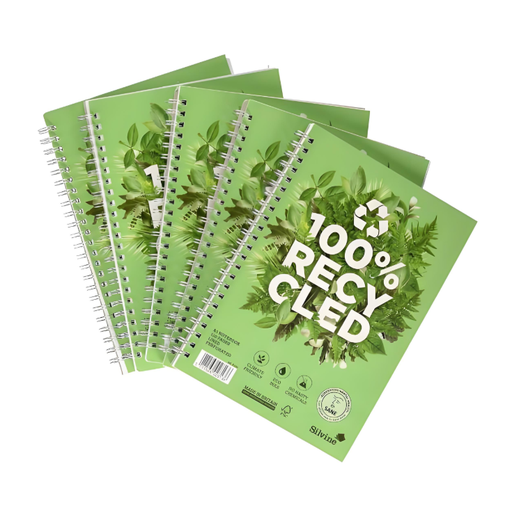
Why This Fits Their Persona: This multipack offers excellent value for students or professionals needing multiple notebooks for different subjects or projects. Being made in the UK from recycled paper, it's a responsible choice for the environmentally aware consumer.
The durable wirebound spine allows the notebook to lie flat, avoiding the weak binding issue. The 80gsm recycled paper provides a quality surface that resists ghosting from everyday pens.
Features perforated and pre-punched pages for easy tear-out and filing. The pack of five is economical for a full term or year's supply.
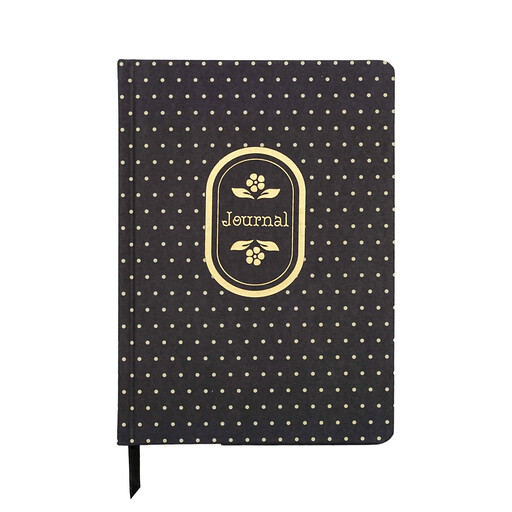
Why This Fits Their Persona: For those who view their notebook as a personal accessory, this journal combines style with substance. The premium fabric hardcover with foil detailing offers a tactile and sophisticated feel, perfect for personal reflection or creative writing.
The premium 100gsm ivory paper is designed to resist ink bleed, making it ideal for fountain pens. The durable fabric hardcover protects your notes and avoids the scuffing seen on cheaper alternatives.
Features a casebound binding for durability and a professional finish. The high-quality paper provides a superior writing experience for pen enthusiasts.
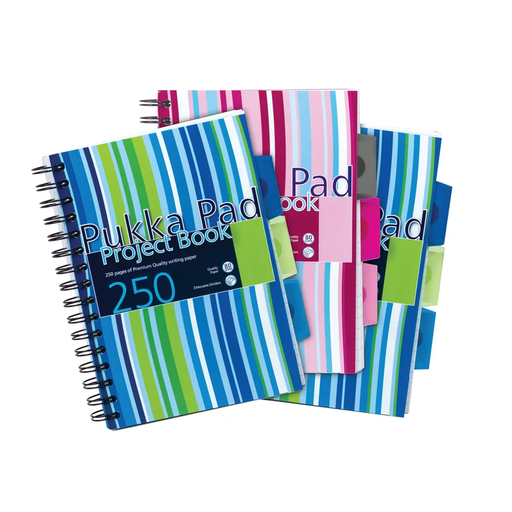
Why This Fits Their Persona: This is more than just a notebook; it's an organisational tool. It's perfect for professionals, students or teachers juggling multiple projects or subjects who need to keep their notes clearly separated and accessible.
The robust wire binding and durable cover are built for heavy use. The 80gsm FSC Certified paper ensures a reliable writing surface without the "ghosting" problem found in cheaper project books.
Includes 3 repositionable dividers with storage pockets, allowing for flexible organisation. The compact A5 size makes it portable without sacrificing functionality.
We have compiled a complete, real-time list of products that fully satisfy these strict selection criteria and UK safety regulations.
While A5 (148 x 210 mm) is the most common portable notebook size in the UK, you may also see B5 (176 x 250 mm). B5 is slightly larger than A5 but smaller than A4, offering more writing space per page while still being more portable than a full-size A4 project book. It's a popular choice in academic settings for those who find A5 a bit too restrictive.
GSM stands for "grams per square metre" and is a measure of paper density and thickness. A higher GSM number means thicker, more durable paper. For general note-taking with a ballpoint, 80gsm is sufficient. If you use ink-heavy pens or want a more premium feel for a writing journal, look for 100gsm or higher to prevent ink from bleeding through.
The primary way to prevent bleed-through is to choose a notebook with higher-quality paper, specifically one with a paper weight of at least 80gsm and ideally 100gsm or more if you use fountain pens or markers. Additionally, testing your pen on an inconspicuous back page can help you gauge how it will behave before you commit to writing.