
24/7 Customer Support

Free returns

Same-day & Next-day Delivery

Quality Guaranteed

Unlock Your Welcome Offers: FREE Delivery | Up to 80% OFF | Free 30-day JoyPlus trial
Download the APP
From lecture halls to boardrooms, the humble notebook remains an essential tool. Yet, choosing the right one can feel surprisingly complicated. A quick search for an A5 notebook reveals a sea of options and it's easy to make a purchase you'll later regret. As a Joybuy Product Recommendation Officer, my role is to help you see past the marketing jargon and focus on what truly matters for your needs.
Before you add another notebook to your basket, let's look at the common pitfalls that lead to disappointment and wasted money.
To avoid these traps, focus on a few key technical details. Understanding these will empower you to select a notebook that performs as you expect.
Paper weight is measured in Grams per Square Metre (GSM). This single number tells you a lot about the paper's thickness and durability.
The construction of the notebook dictates its durability and how it handles during use.
While the A5 notebook (148 x 210mm) is a popular all-rounder for its portability, your specific needs might call for something different. For extensive projects or detailed university notes, a larger A4 project book with built-in dividers can provide the structure and space you need.
Based on these practical criteria, here are a few recommendations matched to different user needs.
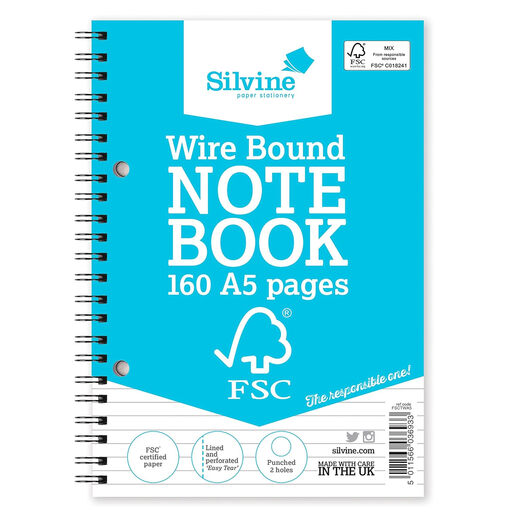
Why This Fits Their Persona: This multipack offers excellent value for students or anyone needing multiple notebooks for different subjects. Its core appeal is its genuine commitment to sustainability, making it a guilt-free purchase for the environmentally aware user.
It cuts through "greenwashing" with verifiable FSC certified and recycled paper. The Silvine brand is known for reliable construction, addressing the flimsy binding pitfall.
A practical and economical eco-friendly notebook choice. The wire binding allows it to lay flat for easy note-taking during lectures.
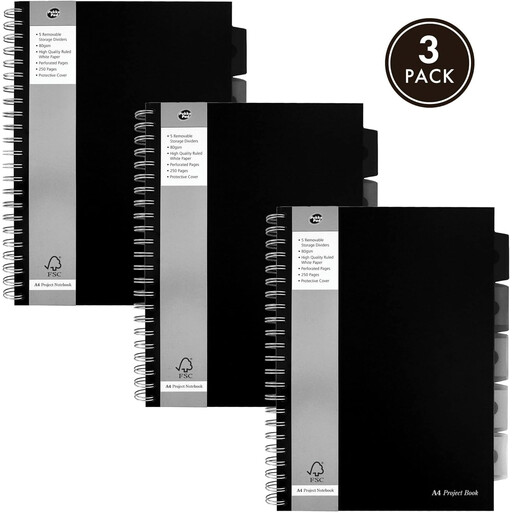
Why This Fits Their Persona: This is for the professional or student juggling multiple complex projects. The larger A4 project book format, combined with organisational features, makes it a powerful tool for keeping workstreams separate and tidy.
The robust polypropylene cover is wipe-clean and highly durable, preventing the wear and tear that plagues lesser notebooks. The 80 gsm paper is a reliable standard that resists bleed-through from most pens.
Five repositionable, colour-coded dividers with storage pockets provide unmatched organisation. Perforated pages allow for clean removal and filing.
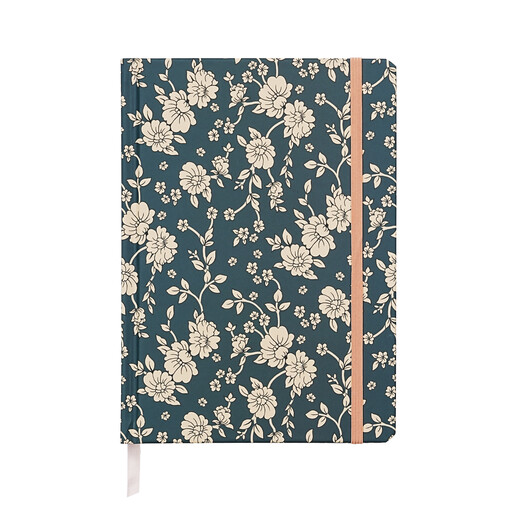
Why This Fits Their Persona: This user values a high-quality writing experience and aesthetics. It's perfect for daily journaling, creative writing or as a stylish office notebook that sits proudly on a desk.
The premium 100g offset paper is specifically chosen to minimise ink bleed, directly solving the thin-paper problem. The durable hardcover journal construction ensures it lasts.
Superior paper quality for a smooth writing feel. Includes thoughtful features like a ribbon bookmark and an elastic closure band for convenience and security.
We have compiled a complete, real-time list of products that fully satisfy these strict selection criteria and UK safety regulations.
While A5 (148 x 210 mm) is the most common portable size, B5 (176 x 250 mm) is a popular alternative, particularly in academic settings. It sits between A5 and A4, offering more writing space per page than an A5 notebook without the full size and weight of an A4 book. It's a great compromise if you find A5 a bit too cramped.
GSM stands for Grams per Square Metre and indicates the paper's weight and thickness. For general notes with a ballpoint pen, 80 GSM is a reliable standard. If you use fountain pens, markers or want a more premium feel for a bullet journal, you should look for 100 GSM or higher to prevent ink from bleeding through the page.
The most effective way is to choose a notebook with higher GSM paper, as explained above. If you're already using a notebook with thinner paper, consider switching to a ballpoint or gel pen with quick-drying ink. For fountain pen users, pairing a fine nib with a well-behaved ink can also reduce the chances of bleed-through. When in doubt, always test your pen on a back page first.