
24/7 Customer Support

Free returns

Same-day & Next-day Delivery

Quality Guaranteed

Unlock Your Welcome Offers: FREE Delivery | Up to 80% OFF | Free 30-day JoyPlus trial
Download the APP
An A5 notebook seems like a simple purchase, but the wrong choice can lead to daily frustration. Whether you're a student juggling lectures, a professional organising your work week or a creative capturing ideas, the right notebook is an essential tool. Yet, many of us have been let down by promising-looking stationery that fails to deliver.
As the Joybuy Product Recommendation Officer, I see where shoppers often go wrong. It's easy to be swayed by a stylish cover, only to find the notebook is impractical. Before you buy your next A5 journal or 2026 diary, let's look at the common pitfalls to avoid.
By understanding a few key features, you can sidestep these issues and find a notebook that serves you well all year long.
To make an informed choice, focus on the specifications that impact daily use. These three factors are far more important than marketing buzzwords.
Paper quality is often measured in grams per square metre (gsm). This number tells you the density and thickness of the paper, which directly affects your writing experience.
The binding determines how a notebook opens, lies and holds up over time.
The cover is your notebook's first line of defence. A hardcover journal offers superior protection for the pages inside, making it a reliable choice for carrying in a bag. Softcover notebooks are lighter and more flexible but offer less protection. Materials range from simple cardstock to durable fabric, textured paper or PU leather, each offering a different balance of style and resilience.
To help you find the right fit, we've matched some excellent options to different user needs.
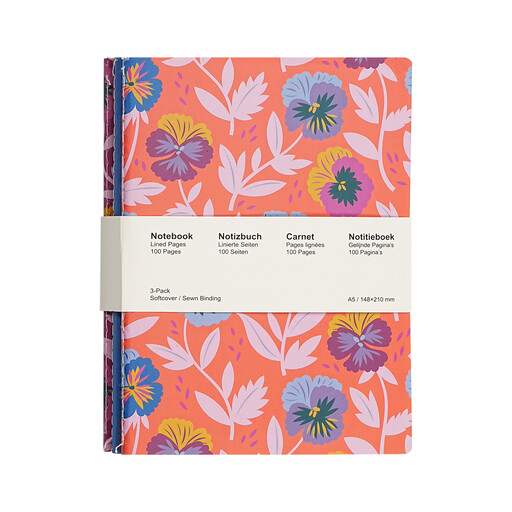
Why This Fits Their Persona: This 3-pack is ideal for students managing multiple subjects. The softcover design is lightweight for carrying in a backpack all day, and the different covers help with organisation. It's a practical and economical choice for heavy note-taking.
The durable stitch binding allows the notebook to lay flat without cracking or falling apart, directly countering the weak binding trap.
Comes in a pack of three for great value. The 80gsm paper is suitable for everyday pens and pencils used in lectures.
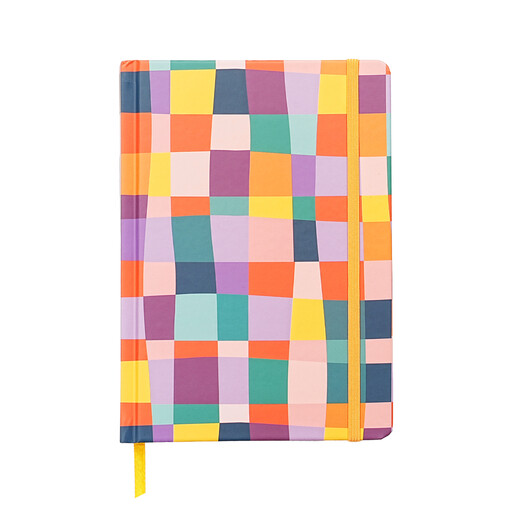
Why This Fits Their Persona: For professionals needing a reliable A5 journal for meeting notes and daily tasks. The durable hardcover and elastic closure keep it neat and protected during commutes, while the classic ruled journal format is perfect for structured office stationery.
The 100g cream paper minimises ink bleed-through, ensuring notes are clean and professional. The sturdy hardcover avoids the scuffing and wear seen on cheaper alternatives.
Includes a practical ribbon bookmark and elastic band for organisation. The textured cover provides a smart, tactile finish.
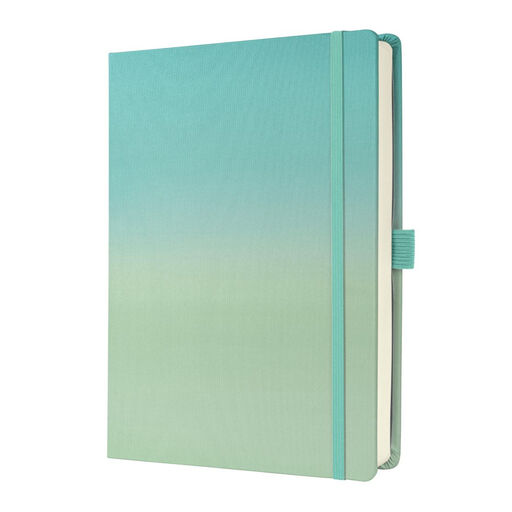
Why This Fits Their Persona: This journal is built for creativity. It's perfect for those who use their notebook as a bullet journal, a sketchbook or for hand lettering. The combination of high-quality paper and a functional design allows for complete artistic freedom.
The premium 120 gsm paper is specifically designed to handle creative penmanship, eliminating the paper bleed-through problem. Its innovative 180° lay-flat binding is superior to standard bindings that fight back.
Features a true lay-flat design for seamless two-page spreads and 200 numbered pages for easy organisation.
We have compiled a complete, real-time list of products that fully satisfy these strict selection criteria and UK safety regulations.
GSM stands for 'grams per square metre' and indicates the paper's weight and thickness. For an A5 journal, 80 gsm is fine for basic notes with a ballpoint pen. If you use gel or fountain pens, look for 100 gsm or 120 gsm to prevent the ink from bleeding through to the other side of the page, keeping your journal neat and legible.
This depends on your note-taking style. A spiral notebook A5 is excellent for lectures where desk space is limited, as you can fold the cover back completely. A lay flat notebook with stitch binding is often more durable for carrying in a packed bag, as there are no wires to get bent or snagged and it's ideal for subjects where you might draw diagrams or mind maps across two pages.
The most effective way is to choose a notebook with higher-quality paper, specifically one with a gsm of 100 or more. Additionally, you can match your pen to your paper. Fine-tipped pens and quick-drying inks are less likely to bleed than broad, wet-flowing ones. If you're set on using a fountain pen, a notebook with 120 gsm paper is a very reliable choice.