
24/7 Customer Support

Free returns

Same-day & Next-day Delivery

Quality Guaranteed

Unlock Your Welcome Offers: FREE Delivery | Up to 80% OFF | Free 30-day JoyPlus trial
Download the APP
An A5 notebook is compact enough for a handbag, backpack or desk drawer, yet offers sufficient space for daily notes, planning and creative work. However, choosing by cover design or page count alone can lead to disappointing purchases.
A notebook may look premium but use thin paper that shows ink through to the reverse side. A large page count may also conceal a cramped layout, weak binding or pages that are difficult to remove and file. Before buying, focus on the paper weight, page format, binding and how you intend to use it.
Page counts are not always presented consistently. Some listings refer to individual pages, while others may describe sheets or sides. Check whether the specification says “pages” and look at the total number of written sides available.
Also consider whether you need blank, lined or ruled paper. A blank A5 notebook offers flexibility for sketching and free-form notes, while a lined A5 notebook is more suitable for lectures, meeting notes and journalling.
Paper weight is measured in gsm, meaning grams per square metre. In practical terms, 80gsm paper is commonly used for everyday writing and helps keep a notebook light and affordable. 100gsm paper generally feels more substantial and may reduce show-through when using darker inks, markers or fountain pens.
Paper performance still depends on the paper finish and ink used. If you regularly write with wet fountain pen ink, check the product description carefully rather than relying on the phrase “premium notebook” alone.
A glued spine can create a neat appearance but may not open completely flat. A wirebound notebook can be easier to use when travelling, particularly when it opens through 360 degrees. Perforated pages are useful if you need to hand in an assignment, share meeting notes or file individual sheets.
For busy classrooms, home offices or shared workspaces, a wipe-clean polypropylene cover can be more practical than a decorative textured cover. The right choice depends on whether portability, presentation or everyday resilience matters most.
An 80gsm notebook is suitable for general pens and pencils and is often a sensible choice for students who need several books. A 100gsm notebook may be preferable for longer writing sessions or users who want a smoother, more substantial surface.
No paper should be assumed to be completely bleed-proof with every ink. Test a new pen on an inconspicuous page first, especially when using markers or wet fountain pen ink.
A5 measures approximately 148 × 210mm, making it a practical middle ground between a pocket notebook and a full-size pad. It can fit into most backpacks and work bags without taking up the space of an A4 office notebook.
If you need to manage multiple modules, research documents or extensive project notes, consider a larger project book. B5 and A4 formats can offer more writing space, dividers and storage pockets, though they are less convenient for daily travel.
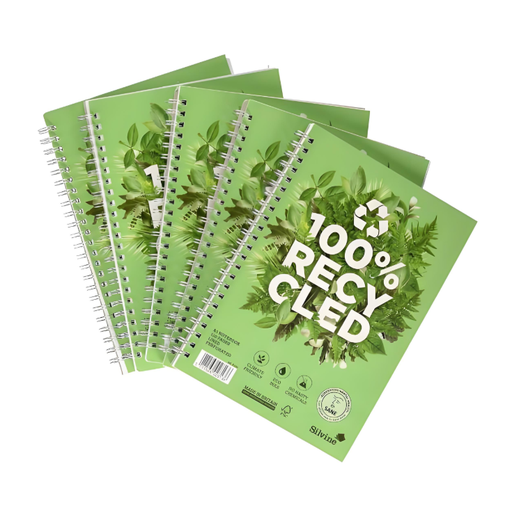
Why This Fits Their Persona: A five-pack gives students, home-office users and families several notebooks for lectures, lists and everyday notes without buying each one separately.
The listing clearly states the pack quantity, 120 lined pages per notebook and 80gsm recycled paper, making capacity and material easier to compare.
Five notebooks, recycled 80gsm paper, four pre-punched holes, perforated pages and a 360° wirebound opening.
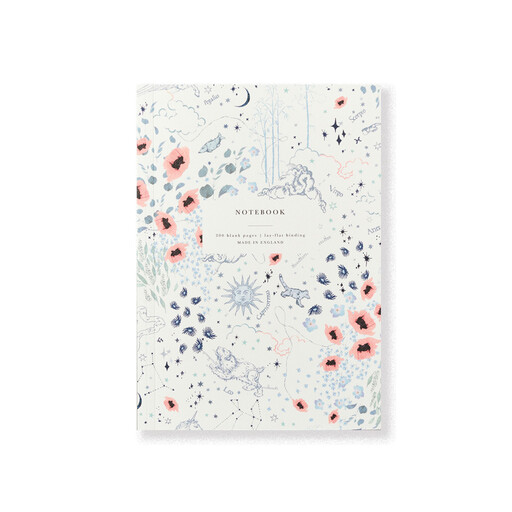
Why This Fits Their Persona: Writers, artists and stationery enthusiasts wanting a substantial blank notebook for sketching, journalling or idea development may value its decorative textured cover and generous capacity.
Its specification states 300 blank pages and 100gsm inner paper, rather than relying only on appearance or vague quality language.
300 blank pages, 100gsm paper and a textured cover with floral prints created through a Lily & Lionel collaboration.
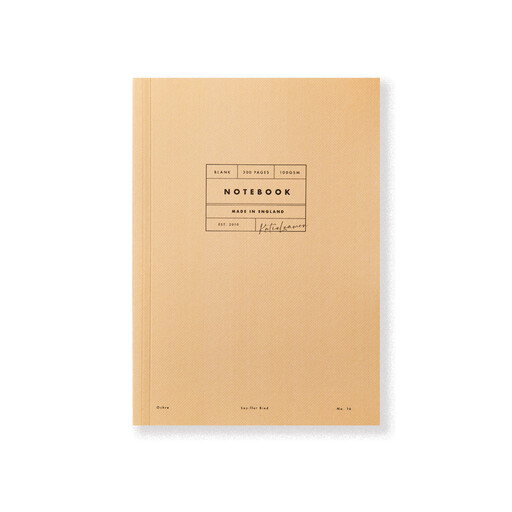
Why This Fits Their Persona: Its blank format suits fountain pen users, illustrators and journal writers who need freedom to combine written entries, diagrams and drawings.
The stated 100gsm paper specification gives a clearer indication of page substance than a cover described only as luxurious.
300 blank pages, A5 portability and a product description that identifies it as fountain pen friendly.
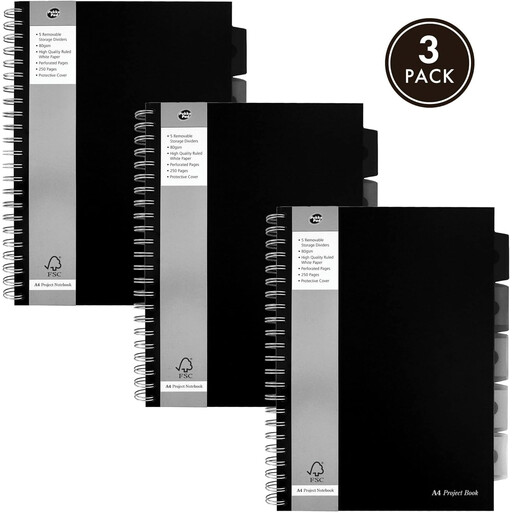
Why This Fits Their Persona: Students, teachers and office users managing several modules, projects or meeting records may benefit more from an A4 project book than a compact A5 notebook.
The specification clearly lists three books, 250 pages per book, 8mm feint ruling and five repositionable dividers.
A4 format, wipe-clean polypropylene cover, storage pockets and perforated FSC-certified 80gsm pages.
For a conventional lined A5 notebook, compare the number of ruled pages, margin layout and cover weight. The Katie Leamon lined options include 196 ruled pages with margins and 100gsm ivory paper, making them suitable for structured writing, journalling and planning:
Choose a recycled notebook if material sourcing is part of your purchasing criteria, while checking whether the 80gsm format suits your preferred pens. Choose blank 100gsm pages when the notebook will combine writing, drawing and free-form layouts.
We have compiled a complete, real-time list of products that fully satisfy these strict selection criteria and UK safety regulations.
Yes, an A5 notebook is easy to carry between lectures and can work well for concise notes, revision lists and planning. If you need extensive diagrams, printed handouts or several subjects in one book, an A4 or B5 project book with dividers may be more practical.
It can be worthwhile if you prefer a smoother writing surface or use darker inks and markers. It is generally heavier than 80gsm paper, so the notebook may feel more substantial. Always check the product’s stated compatibility and try unfamiliar inks carefully, as results vary between pens.
Lifespan depends on page count, binding, handling and storage. Keep the notebook dry, avoid excessive bending and do not overfill it with loose papers. Wirebound and hard-covered formats can be convenient for regular use, while a project book with dividers may remain organised for longer when handling several workstreams.