
24/7 Customer Support

Free returns

Same-day & Next-day Delivery

Quality Guaranteed

Unlock Your Welcome Offers: FREE Delivery | Up to 80% OFF | Free 30-day JoyPlus trial
Download the APP
A5 notebooks are popular in the UK because they offer a useful balance between writing space and portability. They fit neatly into many backpacks, work bags and desk drawers, while providing more room than a pocket notebook.
However, attractive covers and phrases such as “premium paper” do not always tell you whether a notebook will suit your daily routine. As the Joybuy Product Recommendation Officer, I focus on practical specifications rather than presentation alone. Before buying, check these common pitfalls.
A notebook may advertise a high page count, but sheets and pages are not always described consistently. A product listed with 96 sheets provides 192 writing sides, while “96 pages” may refer to the total number of sides.
Margins, wide ruling and large binding areas can also reduce usable space. If you write detailed notes, compare the page count, ruling style and margins together rather than relying on the headline figure.
The standard A5 paper size is approximately 148 × 210mm, but some journals use an A5+ format. For example, a 17 × 22cm journal provides slightly more room while remaining relatively portable.
This matters if you need a notebook to fit a specific organiser, document wallet or laptop bag. Check the dimensions listed by the retailer before ordering.
A stylish softcover may be comfortable to carry but can offer less protection in a busy bag. Conversely, a hardcover notebook protects its pages and creates a firmer writing surface, but may add weight.
Binding also affects how easily the notebook can be used. Wirebound and spiral notebook designs can open widely, while stitched or lay-flat formats may be more comfortable for journalling and drawing. Consider how the notebook will be used over several months, not just how it looks when new.
Paper weight is measured in gsm, or grams per square metre. It is not the only measure of quality, but it provides a useful comparison:
No paper can guarantee that every ink will avoid show-through or bleed-through. If you use fountain pens or markers, look for a clear gsm specification and consider testing a small area first.
A lined A5 notebook or ruled notebook suits meetings, revision and structured notes. Margins can help separate headings, annotations and page references.
A blank notebook offers greater flexibility for sketches, mind maps, creative writing and craft planning. If you are creating a bullet journal, numbered pages and a lay-flat opening can make indexing and double-page spreads easier.
An A5 diary is different from a general A5 journal because it usually includes dated sections, calendars or planning grids. Check whether the layout is daily, weekly or monthly before purchasing.
A wirebound notebook or spiral notebook can be practical when you need to fold pages back or write in restricted spaces. Perforated pages and punched holes are useful if notes need to be removed or filed.
A hardcover notebook offers additional protection and a stable surface. A softcover notebook is generally lighter and may be more convenient for carrying several books at once. For frequent use, inspect whether the product includes a closure band, lay-flat construction or reinforced cover.
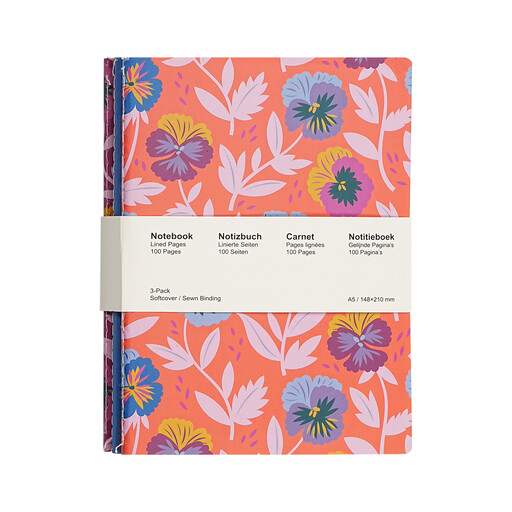
Why This Fits Their Persona: A three-pack gives students, new journalers and home users separate notebooks for study, planning and everyday notes without committing to one large volume.
The product clearly specifies three notebooks, 50 sheets per notebook, 80g cream-coloured ruled paper and stitch binding, making the quantity and format straightforward to compare.
Three portable A5 notebooks; stitch binding is designed to lay flat; ruled pages support organised writing.
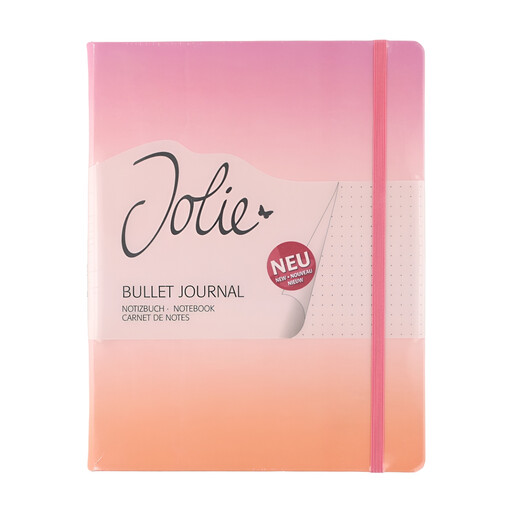
Why This Fits Their Persona: Writers, journalers and stationery gift shoppers may prefer a structured hardcover journal with a more generous A5+ format and a decorative finish.
Its listed 17 x 22cm dimensions make the A5+ format clear, while the 180° lay-flat design addresses the inconvenience of writing near a centre fold.
200 numbered pages; 120g/m² paper; sturdy hardcover and lay-flat opening for planning or drawing.
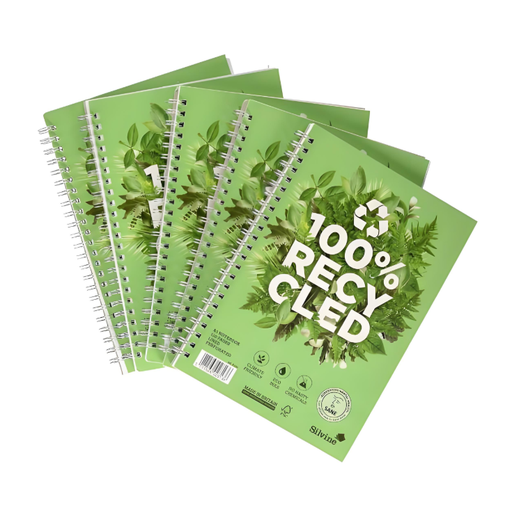
Why This Fits Their Persona: Students, office teams and frequent note-takers can keep separate books for meetings, modules, projects or revision.
The pack quantity, 120-page count per notebook and 80gsm recycled paper are stated clearly. Four punched holes and perforated sheets also make filing or removing notes more practical.
Five notebooks; 360° wirebound opening; recycled paper; pre-punched pages for binder storage.
We have compiled a complete, real-time list of products that fully satisfy these strict selection criteria and UK safety regulations.
For stationery gifts, cover design can be important, but always compare the practical details as well: paper weight, number of sheets, binding and dimensions.
A5 is practical for short meetings, tutorials, revision summaries and daily task lists. If you take extensive lecture notes, an A4 notebook may provide more writing space, while A5 works well as a portable secondary notebook.
Lifespan depends on page count, frequency of use, storage and binding. A notebook with 196 ruled pages may last longer for occasional journalling than a 50-sheet notebook, while a multi-pack can be useful for separating subjects or projects. Keep paper products dry and avoid overloading spiral or wire bindings.
A 100gsm notebook can be a sensible choice for users who write with gel pens, markers or fountain pens, as the heavier paper may reduce show-through compared with lightweight paper. It is still wise to check the manufacturer’s guidance and test your preferred pen, since ink behaviour varies.