
24/7 Customer Support

Free returns

Same-day & Next-day Delivery

Quality Guaranteed

Unlock Your Welcome Offers: FREE Delivery | Up to 80% OFF | Free 30-day JoyPlus trial
Download the APP
Choosing between A5 notebooks and diaries can seem straightforward until the first few weeks of use reveal a weak binding, cramped pages or a cover that does not travel well. The right stationery depends on how you write, where you use it and whether you need flexible notes, dated planning or a giftable design.
This guide highlights common buying traps, explains the specifications worth checking and matches different users with suitable options.
A5 measures approximately 14.8 × 21 cm, making it considerably more portable than A4. However, the actual bulk depends on the page count, cover material and binding. A thick hardcover notebook may take up more space in a small handbag than a slim softcover notebook, while a wirebound design may need additional room around the spine.
Check the full dimensions and construction rather than relying on the A5 label alone.
“Ruled” or “lined” does not always tell you the spacing, page colour or writing feel. An A5 lined notebook with 8 mm ruling may suit compact handwriting and structured notes, while wider spacing can be more comfortable for larger writing.
Paper weight also matters. Lightweight 80gsm paper is practical for everyday school or office notes, whereas 100gsm paper generally provides a more substantial surface and can reduce show-through compared with lighter stock. The result can still vary according to the pen used.
A notebook that looks attractive may become inconvenient if it does not open comfortably. A spiral notebook or wirebound notebook can open flat or fold back on itself, which is useful on a crowded lecture desk or while travelling. A stitched softcover may also lie flat, but it offers a different level of cover protection.
For filing, check whether pages are perforated or pre-punched. These details are more useful than decorative features if you regularly organise notes in folders.
Choose an A5 format for portable journalling, everyday lists, school notes and meeting notes. An A4 notebook or A4 desk diary provides more room for timetables, financial records and detailed planning, but is more suited to a desk or larger work bag.
For dated planning, compare:
Paper weight is measured in gsm, or grams per square metre. The products described here include 80gsm and 100gsm paper. Heavier paper can feel sturdier, although paper coating, ink type and writing pressure also affect show-through.
If you use gel pens, pencils or fountain pens, look for a smooth writing surface and review the manufacturer’s paper description. Always allow ink to dry before closing a notebook, particularly when carrying it in a bag.
A hardcover notebook offers more support when writing without a desk and can protect pages in a busy backpack. A softcover notebook is lighter and often more suitable for carrying several subjects separately.
Useful construction details include:
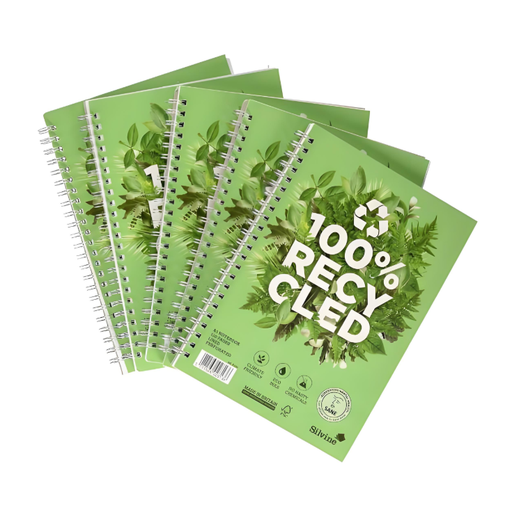
Why This Fits Their Persona: A five-pack gives students, home users and office teams separate notebooks for different subjects or projects without buying individual books repeatedly.
The specification clearly states 120 lined pages per notebook, 80gsm recycled paper, perforated sheets and four-hole punching, so the useful features are easy to verify.
Pack of five; recycled 80gsm paper; 360° wirebound opening; made in the UK according to the supplied product details.
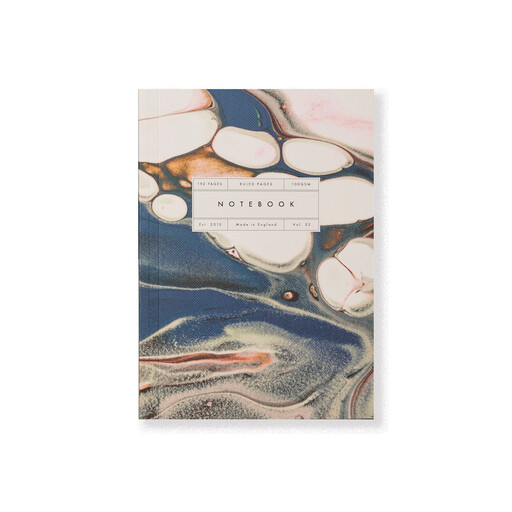
Why This Fits Their Persona: Its refined cover and generous ruled interior suit professionals, journal writers and anyone wanting a substantial writing journal for home or work.
It specifies 196 ruled pages with margins, 100gsm ivory paper and a 300gsm textured cover, giving clearer information than a vague “premium” label.
100gsm paper; ruled pages with margins; textured 300gsm cover; A5 format for portable daily writing.
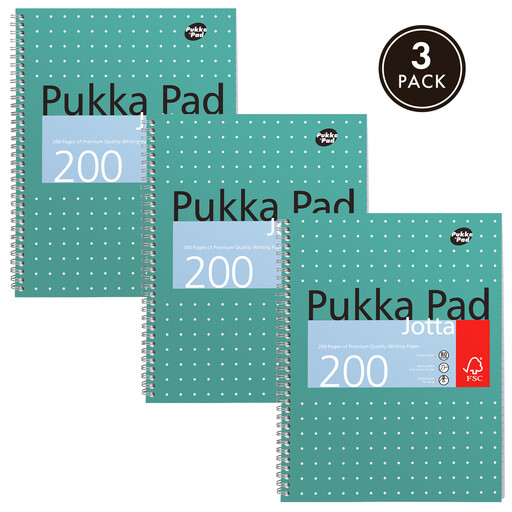
Why This Fits Their Persona: Students and professionals handling long meeting notes, assignments or project paperwork may prefer the larger A4 working area.
The pages are described as true A4 with an added four-hole punched margin, helping users file removed sheets without relying on an approximate size.
Pack of three; 200 pages per notebook; 80gsm paper; 8mm ruling; wirebound format with filing margin.
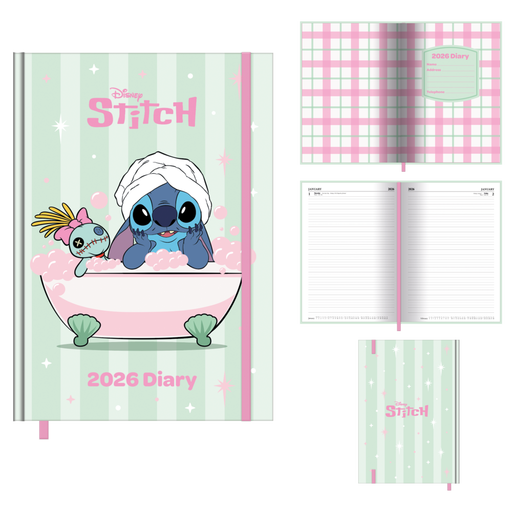
Why This Fits Their Persona: Disney and Lilo & Stitch fans can combine daily organisation with themed artwork, making it suitable for personal use or stationery gifts.
The dated day-to-page layout makes the available writing space clear, avoiding the cramped entries found in some compact diaries.
A5 size; one page for each day; colourful character illustrations; suitable for appointments, tasks and reflections.
We have compiled a complete, real-time list of products that fully satisfy these strict selection criteria and UK safety regulations.
A hardcover spiral notebook is useful when you need structure and protection, such as commuting between home, university and work. The Jubiluu A5 hardcover range includes 96 sheets of 100g cream ruled paper, twin-wire binding and an elastic closure.
For lighter everyday carrying, the Jubiluu A5 softcover three-packs provide 50 sheets per notebook, ruled 80g cream paper and stitch binding. They can work as separate school notebooks, office notebooks or journalling notebooks.
Creative hobbyists may prefer an unlined option such as the Tinc Mallo Heart Padded A5 Notebook. Its unlined pages are suited to doodling, sketching, creative writing and journalling rather than formal note-taking.
Yes. A5 notebooks are easy to carry between lessons and can be assigned to individual subjects. Wirebound and spiral formats are particularly practical when writing on small desks, while perforated or punched pages can simplify filing.
Lifespan depends on page usage, storage and binding quality. A frequently used notebook may fill quickly even if the cover remains intact. Keep paper away from moisture, avoid bending the wire and choose a page count that matches how often you write.
There are no batteries, subscriptions or charging costs, but a paper diary must be replaced for each dated planning period. The practical value comes from the layout, writing space and whether you will use it consistently. For users who prefer handwriting and quick visual reference, a suitable diary can be a straightforward planning tool.