
24/7 Customer Support

Free returns

Same-day & Next-day Delivery

Quality Guaranteed

Unlock Your Welcome Offers: FREE Delivery | Up to 80% OFF | Free 30-day JoyPlus trial
Download the APP
Whether you need a portable notebook for lectures, an office notebook for meetings or a journalling notebook for personal writing, A5 notebooks offer a practical balance between writing space and portability. Their 148 × 210 mm format fits easily into most backpacks, handbags, briefcases and desk drawers.
However, attractive covers and impressive page counts can distract from the details that affect everyday usability. Before buying, check the paper weight, ruling, binding and organisational features rather than relying on appearance alone.
A notebook may advertise a high number of pages, but the total can be presented as sheets, sides or pages per book. For example, a 3-pack containing 50 sheets per notebook provides 100 writing sides per notebook, not 50 pages in the everyday sense.
Always check:
Paper weight is measured in gsm, or grams per square metre. A standard 80gsm notebook can be suitable for pencils, ballpoint pens and many everyday pens, while 100gsm paper generally provides a smoother, more substantial writing surface and can reduce ink show-through.
That does not mean every 100gsm notebook will suit every fountain pen, marker or wet ink. Ink behaviour also depends on coating, absorbency and the writing instrument. If you use wetter pens, look for product information about ink show-through and choose a sample carefully where possible.
A softcover notebook is lightweight and easy to carry, but it may offer less protection in a busy school bag. A hardcover notebook can help the pages stay protected, although the added structure may make it heavier.
Binding also affects how you write:
A5 is larger than A6 but smaller than B5 and A4. It provides enough room for meeting notes, revision summaries and daily journalling without taking up the space of a full-size pad.
For commuting or mobile work, check whether the cover, wire or elastic closure adds noticeable bulk. A compact A5 notebook should fit your usual bag without bending at the corners.
A lined A5 notebook or ruled notebook is the straightforward choice for written notes, lists and minutes. Margins can improve structure by leaving room for headings, dates or annotations.
A blank notebook is more flexible for sketching, mind maps, diagrams and freeform journalling. Artists and creative users may prefer blank pages, while students and office workers often find ruled pages easier for rapid note-taking.
For multiple subjects or projects, consider a project book with repositionable dividers and storage pockets. These features can reduce the need to carry separate books, but they are unnecessary if you only need one writing section.
Look for the paper weight and material rather than vague phrases such as “premium paper”. Options in this selection include 80gsm offset or recycled paper and 100gsm ivory paper. Recycled paper may suit shoppers who want to consider material sourcing, while thicker paper can feel more substantial during regular writing.
Perforated pages are convenient when notes need to be removed, filed or shared. Four-hole punching is particularly useful if you plan to move pages into a ring binder. Keep paper products dry and avoid heavy pressure on the cover or binding to help maintain their condition.
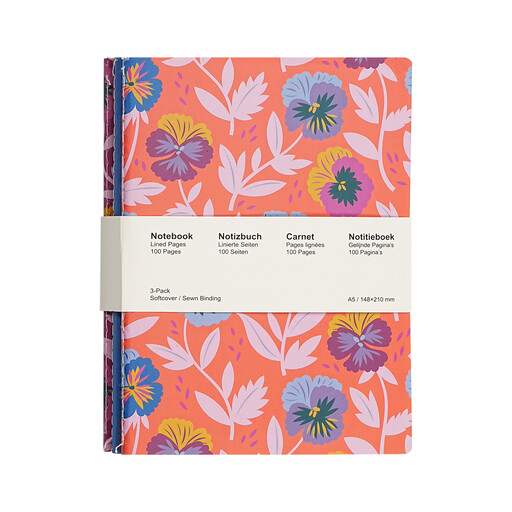
Why This Fits Their Persona: A set of three gives students, home-office users or new journalers separate books for different tasks without committing to one large notebook.
The listing specifies 50 sheets per notebook, 80g cream-coloured ruled paper and stitch binding, making the capacity and construction clear.
Three portable A5 books; stitch binding is designed to lie flat.
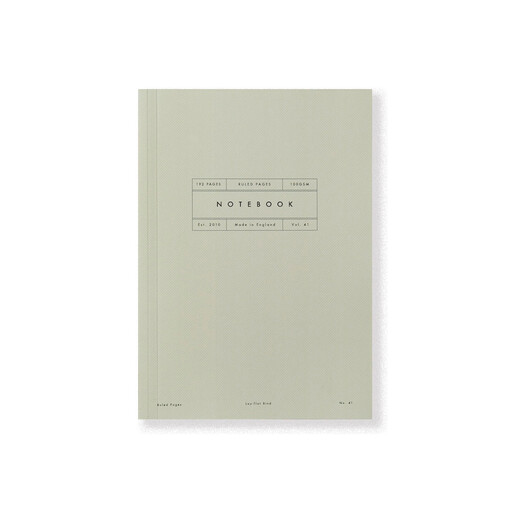
Why This Fits Their Persona: Its refined cover and structured pages suit professionals, writers and shoppers seeking a presentable notebook for work or personal use.
The specification states 196 ruled pages with margins, 100gsm ivory paper and a textured 300gsm cover.
196 ruled pages; 100gsm paper; portable A5 format.
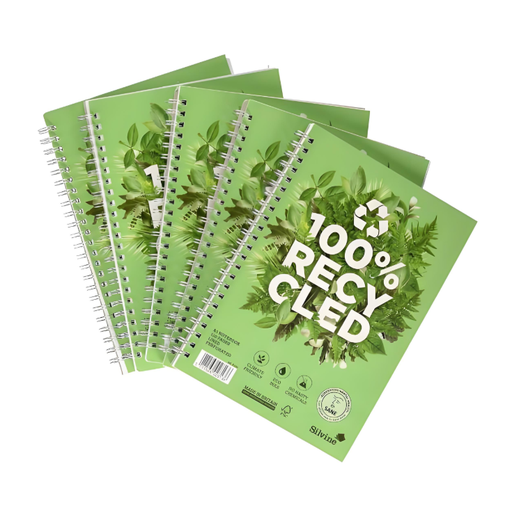
Why This Fits Their Persona: Frequent note-takers, university students and office teams can keep several notebooks available for lectures, meetings or separate workstreams.
The listing clearly identifies recycled 80gsm paper, 120 pages per book, perforated sheets and four-hole punching for filing.
Five-book multipack; 360-degree wirebound opening; perforated, fileable pages.
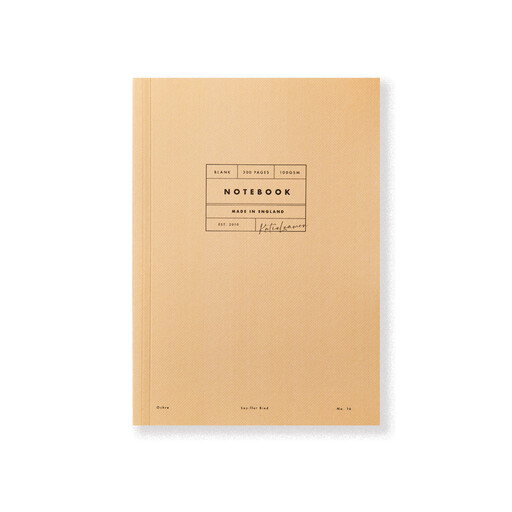
Why This Fits Their Persona: Writers, artists and journalers can use the uninterrupted pages for sketches, brainstorming, lettering or freeform writing.
The specification identifies 300 blank pages and 100gsm paper, so buyers can distinguish it from a lined notebook intended for structured notes.
300 blank pages; 100gsm paper; compact format for carrying in a bag.
A notebook multipack can lower the cost per book and make sense for school supplies, shared office stationery or separate notebooks for different modules. Check the number of pages per individual book before comparing prices.
A single hardcover or 100gsm notebook may be more suitable when appearance, paper feel and long-term organisation matter more than quantity. For project management, an A5 project book with dividers can replace several basic books. If you need extensive space for documents, an A4 project book may be more practical, while B5 sits between A4 and A5 for larger notes.
We have compiled a complete, real-time list of products that fully satisfy these strict selection criteria and UK safety regulations.
Yes. A5 notebooks are convenient for carrying between classrooms, libraries and lecture rooms. A ruled or lined layout suits written notes, while a project book with dividers can separate subjects. For large diagrams or extensive coursework, A4 or B5 may provide more working space.
It can be worthwhile if you use gel pens, fountain pens, markers or write on both sides of the page. 100gsm paper typically feels smoother and more substantial than 80gsm, but pen and ink type still affect show-through. For pencils and standard ballpoint pens, 80gsm may be sufficient.
Lifespan depends on how frequently it is used, the number of pages and how it is carried. A 196-page ruled notebook may suit regular daily notes, while a 300-page blank notebook can support longer creative projects. Keeping the book dry, avoiding excessive bending and choosing a suitable cover can help preserve the pages and binding.