
24/7 Customer Support

Free returns

Same-day & Next-day Delivery

Quality Guaranteed

Unlock Your Welcome Offers: FREE Delivery | Up to 80% OFF | Free 30-day JoyPlus trial
Download the APP
A5 notebooks are popular across the UK because they offer a useful balance between writing space and portability. They fit into most backpacks, handbags and work bags, while providing more room than a pocket notebook. However, the right choice depends on more than cover colour or page count.
Marketing language can make stationery look more practical than it is. Before buying, check the paper weight, binding, ruling and whether the notebook suits the way you plan to use it. A decorative cover may be appealing, but it will not compensate for pages that tear easily or a binding that does not lie flat.
A product may advertise a high page number, but the actual usable area can be reduced by wide margins, dividers, planner pages or perforated edges. Check whether the listing refers to sheets or pages and whether some pages are dedicated to storage or reference information.
For regular notes, a lined A5 notebook with clear ruling and margins is usually easier to organise. For creative work, unlined pages provide more flexibility for sketches, mind maps and doodles.
Paper weight is measured in gsm, or grams per square metre. 80gsm paper is common in school notebooks and office notebooks because it keeps the product light and affordable. 100gsm paper generally feels more substantial and may reduce show-through with some pens, although results depend on the ink and writing pressure.
If you use fountain pens, markers or wet gel pens, look for specific paper information rather than relying only on phrases such as “premium stationery”. When a product does not state the gsm, paper type or page finish, it is harder to compare it fairly.
A glued or stitched notebook can look tidy but may not open completely flat. A spiral notebook or wirebound notebook can be more comfortable for writing on trains, in lecture halls or at a small desk. Conversely, exposed wire may catch on other items in a crowded bag.
Also consider whether you need to remove or file pages. Perforated pages and punched holes are useful for coursework, meeting notes and project records, but they may not be necessary for a personal journalling notebook.
A standard A5 format measures approximately 148 × 210mm. It is compact enough for everyday carrying while leaving practical room for notes, lists and planning. If you need full-size diagrams, printed handouts or extensive project notes, an A4 notepad or A4 project book may be more suitable.
For students moving between classrooms, professionals attending meetings and commuters making quick notes, A5 notebooks are often easier to transport than larger stationery notebooks.
Choose the page layout according to the task:
A page count of 96 sheets, 120 pages or 196 ruled pages can represent very different amounts of writing space, so check the full specification before comparing prices.
A hardcover notebook offers more support when writing without a desk and can protect pages inside a bag. A textured or laminated finish may also be easier to handle regularly, although all paper products should be kept away from moisture.
A wire or twin-wire binding can allow the notebook to open flat and, in some cases, rotate fully around. For filing, look for pre-punched holes or a compatible project-book format. For gifting, a decorative or novelty cover may be more appropriate than a functional office design.
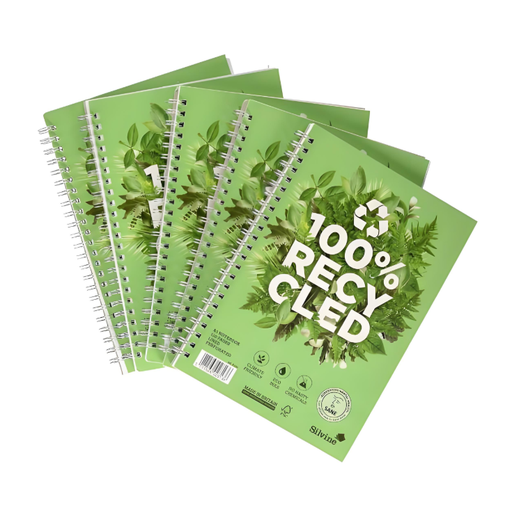
Why This Fits Their Persona: A five-pack gives students, families and home-office users several notebooks for separate subjects or tasks without buying individually.
The listing states the quantity, page count and 80gsm recycled paper clearly, making it easier to assess value rather than judge by cover design alone.
120 lined pages per notebook, four-hole punching, perforated sheets and a 360° wirebound opening.
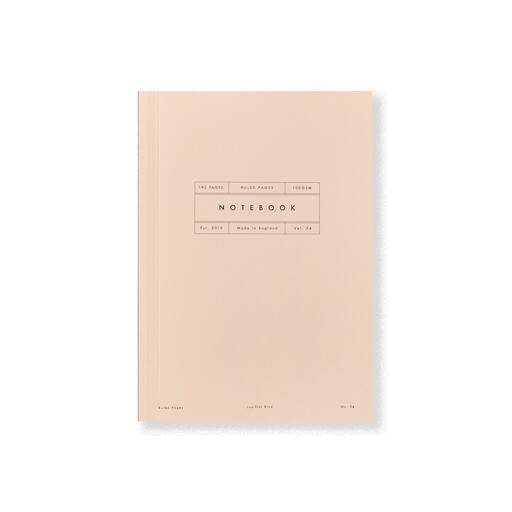
Why This Fits Their Persona: Its portable format and refined cover suit professionals, journal writers and gift buyers who want practical stationery with a considered appearance.
The specification identifies 196 ruled pages, margins, 100gsm ivory paper and a 300gsm textured cover, rather than relying only on premium-sounding wording.
100gsm paper and a durable 300gsm cover provide clearly stated material specifications for everyday writing.
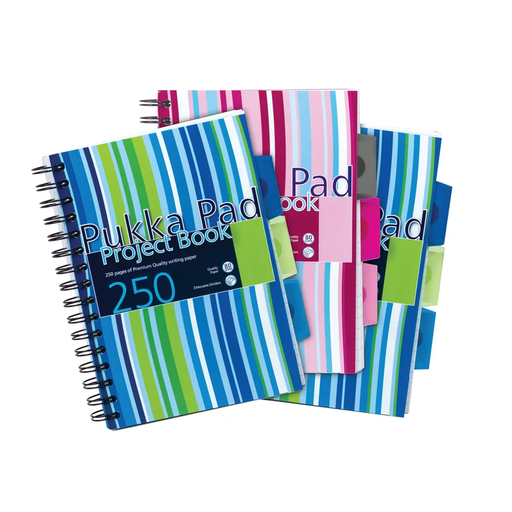
Why This Fits Their Persona: Students, teachers and professionals can separate subjects, clients or workstreams while carrying a compact project book between locations.
The three repositionable dividers and storage pockets address the common problem of mixing notes, handouts and project material in one undivided book.
250 pages of 8mm lined, 80gsm FSC Certified paper, plus storage pockets and repositionable dividers.
We have compiled a complete, real-time list of products that fully satisfy these strict selection criteria and UK safety regulations.
A hardcover spiral notebook can suit users who write away from a desk and want a firmer surface. The Jubiluu A5 format, for example, lists 96 sheets of 100g cream ruled paper, twin-wire binding and an elastic closure.
For creative writing, the Tinc Mallo Heart padded A5 notebook has unlined paper and a spiral binding, making it more suitable for doodling, sketching and free-form journalling than structured class notes.
If you need a larger workspace, an A4 notepad or A4 project book may be more practical. A4 options can accommodate diagrams, handouts and filing, while packs of three are useful for separating subjects or workplace projects.
Yes. A5 notebooks are suitable for lectures, revision, meeting notes and daily planning when portability matters. Choose ruled pages for structured writing, a wirebound design for flat opening, or a project book if you need dividers and pockets.
Neither is automatically right for every user. 80gsm is lighter and commonly used for everyday notes, while 100gsm offers a more substantial feel and may reduce show-through with some inks. Check the pen types you use before paying more for heavier paper.
Lifespan depends on page count, binding, cover material and handling. Frequent users may prefer a hardcover, wirebound or project-book design. Keeping the notebook dry, avoiding excessive bending and storing it away from direct sunlight can help preserve the paper and cover.