
24/7 全天候客户支持

免费退货

当日/次日达

品质保障

开启新人专享福利: 全场免邮 | 低至 2 折 | 免费试用 30 天 JoyPlus 会员
下载 Joybuy
By Joybuy Product Recommendation Officer
A5 notebooks and sketchbooks are easy to compare at a glance, but the differences that matter most are often hidden in the product details. A stylish cover may not compensate for thin paper, while a large page count can become inconvenient if the binding does not open comfortably.
Before buying an A5 notebook, consider how you will use it, which pens or pencils you prefer and whether portability matters more than capacity. The following guide highlights common buying pitfalls, practical specifications and suitable options for different UK shoppers.
A “300-page notebook” sounds substantial, but page numbering can vary between listings. Check whether the description means 300 individual pages or 300 sheets, as one sheet has two sides. Also consider whether blank, lined or ruled pages will suit your intended use.
A blank notebook offers flexibility for creative journaling, diagrams and writing, while a lined notebook is usually more practical for lectures, meeting notes and everyday planning.
Paper thickness is often listed in gsm, meaning grams per square metre. A lower gsm paper can be perfectly suitable for pencils and ordinary ballpoint pens, but some inks may show through or bleed.
For regular writing, 80gsm paper is a common practical choice. If you use fountain pens, markers or wet ink, you may prefer a 100gsm paper notebook. However, paper performance can also depend on the ink and writing pressure, so product descriptions should not be treated as a guarantee for every pen.
A hardbound sketchbook can protect pages in a bag, but it may not lie completely flat. A wirebound notebook or wiro notebook can open further and may be more comfortable when writing on a small desk or shared lecture table.
Perforated pages are useful if you need to hand in work or remove notes, although repeated tearing can reduce the notebook’s long-term page capacity. Dividers and pockets can also add organisation without requiring a separate folder.
A5 measures approximately 148mm × 210mm, making it compact enough for most backpacks, work bags and tote bags. It provides more writing space than A6 while remaining easier to carry than A4.
For commuting, university or school, check the cover thickness and binding as well as the dimensions. A rigid cover may offer protection, while a lighter notebook can reduce the weight of a full stationery set.
Choose the layout according to the task:
A 120-page notebook is convenient for shorter projects, while a 250-page or 300-page format reduces the need to replace it frequently.
Look for clearly stated paper weight, page ruling and material information. The Pukka Pad project books listed below use 80gsm FSC Certified paper, while the Silvine notebooks use 80gsm recycled paper. These details help you compare products more meaningfully than cover colour alone.
For a sketchbook, the RHS Rose option specifies 110gsm paper, offering a heavier surface than a typical everyday notepad. Still, always match the paper to your medium and avoid assuming that any notebook is suitable for heavy paint or wet media unless the listing confirms it.
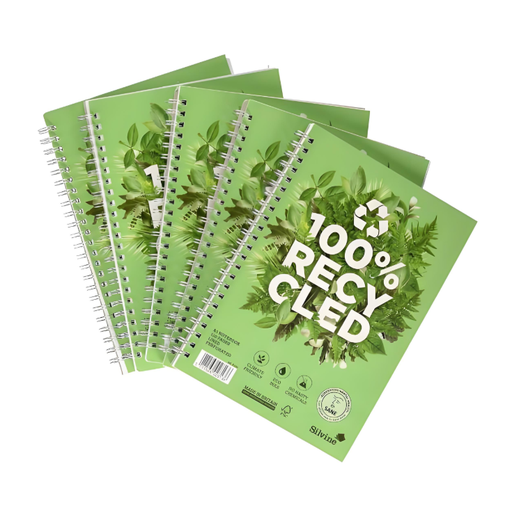
Why This Fits Their Persona: A practical notebook multipack for students, home users or office workers who need separate books for different subjects and tasks.
The listing states the pack contains five notebooks with 120 lined pages each, so the quantity and capacity are clear rather than implied by the cover design.
80gsm recycled paper, four pre-punched filing holes, perforated pages and a wirebound 360° opening.
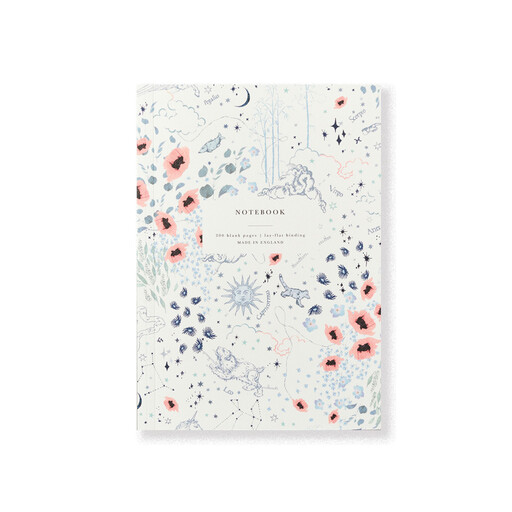
Why This Fits Their Persona: A considered option for writers, artists, journalers and shoppers seeking premium stationery with a giftable appearance.
The product details specify 300 blank pages and 100gsm inner paper, making it easier to assess capacity and paper weight before purchase.
Blank 100gsm pages, textured cover and a generous format for writing, drawing, brainstorming or creative journaling.
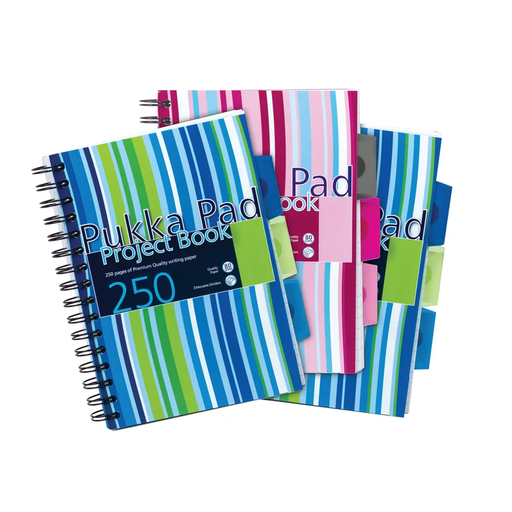
Why This Fits Their Persona: Suitable for students, teachers and professionals managing several subjects, meetings or projects in a single portable format.
Three repositionable dividers and storage pockets provide a stated organisation system, rather than relying on a decorative cover or loose labels.
Pack of three, 250 lined pages per project book and 80gsm FSC Certified paper.
For drawing-led use, the RHS Rose A5 Hardbound Sketchbook 110gsm combines an A5 format with a hardbound cover and stated 110gsm paper. Its botanical presentation makes it relevant to gardeners, RHS stationery collectors and anyone looking for a plant-themed creative notebook. View the RHS Rose A5 Hardbound Sketchbook for its full product details.
The RHS Tropical A5 Sketchbooks, Pack of 3 may suit shoppers who want several themed books for separate sketches, gardening notes or gift purposes. Disney fans may prefer the Lilo & Stitch Planetary A5 Wiro Notebook, which has lined paper, a twin-wire binding and a cover featuring Stitch and Angel in a planetary design.
We have compiled a complete, real-time list of products that fully satisfy these strict selection criteria and UK safety regulations.
Yes. Their 148mm × 210mm format fits most bags and provides enough room for lecture notes, revision lists and project planning. Lined pages and dividers can help maintain a clear structure across different subjects.
A 100gsm notebook is generally a more suitable starting point than 80gsm when using fountain pens, but ink behaviour varies. Check the individual product information and try a small sample if bleed-through is a concern.
Lifespan depends on page count, binding, storage and frequency of use. A 120-page notebook may suit a short project, while a 250-page or 300-page notebook can support longer-term journaling or note-taking. Keep paper products dry and avoid excessive bending to help preserve their condition.