
24/7 Customer Support

Free returns

Same-day & Next-day Delivery

Quality Guaranteed

Unlock Your Welcome Offers: FREE Delivery | Up to 80% OFF | Free 30-day JoyPlus trial
Download the APP
An A5 notebook is compact enough for a handbag, rucksack or desk drawer, yet provides more writing space than a pocket notebook. That balance makes A5 notebooks useful for students, professionals, writers, artists and journal keepers across the UK.
However, attractive covers and phrases such as “premium paper” do not always tell you whether a notebook will suit your daily routine. Before buying, check the ruling, paper weight, binding and page format rather than choosing on appearance alone.
A stylish cover can attract attention, but the binding determines how comfortably the notebook opens and how well it travels. A standard glued spine may be suitable for occasional writing, while a spiral notebook or wirebound notebook can open flat and make it easier to write on both sides of a desk.
Twin-wire designs may also allow pages to turn through 360 degrees. This is convenient for lectures, meetings or writing with limited desk space. On the other hand, exposed wire can catch on items in a crowded bag, so consider how the notebook will be carried.
A notebook advertised with a high page count may contain thinner sheets, small writing areas or pages that are unsuitable for your preferred pen. Check whether the listing refers to sheets or pages. One sheet has two sides, so the distinction affects the amount of usable writing space.
Margins and ruling also matter. An A5 lined notebook with 196 ruled pages and margins may be more practical for organised notes than a larger-looking book with fewer usable lines.
Paper weight is measured in GSM, or grams per square metre. 80gsm paper is lightweight and useful for everyday notes, while 100gsm paper generally provides a more substantial feel and may help reduce ink show-through. Neither measurement guarantees suitability for every ink, so users of fountain pens, markers or wetter gel pens should still check the product description and, where possible, try a small sample first.
A5 measures approximately 148 × 210mm. It fits many standard bags and folders while leaving enough room for meeting notes, schoolwork, lists and journalling. If you regularly carry several books, a lightweight softcover may be more comfortable. A rigid cover adds protection but can increase bulk.
Choose the layout around your primary task:
A ruled A5 notebook is a practical general-purpose option, while blank pages are more adaptable for artists and creative writers.
A hardcover notebook offers a firmer writing surface and more protection inside a rucksack. A softcover notebook is usually lighter and can be convenient for carrying several books at once. Stitch binding can support a lay-flat format without adding a wire spine, while twin-wire binding enables flexible page turning.
Also consider extra features such as elastic closure bands, dividers, storage pockets, perforated pages and punched holes for filing. These features are useful only when they match your routine.
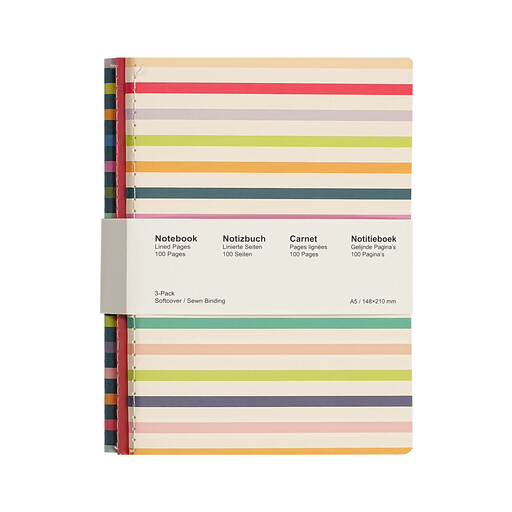
Why This Fits Their Persona: A three-pack gives students, home users or new journal keepers separate notebooks for different subjects, tasks or ideas without committing to one large volume.
The listing states the pack contains three A5 notebooks, each with 50 sheets of ruled 80g cream-coloured paper, making the quantity and format clear.
Softcover construction, stitch binding and a lay-flat design support lightweight everyday use.
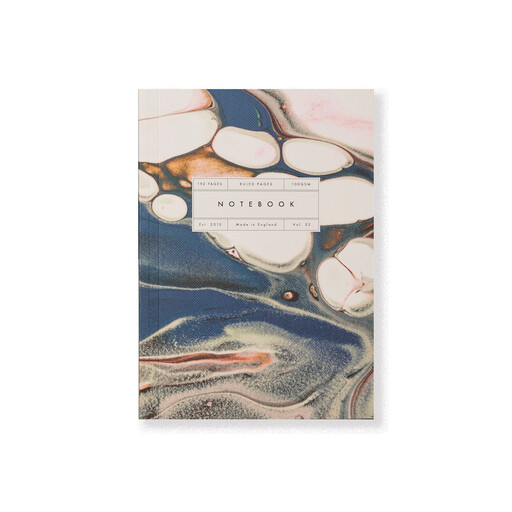
Why This Fits Their Persona: Writers, journal keepers and stationery enthusiasts may prefer a substantial notebook with a refined cover and ample ruled pages for longer entries.
The specification identifies 196 ruled pages with margins, 100gsm ivory paper and a 300gsm textured cover rather than relying only on style-led descriptions.
The 100gsm paper and textured 300gsm cover provide clearly stated material details for regular writing use.
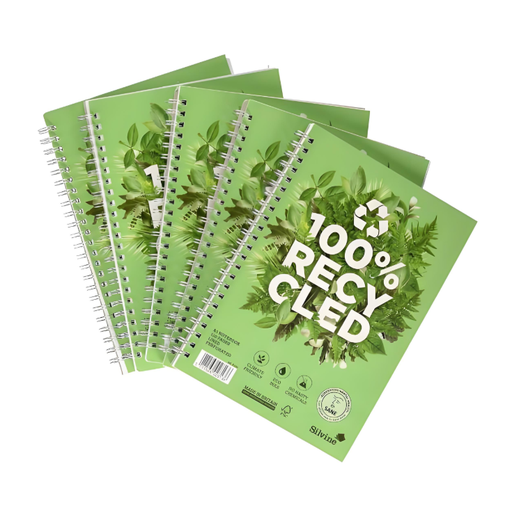
Why This Fits Their Persona: Students, office workers and frequent note-takers can keep separate books for meetings, revision, home administration or projects.
The listing specifies five notebooks, 120 lined pages per book, perforated sheets and four punched holes for filing.
The 80gsm recycled paper, 360-degree wirebound opening and UK manufacture are stated product attributes.
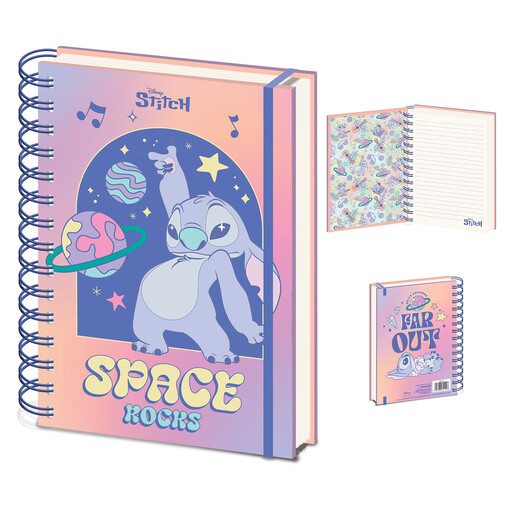
Why This Fits Their Persona: Disney Lilo & Stitch fans may want a practical school notebook, office notebook or journalling notebook with a distinctive cosmic character design.
It combines the decorative cover with listed practical specifications: A5 sizing, lined pages and metal wiro binding.
The wiro design can lie flat or open through 360 degrees, while the cover features Stitch and Angel in a planetary theme.
We have compiled a complete, real-time list of products that fully satisfy these strict selection criteria and UK safety regulations.
Yes. Their 148 × 210mm format is portable for school bags and university rucksacks, while ruled pages support lectures, revision and assignment planning. Wirebound versions can be useful when writing on crowded desks, and project books with dividers help separate modules or topics.
Its lifespan depends on page count, paper handling, binding quality and how frequently it is used. A 50-sheet softcover notebook may suit a short project, whereas a 120-page or 196-page book is more appropriate for regular notes. Keep paper away from moisture, avoid overloading the binding and store notebooks flat or upright in a dry place.
It can be worthwhile if you use fountain pens, markers or wetter inks, or prefer a firmer writing surface. A 100gsm notebook may feel more substantial than an 80gsm option, but paper performance varies by ink and manufacturer. For basic pencil or ballpoint notes, 80gsm paper can be a sensible choice, particularly when buying an A5 notebook multipack.