
24/7 Customer Support

Free returns

Same-day & Next-day Delivery

Quality Guaranteed

Unlock Your Welcome Offers: FREE Delivery | Up to 80% OFF | Free 30-day JoyPlus trial
Download the APP
Buying AA and AAA batteries looks straightforward until a remote stops responding, a camera drains a fresh pack in minutes or a gaming controller becomes unreliable. The right choice depends on more than price and pack size. Battery chemistry, device demand, storage conditions and replacement habits all affect value.
This guide explains the main buying pitfalls and compares practical options for UK homes, offices, gamers, photographers and emergency kits.
AA and AAA batteries are not interchangeable. AA batteries are larger and are commonly used in torches, toys, cameras and gaming controllers. AAA batteries are slimmer and are more often found in remote controls, wireless mice, clocks and compact lights.
Check the device compartment or manual for the required designation, such as AA, AAA, LR6 or LR03. Never force a battery into a compartment, even if the voltage appears similar.
Alkaline batteries are suitable for many everyday, low- to medium-drain devices. However, cameras, flash units, motorised toys and gaming controllers can use power more quickly. For these high-drain applications, lithium or rechargeable NiMH batteries may be more suitable.
Lithium primary batteries are generally non-rechargeable batteries. Rechargeable NiMH cells require a compatible charger but can be more economical for devices used frequently.
A bulk battery pack can reduce the cost per cell, but only if the batteries will be used before their storage period ends and stored correctly. Buying twenty cells for an occasional remote may not offer meaningful value. Conversely, a small pack can become expensive for a household with several controllers, toys and torches.
Compare the cost per battery, chemistry, stated shelf life and the number of cells your devices require.
Standard AA and AAA alkaline and lithium cells generally provide a nominal 1.5V per battery. Rechargeable NiMH batteries commonly provide 1.2V, which is suitable for many compatible devices but may not be appropriate for every product.
Use the same size and chemistry recommended by the manufacturer. Do not mix new and used cells, different chemistries or different brands in one device.
Capacity figures are not directly comparable across every chemistry or device. Actual running time varies with power demand, operating temperature and battery age.
Look for a clearly stated leak-resistant design, particularly when batteries may remain in a device for long periods. Even leak-resistant cells should be removed from equipment that will not be used for an extended time.
Store unused batteries in their original packaging in a cool, dry place. Keep them away from loose metal objects such as coins and keys. Do not refrigerate batteries, and never attempt to recharge primary alkaline or lithium cells.
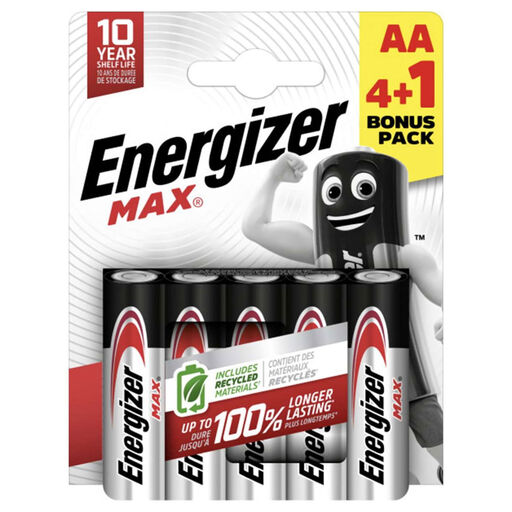
Why This Fits Their Persona: A five-cell pack suits households needing spare AA batteries for remotes, clocks, toys, torches and wireless accessories without committing to a large bulk battery pack.
The pack quantity is clear, and the cells are identified as 1.5V, non-rechargeable alkaline batteries with leak-resistant construction and storage life of up to 10 years when stored correctly.
AA format; five batteries in total; suitable for common household and office electronics; no charger required.
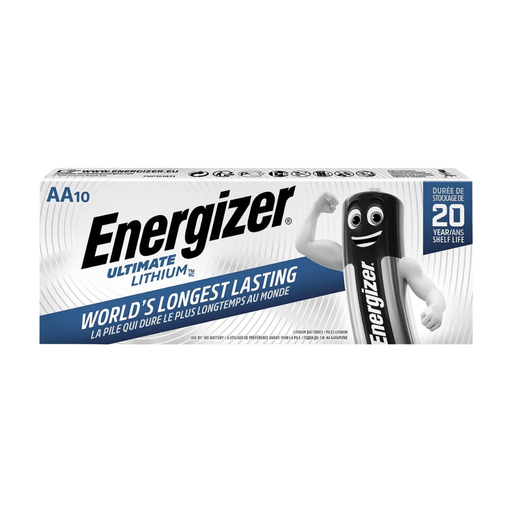
Why This Fits Their Persona: A ten-pack is practical for photographers, outdoor enthusiasts and households that want lightweight cells for demanding or infrequently accessed equipment.
It is clearly marked as lithium, AA, 1.5V and non-rechargeable, avoiding confusion with rechargeable batteries. The stated storage life is up to 25 years when stored correctly, while the cells are designed for a broad temperature range.
Lithium iron disulfide chemistry; approximately one-third lighter than alkaline cells; leak-resistant construction; ten-cell pack.
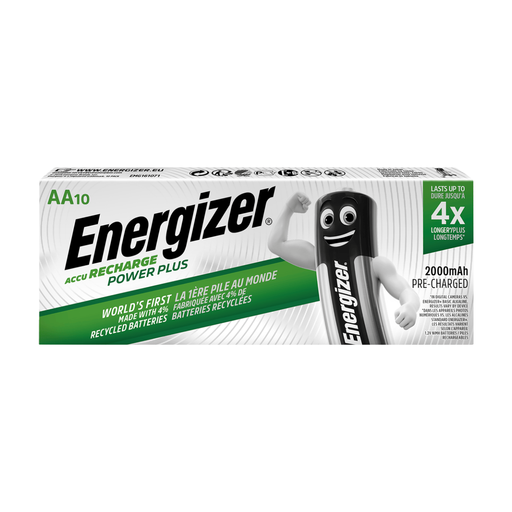
Why This Fits Their Persona: Frequent gamers, photographers and families using motorised toys can benefit from rechargeable NiMH batteries where repeated replacement would otherwise be costly.
The rechargeable chemistry and 2,000mAh capacity are stated clearly. Buyers can account for the additional charger cost instead of mistakenly treating the cells as single-use alkaline batteries.
NiMH chemistry; 2,000mAh capacity; ten-cell pack; designed for repeated charging in frequently used devices.
We have compiled a complete, real-time list of products that fully satisfy these strict selection criteria and UK safety regulations.
No. They have different physical dimensions. Use the size specified by the device, even when both battery types have a similar nominal voltage.
Cameras and gaming controllers are often high-drain devices. Lithium primary cells or rechargeable NiMH batteries may be more suitable than standard alkaline cells, depending on the device manufacturer’s guidance and how often the equipment is used.
They can be more economical when used regularly because the same cells can be charged repeatedly. Include the cost of a compatible charger and electricity, and remember that rechargeable NiMH batteries may have a different nominal voltage from disposable alkaline batteries.