
24/7 Customer Support

Free returns

Same-day & Next-day Delivery

Quality Guaranteed

Unlock Your Welcome Offers: FREE Delivery | Up to 80% OFF | Free 30-day JoyPlus trial
Download the APP
AA batteries power far more than remote controls. They are used in gaming controllers, digital cameras, torches, toys, wireless accessories, grooming tools and safety equipment. However, choosing by pack size or familiar branding alone can lead to unnecessary spending, short runtimes or damaged devices.
This guide from the Joybuy Product Recommendation Officer focuses on the practical details that matter when comparing AA batteries, including alkaline, rechargeable and lithium options.
A large pack of cheap alkaline batteries may appear economical, but frequent users can spend more over time than they would on rechargeable AA batteries and a suitable charger. Conversely, rechargeable batteries may not be worthwhile for a low-use wall clock or emergency torch that is rarely switched on.
Compare the cost per battery, expected usage and whether the device is used often enough to justify recharging.
AA describes the physical size, not the chemistry or performance. Standard alkaline AA batteries typically provide 1.5V and are suitable for many household devices. NiMH rechargeable batteries generally provide 1.2V, which works in many devices but may not suit equipment that requires a particular voltage profile.
Lithium AA batteries are also generally non-rechargeable. Do not place them in a charger unless the manufacturer specifically states that they are rechargeable.
Runtime varies according to the device, temperature, power demand and usage pattern. A battery that performs well in a low-drain clock may not provide the same results in a camera flash or gaming controller.
Marketing comparisons may refer to a specific test setup rather than everyday UK household use. Look instead at the battery chemistry, intended application, storage life, leak protection and pack quantity.
Rechargeable capacity is usually shown in mAh, or milliamp-hours. A higher mAh figure can indicate more stored charge, but actual runtime depends on the device and battery design. For example, a 2000mAh NiMH AA battery is designed for a different usage pattern from a standard alkaline cell.
Check the device manual for the required voltage. Never mix battery chemistries, old and new batteries, or batteries with different charge levels in the same device.
For emergency kits, smoke alarms, torches and rarely used electronics, storage life is important. Some alkaline AA batteries in this selection offer storage periods of up to 10 or 12 years when stored correctly, while the listed lithium option specifies up to 25 years.
Store unused batteries in a cool, dry place, away from direct sunlight and extreme temperatures. Remove batteries from devices that will not be used for extended periods. Leak-resistant construction can help reduce risk, but no battery should be left inside equipment indefinitely.
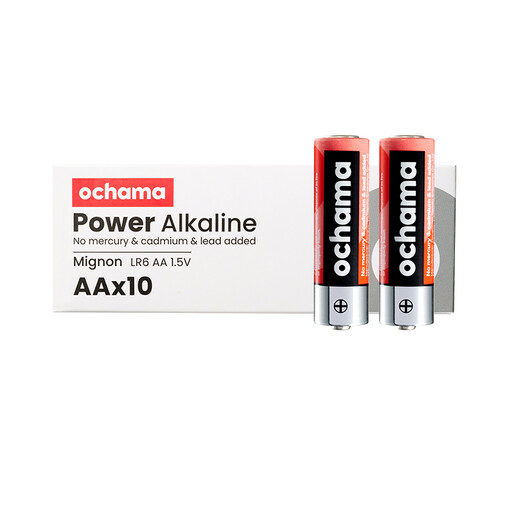
Why This Fits Their Persona: A straightforward 10-pack for households needing everyday power for remotes, digital scales, toys and other general-use electronics.
The alkaline format and clearly stated 10-piece quantity make it easier to compare everyday supply needs without paying for rechargeable equipment that may not be required.
10 alkaline AA batteries; mercury-free specification; suitable for several common household devices.
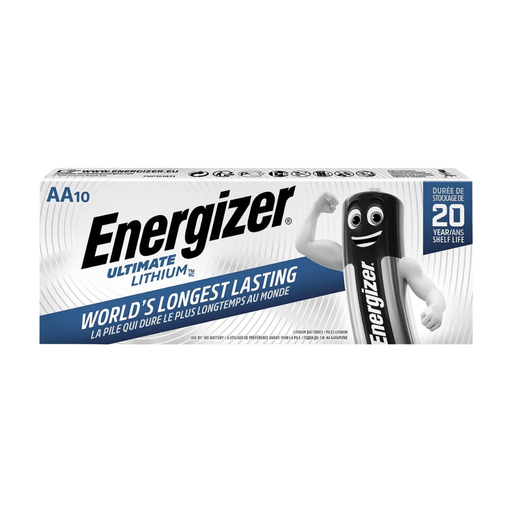
Why This Fits Their Persona: A suitable option for photographers, outdoor users and households storing batteries for emergency equipment or demanding devices.
The product listing identifies lithium chemistry, a 25-year storage life and leak-resistant construction, helping buyers distinguish it from standard alkaline AA batteries.
Pack of 10; approximately one-third lighter than alkaline batteries; specified operation from -40°C to 60°C.
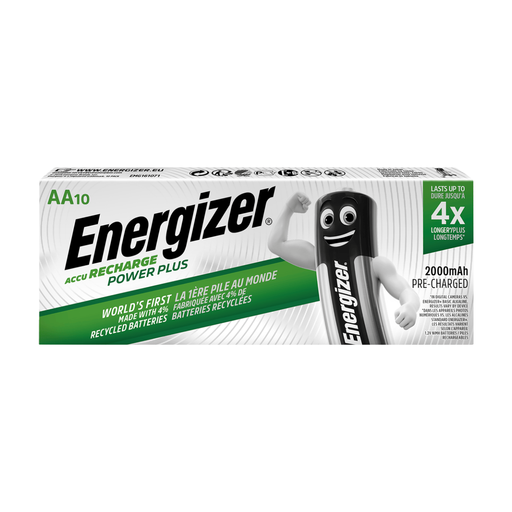
Why This Fits Their Persona: Designed for frequent users powering gaming controllers, cameras, portable audio, toys and other high-use electronics.
Rechargeable cells reduce dependence on repeated single-use purchases, while the 2000mAh rating gives a clearer indication of intended capacity than vague runtime wording.
2000mAh NiMH capacity; rechargeable for hundreds of cycles; pre-charged and ready for use.
We have compiled a complete, real-time list of products that fully satisfy these strict selection criteria and UK safety regulations.
Use batteries according to the device instructions and match the positive and negative terminals correctly. Do not recharge disposable alkaline or lithium batteries. Do not dismantle, heat, crush or burn batteries, and keep loose cells away from children.
Used batteries should not be placed in general household waste. In the UK, take them to a suitable battery collection point, many of which are available at supermarkets, recycling centres and electrical retailers. Rechargeable batteries should also be recycled through an appropriate collection scheme when they reach the end of their usable life.
They can be more economical for devices used regularly because the same cells can be recharged repeatedly. The calculation depends on the purchase price, charger cost, electricity use and recharge cycle life. For occasional-use devices, alkaline AA batteries may be simpler.
No. AAA batteries are physically smaller and normally have a different capacity. Use the size specified on the device or in its manual. AA and AAA batteries should not be forced into an incompatible compartment.
Keep them in their original packaging or a battery organiser in a cool, dry place at room temperature. Avoid storing loose batteries with keys or other metal objects, and remove cells from equipment that will not be used for a long period.