Households keeping a bedside torch ready
You want a charged AA set available when you need the torch, with a straightforward way to check charging status and handle a small number of cells.


Choose a charger specified for rechargeable AA NiMH batteries, then match its permitted cell count to the way you prepare spare batteries for your torch. Individual charging channels and clear status indicators are useful if you charge one or two cells at a time; a shorter stated charging time matters more if you often need to replenish a set promptly. Check that your torch accepts rechargeable AA cells, and never put disposable alkaline batteries in a NiMH charger.
You want a charged AA set available when you need the torch, with a straightforward way to check charging status and handle a small number of cells.
You replace rechargeable AAs often enough that the stated charging time, or having a spare set supplied with a charger, could affect your choice.
You want to charge the torch’s AA cells and AAA NiMH cells used elsewhere, potentially in different quantities rather than always as a pair.
Check your torch’s battery requirements and cell count before comparing charger features; a charging time is useful only if it applies to the cells you intend to use.
| Concern | What to check | Who this matters to |
|---|---|---|
| Keeping spare cells ready | Check for a charging-status indicator and whether the charger accepts the number of cells you normally prepare. IKEA specifies individual channels and status lights for STENKOL. | When I keep a torch by the bed, I want to tell whether my spare cells are charged rather than rely on a last-minute recharge. Around 45% of consumers would put readiness and simple status checks first. |
| Replenishing cells promptly | Compare stated charging times for the same cell size, number and battery type. Energizer’s Pro Charger specification covers two or four cells; Panasonic’s BQ-CC55 example concerns two AA eneloop cells. | If I use the torch regularly, I want to restore its spare set without a long wait. Roughly 33% of consumers would make quicker replenishment their primary concern. |
| Charging cells for other devices | Confirm AA and AAA NiMH compatibility, and check whether the charger accepts a single cell if your household needs that flexibility. Battery chemistry must match the charger’s instructions. | I also use AAA rechargeables elsewhere at home, so I want one charger that suits those cells as well as the torch’s AAs. Around 22% of consumers would prioritise that flexibility. |
A disposable alkaline AA is not interchangeable with a rechargeable NiMH AA. Energizer’s NiMH charger instructions warn that charging other battery types can cause leakage, rupture or explosion.
Read both the battery label and the charger instructions. Use rechargeable AA NiMH cells only in a charger specified for them; do not charge disposable AAs.
A charger specified for two or four cells may not suit a routine in which you recharge just one torch cell. IKEA specifies one-to-four-cell charging for STENKOL, while Energizer specifies two or four cells for its cited Pro Charger.
Count the cells your torch takes and check the exact charger’s permitted charging arrangements before buying.
A quoted time applies to a particular battery setup. Energizer says its Pro Charger’s four-hour time may vary by NiMH battery; Panasonic’s stated BQ-CC55 time also depends on temperature and battery condition.
Check which cells and quantities the time describes, and prepare your spare set before you expect to need it.
GOV.UK explains that UK battery collection and recycling arrangements are intended to keep waste batteries out of landfill and incineration.
Take exhausted portable batteries to a battery collection point or use a local battery-recycling route.
STENKOL is a straightforward option to examine if you charge different numbers of AA or AAA NiMH cells.
The cited Pro Charger suits a routine built around charging two or four AA or AAA NiMH cells, with an AA battery set supplied.
The BQ-CC55 is worth examining if independently charging a small number of eneloop cells is more important to you than buying a simple fixed-pair charger.
These chargers and kits are options to assess for preparing rechargeable AA cells for a bedside torch. Match the cell count and power connection to your routine, and check your torch’s battery instructions.
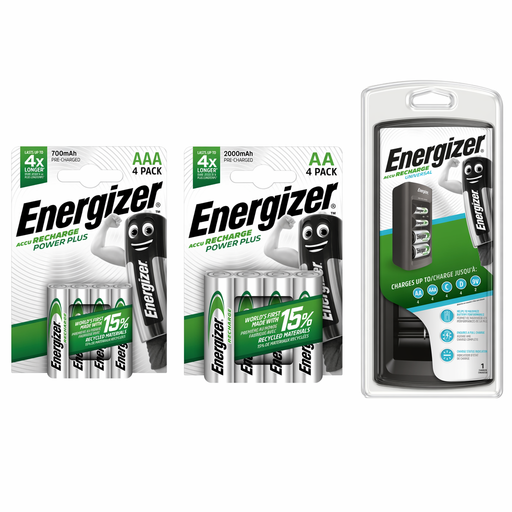 No image available
Consider this kit if you want a charger and rechargeable cells for a torch-ready AA set. Confirm the exact battery quantities in the bundle and whether its charging arrangements suit the number of cells you use.
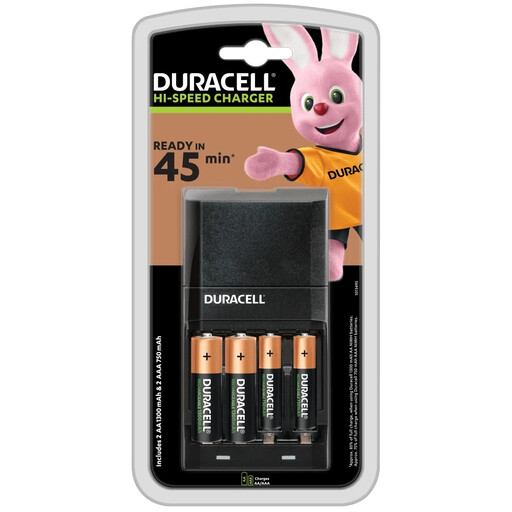 No image available
This kit is worth considering if you prepare a two-cell AA set and also use AAA batteries. Check the stated charging arrangement if you might need to charge one cell; do not take the model’s 45-minute wording as a promise of a full charge.
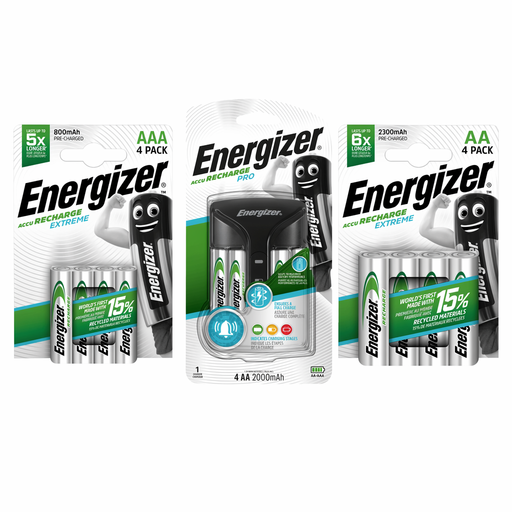 No image available
Consider this kit if you want to prepare rechargeable AA cells and may also use AAA cells. Check the precise bundle contents and the charger’s permitted cell counts before relying on it for your torch routine.
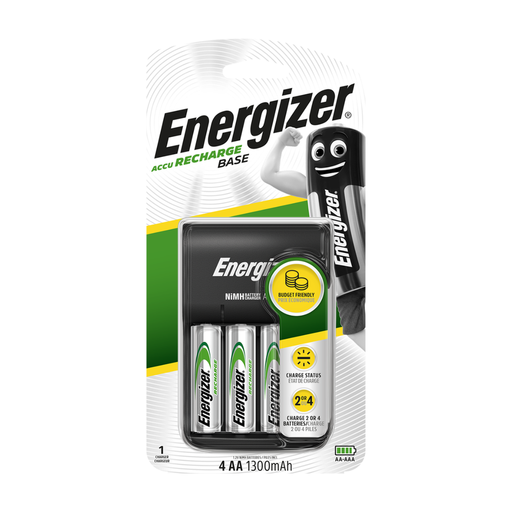 No image available
This USB-powered kit is an option if you have a suitable USB supply where you charge your spare torch cells. The title specifies four 1300 mAh AA rechargeable batteries; check whether you need a separate USB power adapter and whether the charger accepts your usual cell count.
 No image available
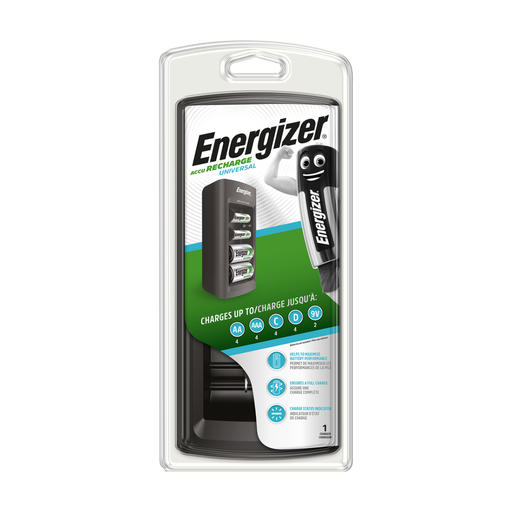
Consider this charger if you want to assess a household charger for your torch’s rechargeable AAs. Before choosing it, check the supported cell counts, whether cells charge independently and how it connects to power.
No, not in a charger specified for rechargeable NiMH cells. Energizer’s NiMH charger instructions warn that charging other battery types can cause leakage, rupture or explosion; check the label on each cell before charging it.
Yes, if the exact charger explicitly permits single-cell charging. IKEA specifies one-to-four-cell charging for STENKOL, and Panasonic specifies independent charging of one to four AA or AAA eneloop cells for the BQ-CC55; Energizer’s cited Pro Charger specification covers two or four cells.
Use it there only if the location and setup meet the particular charger’s instructions. Energizer’s cited instructions require a dry location; check the model manual for placement and power requirements rather than using the bed itself as a charging surface.
Take exhausted portable batteries to a battery collection point or a local recycling route. GOV.UK describes UK battery collection and recycling arrangements intended to keep waste batteries out of landfill and incineration.