Single-cell desk-clock owners
If your clock uses one AA battery, check whether a charger can charge that cell alone. Panasonic’s BQ-CC50 and BQ-CC55 specify individual charging, while Energizer’s UK Pro Charger specifies charging two or four cells.


Check the desk clock’s instructions before buying a charger: AA size alone does not establish whether the clock accepts rechargeable cells. If it accepts NiMH AA batteries and uses just one cell, a charger that explicitly charges one cell is the more practical choice; a two- or four-cell charger makes more sense if you also keep spares or charge batteries for other devices.
If your clock uses one AA battery, check whether a charger can charge that cell alone. Panasonic’s BQ-CC50 and BQ-CC55 specify individual charging, while Energizer’s UK Pro Charger specifies charging two or four cells.
Once your clock’s instructions permit rechargeable AA cells, look for a charger specified for the rechargeable battery chemistry you plan to use, such as NiMH. Duracell advises checking the device manual for compatibility.
If you also rotate AA or AAA cells through other devices, a charger designed for several cells may fit your routine. Energizer’s UK Base and Pro Charger specifications both describe two- or four-cell charging.
Choose when: The clock permits rechargeable cells and you want to charge its single AA without waiting for another cell.
Bear in mind: Confirm the sales-region plug version; Panasonic says plug configurations vary by region.
Choose when: You keep spare rechargeable cells or charge batteries for other devices as well as the clock.
Bear in mind: Energizer’s UK Base and Pro Chargers specify two- or four-cell charging, so neither is a one-cell charging route.
Choose when: The exact clock’s instructions specify alkaline batteries; hold off on a rechargeable setup if compatibility is unclear.
Bear in mind: This avoids assuming rechargeables will work, but does not provide a reusable NiMH setup.
| Concern | What to check | Who this matters to |
|---|---|---|
| Clock and battery compatibility | Read the exact clock’s battery instructions, then check that the charger specifies NiMH AA cells. | If my clock calls for alkaline batteries, an AA-sized rechargeable is not a reason to disregard its instructions. Around 50% of consumers would put clock and battery compatibility first. |
| Charging one AA | Check the minimum number of cells the charger accepts, rather than just its slot count. | With only one rechargeable AA in rotation, I need to prepare it without finding a second cell. Charging one cell would be the main concern for around 30% of consumers. |
| Spares and turnaround | Compare supported cell counts and the conditions attached to quoted charge times. | If I also charge batteries for other devices, keeping several cells ready may matter more than a one-cell routine. Around 20% of consumers would prioritise spares and turnaround. |
AA describes the battery size, not the clock’s permitted battery chemistry. Chelsea Clock’s quartz guidance, for example, says most of its clocks require an AA alkaline battery.
Check the battery compartment and instructions for your exact clock before choosing rechargeable cells.
A charger specified for two or four cells does not meet a routine that involves charging one AA by itself. Energizer’s UK Base and Pro Charger pages describe those two- or four-cell formats.
If you will not keep a spare cell in rotation, look for an explicit one-cell charging specification.
Duracell’s charger instructions warn that alkaline, zinc carbon, lithium and other unsupported batteries must not be charged because they may burst.
Use only rechargeable battery types expressly permitted by the charger’s instructions.
A quoted charge time applies to the stated charger and battery conditions; it does not establish whether you can charge your clock’s single AA.
Settle clock compatibility and minimum cell count before comparing charge times.
Panasonic’s BQ-CC50 and BQ-CC55 are individual-slot AA/AAA charger options for a clock confirmed to accept rechargeable cells.
Energizer’s UK Base and Pro Chargers are NiMH AA/AAA options for charging two or four cells at a time.
Duracell lists rechargeable AA cells and AA/AAA chargers, including an Expert Charger specified for one to four cells.
These chargers are relevant if your desk clock accepts rechargeable AA cells. The Energizer kits suit a routine with spare cells or other devices; check each model’s minimum charging load before relying on it for a single AA.
 No image available
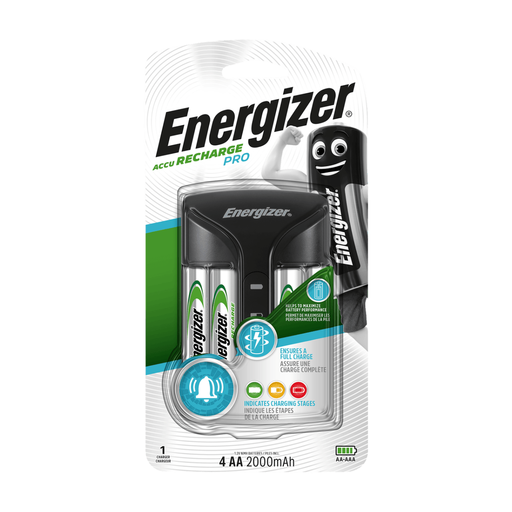
Consider this kit if the clock accepts rechargeables and you also keep spare AA cells or charge other devices.
The bundle names four rechargeable AA 2000mAh batteries. Energizer’s UK Pro Charger specification describes charging two or four AA/AAA NiMH cells, so it is not the option for charging one AA by itself.
 No image available
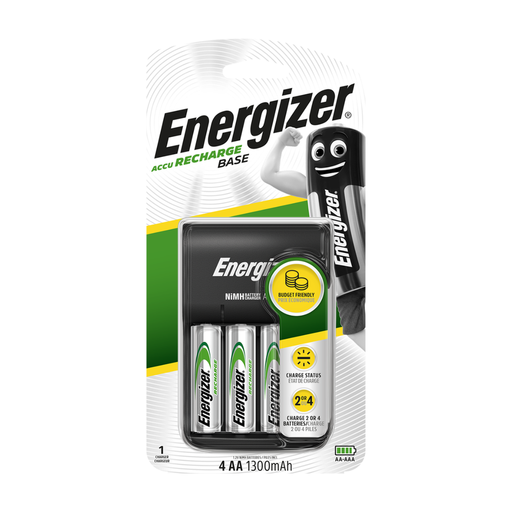
This kit is relevant if you plan to keep rechargeable AA spares and a USB-powered charger suits your setup.
The bundle names four rechargeable AA 1300mAh batteries. Its stated charging format is two or four cells, rather than one AA alone; check what USB power equipment is supplied.
 No image available
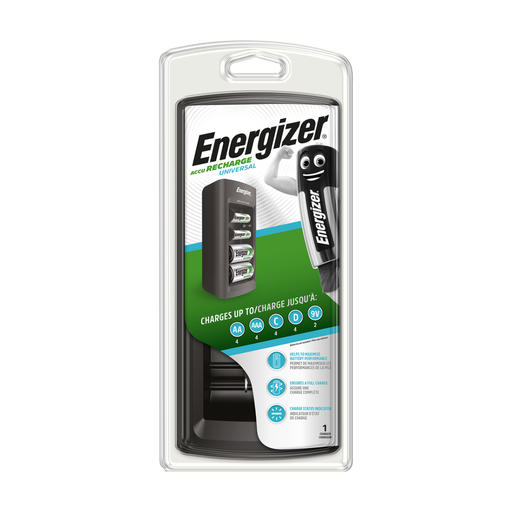
Consider this charger if you also prepare rechargeable batteries for other household devices.
Before using it for a one-AA clock routine, confirm whether the exact unit charges a single AA and which plug version it uses. Check the clock’s instructions for rechargeable-cell compatibility too.
No: AA size alone does not establish rechargeable-cell compatibility. Check your exact clock’s instructions; Duracell advises consulting the device manual, and Chelsea Clock’s quartz guidance specifies alkaline AA batteries for most of its clocks.
Do not put an ordinary alkaline battery in a charger intended for NiMH rechargeables. Duracell’s charger instructions also warn against charging zinc carbon, lithium or other unsupported batteries because they may burst.
A one-cell charger is useful if your compatible desk clock uses one rechargeable AA and you do not keep another cell to charge alongside it. Panasonic specifies individual charging for the BQ-CC50 and BQ-CC55; Energizer’s UK Base and Pro Chargers specify two- or four-cell charging instead.
Follow the instructions for the exact charger and charge only the rechargeable battery types it permits. Check battery polarity and do not use damaged charging equipment.
Use a battery collection point rather than putting spent AA batteries in household rubbish. GOV.UK says collection points are available at local supermarkets and other large shops that sell batteries; rechargeable batteries can be collected too.