Planning a controller set before departure
You want charged AA cells and spares ready to pack. Individual charging channels and clear status indicators help when cells do not all need the same attention.


For a controller that takes removable AA batteries, choose an NiMH charger with four independent slots if you want to prepare a set and spares before travelling. A rapid charger is more relevant when turnaround time is tight, but its stated speed depends on the cells used; a USB-input model makes sense only if you can supply suitable USB power at the cottage.
You want charged AA cells and spares ready to pack. Individual charging channels and clear status indicators help when cells do not all need the same attention.
You might discover low batteries just before leaving or between games. Check a rapid charger's timing against the particular rechargeable cells you intend to use.
You would rather use an available USB power source than pack another dedicated mains appliance. Confirm the charger's input requirements and allow for its stated charging time.
Check that the controller accepts removable AA cells and that the charger supports rechargeable AA NiMH batteries. Then decide whether preparing spares, charging quickly or using your available power source matters most.
| Concern | What to check | Who this matters to |
|---|---|---|
| Preparing a set and spares | Look for four independent AA charging channels and status indicators that help identify a problem cell. | I want the controller batteries and spares ready before the trip, even if the cells start at different charge levels; around 40% of consumers put complete-set preparation first. |
| Short-notice charging | Match the stated charge time to the battery model, capacity and charge level used for that claim. | If the cells run low between games, waiting for them could interrupt the session; roughly 30% of consumers prioritise a quick turnaround. |
| Power at the cottage | Check whether the charger needs USB power or a mains socket, and which cable or adaptor is supplied. | I need a charger that works with the power setup I can take and use there; about 30% of consumers put travel-power flexibility first. |
The NiMH chargers discussed here are intended for compatible rechargeable cells, not ordinary disposable AA batteries. Panasonic says its BQ-CC55 detects a dry battery and stops power to that slot; that feature is not permission to try charging one.
Keep disposable and rechargeable cells separate, and follow the charger's instructions for supported battery chemistry and size.
GP's Charge10 figure of 10 minutes to 90% applies to its 1,700 mAh Charge10 AA cells. Its stated time for 2,600 mAh ReCyko AA cells is approximately 35 minutes, so the shorter figure should not be applied to every set.
Check the cells and charge level behind a timing claim. If they do not match yours, charge before travelling rather than relying on the headline time.
Four physical bays do not, by themselves, establish whether a charger can handle one or three cells or manage each slot separately.
Look for explicit support for individual channels and the number of cells you expect to charge at once.
A USB-input charger still needs a compatible power source. USB input also says nothing on its own about charging speed.
Check the required input and supplied cable or adaptor against what you can use at the cottage.
Its range includes AA/AAA NiMH chargers with different power inputs, including the mains-powered BQ-CC55 and USB-input BQ-CC80.
The relevant models span everyday USB charging and the mains-powered Charge10, serving different packing and turnaround needs.
Duracell offers rechargeable AA cells and several AA/AAA charger variants, including Value and Expert Hi-Speed models.
These AA rechargeable-battery kits cover advance preparation, shorter-notice charging and USB-powered travel. Check each controller's AA compatibility and each kit's capacity and power requirements before choosing.
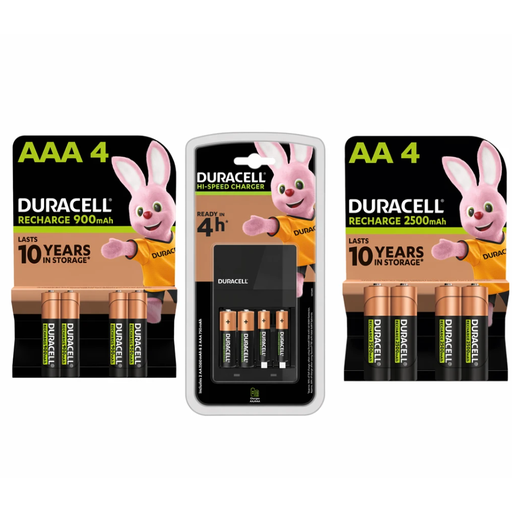 No image available
The included AA set is relevant if you want to prepare controller batteries and spares before departure.
The title lists four rechargeable AA and four rechargeable AAA batteries. Check the charging time for the supplied AA cells if your schedule depends on it.
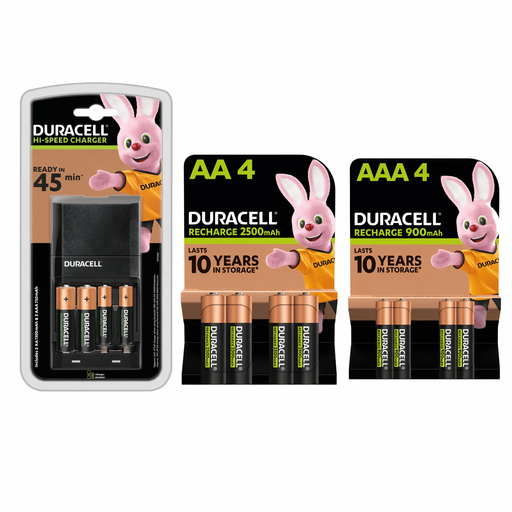 No image available
Consider this kit if a shorter two-cell turnaround matters more than charging a full set of spares at once.
Confirm which AA cells are supplied and the conditions behind the stated 45-minute time. Check that its two-cell charging capacity fits your plans.
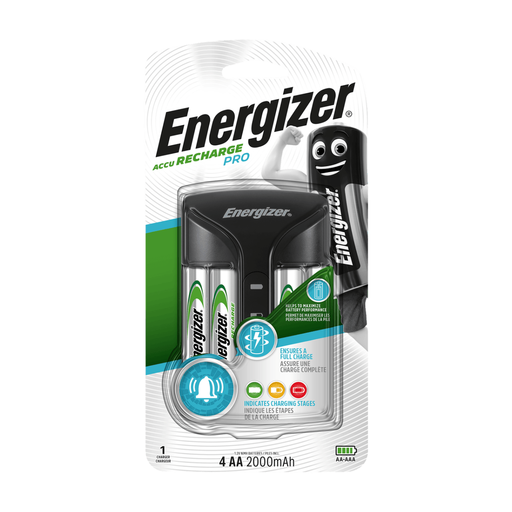 No image available
The four included rechargeable AA cells suit preparing a set and spares before the trip.
If you plan to charge an uneven number of cells or want to track them separately, confirm independent-channel and per-cell status support before buying.
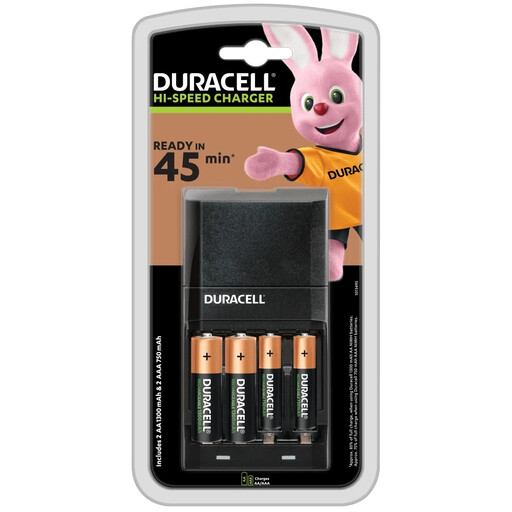 No image available
The two included AA cells may cover one controller that uses two removable AAs; you would need more cells to pack a spare pair.
The listed 45-minute result concerns approximately 85% charge for two AA cells, not a stated full charge. Confirm the supplied plug format for use at the cottage.
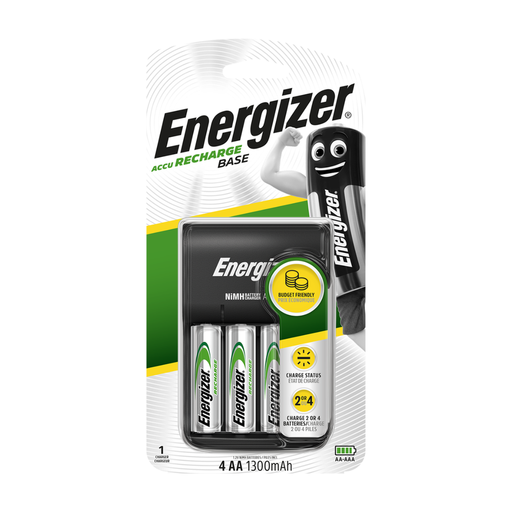 No image available
This USB-input kit may fit a travel setup with a compatible USB power source, while its four AA cells let you prepare batteries before leaving.
Check the charging time if you expect to recharge during a short stay, and confirm whether you need to bring a cable or adaptor.
No: this advice applies to controllers designed for removable AA cells. Check your controller's manual or battery compartment before choosing batteries and a charger.
No; use only rechargeable batteries of a size and chemistry supported by the charger's instructions. Do not rely on a charger's fault detection to make disposable cells suitable for charging.
No. Greater Manchester Fire and Rescue Service advises against leaving a charging battery unattended or charging it when you go to bed. Follow the instructions for your charger and batteries.
Take them to a suitable battery collection point rather than putting them in household rubbish. The Office for Product Safety and Standards includes both AA and rechargeable batteries in its battery-recycling guidance.