Lantern owners replacing AA cells
If your lantern takes removable AA cells, check its instructions before switching to rechargeable NiMH batteries. The charger must accept those cells too; an AA slot alone does not establish chemistry compatibility.


Check the lantern’s instructions before choosing a charger: it must use replaceable AA cells and permit rechargeable NiMH batteries. Then choose a charger rated for AA NiMH cells and enough cells for the lantern; prioritise a shorter stated charging time only if you need the batteries ready soon, or a multi-size charger if you also recharge other household battery sizes.
If your lantern takes removable AA cells, check its instructions before switching to rechargeable NiMH batteries. The charger must accept those cells too; an AA slot alone does not establish chemistry compatibility.
If you need the lantern ready soon, compare charging times for the battery capacity and number of AA cells you will use. The stated time may depend on the charger’s power input.
If you also recharge AAA, C, D or 9V cells, a multi-size NiMH charger may cover those needs. Check its supported sizes and AA charging arrangement rather than assuming every universal model works alike.
Start with lantern and battery compatibility, then the number of cells you need ready. Charging time and countertop features matter once those basics are settled.
| Concern | What to check | Who this matters to |
|---|---|---|
| Lantern and battery compatibility | Check that the lantern permits rechargeable AA NiMH cells and that the charger explicitly accepts AA NiMH batteries. | If my lantern takes AA cells, I need to confirm that both the lantern and charger permit NiMH before charging them; around 40% of consumers put compatibility first. |
| Time until enough cells are ready | Compare the stated time for your number of AA cells and their mAh capacity; check the required USB or mains input. | When I need the lantern soon, I care about having its full set of cells ready, not just a fast headline figure; roughly 30% of consumers prioritise turnaround. |
| Countertop use and versatility | Check the slot count, status indicators and dry indoor-use instructions; consider extra battery sizes only if you use them. | If the charger sits on my kitchen counter or serves other household batteries, I want a setup I can monitor and a size range I will use; around 30% of consumers put convenience and versatility first. |
AA describes a size, not a rechargeable chemistry. Energizer’s NiMH charger instructions warn that charging other battery types can cause leakage, rupture or explosion.
Read the cell label and the exact charger instructions before inserting batteries. Do not put a single-use cell in a NiMH charger merely because it fits.
A stated time applies under particular battery and charging conditions. For example, GP Batteries specifies 2.6 hours for four 2,100mAh AA cells with its ReCyko P461; that does not establish the time for other cells or chargers.
Compare the stated battery capacity, number of cells and power input, and check whether the figure means a full or partial charge.
Extra battery-size support is useful only if you need it. GP Batteries lists a four-to-eight-hour AA charging range for its multi-size ReCyko B631, depending on AA cell capacity.
If you mainly prepare AA cells for one lantern, compare its counter space, indicators and AA charging arrangement with those of an AA/AAA model.
UK government recycling guidance directs consumers to battery collection points for most waste batteries rather than household rubbish.
Take spent portable AA batteries to an appropriate supermarket, eligible large retailer or local recycling facility.
Its UK range includes AA/AAA NiMH chargers and a Universal Charger for additional NiMH sizes.
The UK-listed ReCyko range includes USB AA/AAA chargers and multi-size models.
Its AA/AAA NiMH charger line includes the BQ-CC55, which controls charging by individual slot.
Its range includes chargers for households needing more AA/AAA slots or battery-maintenance functions.
These chargers offer AA-focused kits, a USB-powered option and a universal model. Check the lantern’s NiMH compatibility and required cell count before choosing among them.
 No image available
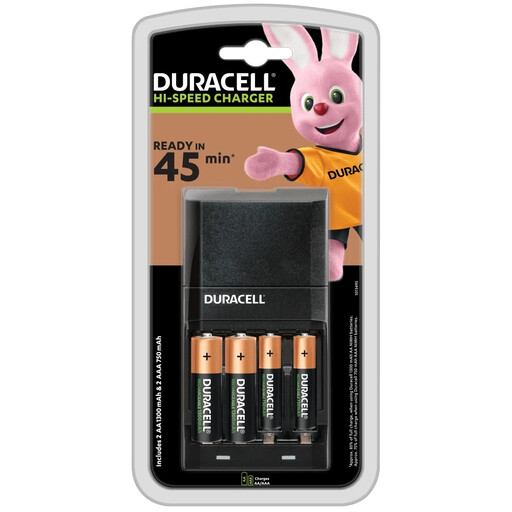
For a lantern that permits rechargeable AA cells, this kit lists two AA and two AAA batteries. Check whether its 45-minute figure refers to a partial charge, and confirm how many AA cells the charger handles at once.
 No image available
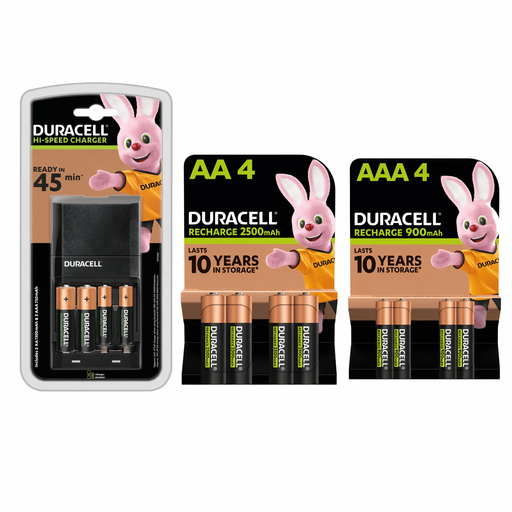
Consider this kit if you want a charger offered with AA and AAA batteries. Confirm the exact batteries in the package and what the 45-minute figure measures before relying on it for lantern preparation.
 No image available
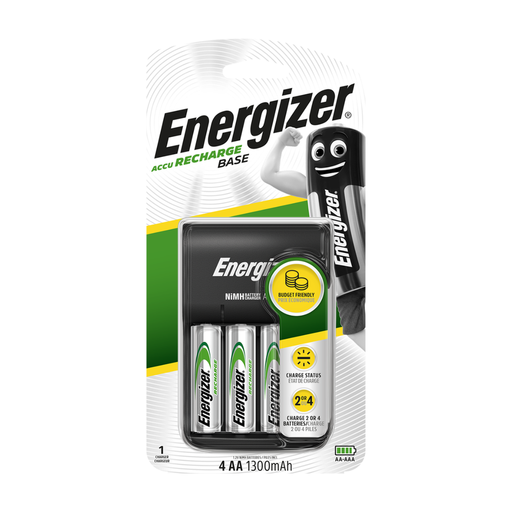
The four included AA batteries may suit a lantern that requires four compatible rechargeable cells. Check the lantern’s battery requirements, the charger’s power-adapter arrangement and its stated charging time.
 No image available
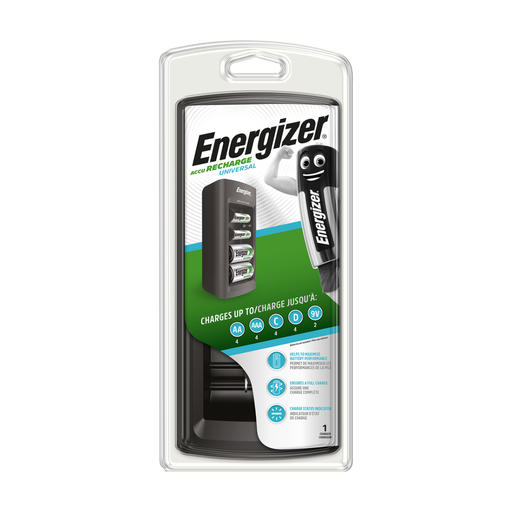
A universal charger is worth considering if you also recharge household battery sizes beyond AA. Check the exact supported cells, UK power arrangement and indicator version, as well as the lantern’s AA battery requirements.
No. AA identifies the battery’s size, not whether it can be recharged. Use only the sizes and rechargeable chemistry specified in the charger’s instructions; Energizer’s NiMH charger instructions warn that other battery types can leak, rupture or explode during charging.
A dry, stable counter may be suitable if it meets the exact charger’s instructions. Energizer’s charger instructions specify indoor use away from excessive moisture, so keep the charger clear of sinks, splashes and wet cleaning areas.
Choose one if a shorter wait matters for the number of cells your lantern needs. GP Batteries states 2.6 hours for four 2,100mAh AA cells with its P461, while Energizer states four hours for two or four AA/AAA NiMH cells with its Recharge Pro; compare each figure with its stated battery and input conditions rather than treating either as a time for every cell.
Use a suitable battery collection point rather than household rubbish. UK government guidance says most waste batteries can be taken to a local supermarket or another large shop that sells more than 32 kg of batteries a year; local recycling facilities are another option.