One-lantern routine users
If you prepare a complete set of rechargeable AA cells before using the lantern, a charger that takes two or four cells may fit your routine. Energizer UK specifies this charging arrangement for its Recharge Pro.


Check whether the lantern takes removable AA cells and permits rechargeable NiMH batteries before choosing a charger. A charger that handles two or four cells suits preparing complete sets in advance; independently controlled slots are more useful for single-cell top-ups, while an eight-slot model makes sense mainly if you maintain several sets. Whichever format you choose, charge only cell types supported by the charger.
If you prepare a complete set of rechargeable AA cells before using the lantern, a charger that takes two or four cells may fit your routine. Energizer UK specifies this charging arrangement for its Recharge Pro.
If you sometimes need to charge just one cell or an incomplete set, independently controlled slots offer more flexibility. Panasonic specifies individual charging for one to four compatible AA or AAA eneloop cells in its BQ-CC55.
If the lantern is one of several devices for which you maintain rechargeable cells, a larger batch charger may be useful. ANSMANN specifies individual monitoring for one to eight supported AA or AAA cells in its Powerline 8.
Start with the lantern’s instructions and the labels on its cells. If rechargeable NiMH AA cells are suitable, choose the slot arrangement for the way you will prepare them, rather than choosing by a charging-time claim alone.
| Concern | What to check | Who this matters to |
|---|---|---|
| Preparing one complete set | Check how many AA cells the lantern takes and whether charging in pairs or groups of four fits that number. | I want the lantern’s whole set ready before I need it, without charging spare cells unnecessarily. Around 40% of consumers put straightforward set preparation first. |
| Single-cell top-ups | Look for independently controlled slots if you need to charge one cell or an incomplete set; treat stated charging times as conditional. | When only part of my set needs attention, I do not want to wait for another cell to charge alongside it. Roughly 30% of consumers prioritise flexible or time-sensitive top-ups. |
| Several rechargeable sets | Consider the supported cell count and per-cell monitoring if you regularly charge cells for other devices too. | If I maintain several sets, I would rather manage a larger batch than repeat smaller charging sessions. About 30% of consumers place multi-set capacity and monitoring first. |
AA describes a cell’s size, not its chemistry. Energizer’s NiMH charger instructions warn that charging other battery types may cause leakage, rupture or explosion.
Check the lantern instructions and each cell label. Put only rechargeable cells of a chemistry supported by the charger into it.
A charger specified for two or four cells does not offer the same slot flexibility as one designed to charge cells individually.
Count the lantern’s cells and decide whether you will always charge complete sets. If not, look for independent-slot charging.
Energizer UK says its Recharge Pro timing varies by NiMH battery; Panasonic also notes that battery condition and temperature affect its BQ-CC55 charging time.
Prepare cells ahead of a planned use and follow the charger’s status indication rather than relying only on a clock.
UK guidance from the Office for Product Safety and Standards says the crossed-out wheeled-bin symbol means batteries should not go in household rubbish.
Keep spent cells for an appropriate battery collection point instead.
Energizer UK lists AA and AAA NiMH chargers for both paired-set preparation and more flexible charging.
Panasonic’s BQ-CC55 is a charger to consider when individual control of compatible rechargeable cells matters.
ANSMANN’s Powerline 8 addresses larger rechargeable-cell routines rather than just one lantern set.
These chargers relate to preparing rechargeable AA cells for a lantern: some are suited to charging sets ahead of use, while the starter kit is worth considering when incomplete-set top-ups matter. Check the lantern’s cell requirements before choosing a bundle.
 No image available
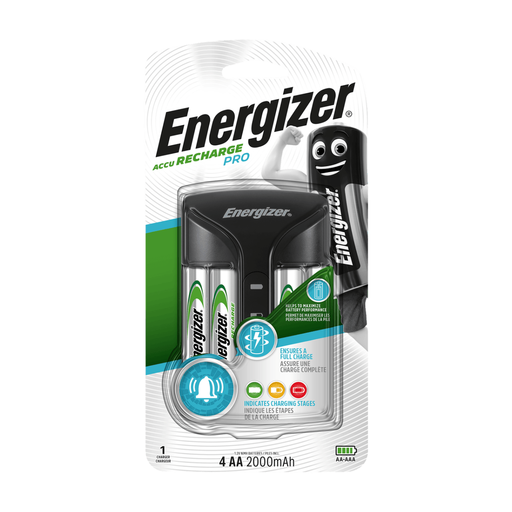
Consider this bundle if you plan to prepare a complete rechargeable AA set ahead of using the lantern.
The bundle names four AA 2000mAh rechargeable batteries. Confirm that the lantern permits NiMH cells and check how many it requires.
 No image available
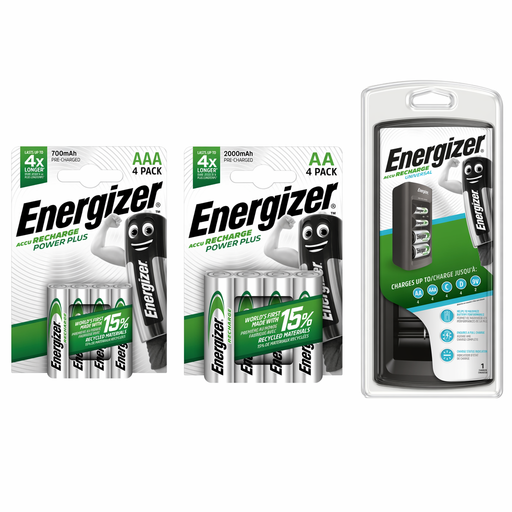
Consider the universal-charger kit if you expect to top up an incomplete set as well as prepare cells for the lantern.
The bundle names both AA and AAA batteries. Confirm its cell quantities and that the lantern accepts rechargeable NiMH AA cells before ordering.
 No image available
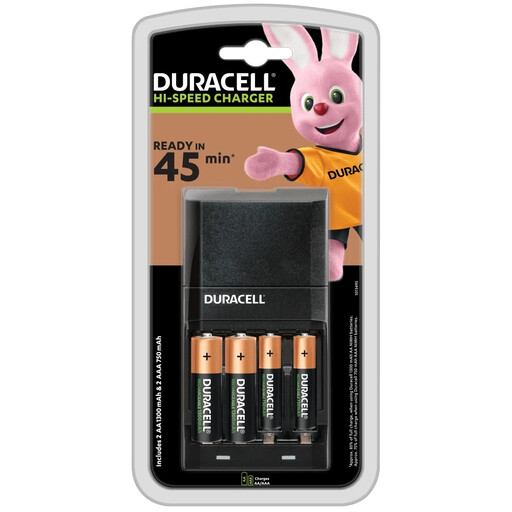
This bundle is worth considering if you prepare cells in pairs rather than topping up one at a time.
It names two AA and two AAA batteries. The 45 Minute wording is part of the model name, not a promise that every cell will be fully charged in that time; check the lantern’s required cell count.
 No image available
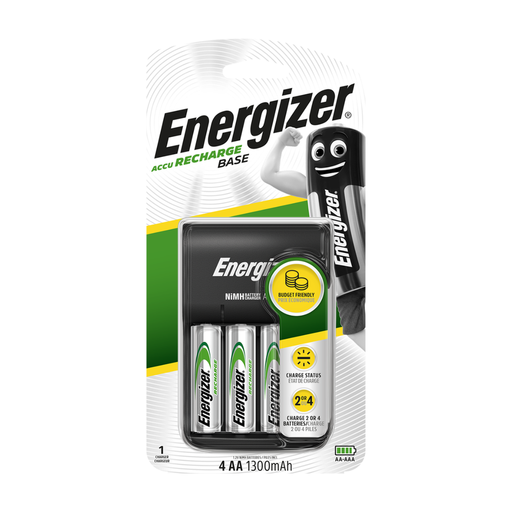
Consider this bundle for preparing a rechargeable AA set where you have a suitable USB power source.
It names four AA 1300mAh rechargeable batteries. Check the lantern’s instructions for rechargeable-cell compatibility before choosing it.
No. A NiMH charger is for supported rechargeable NiMH cells, not disposable AA batteries. Energizer’s instructions warn that charging other battery types may cause leakage, rupture or explosion, so check the label on every cell.
Not if you can prepare its complete rechargeable-cell set using the charger’s supported slot arrangement. Individual control becomes useful when you need to charge a single cell or an incomplete set; Panasonic specifies this arrangement for compatible cells in its BQ-CC55.
Charge them ahead of a planned use rather than counting on a fixed turnaround time. Energizer UK says its Recharge Pro’s stated four-hour time varies by NiMH battery; follow the status indication and the instructions for the charger you choose.
Batteries bearing the crossed-out wheeled-bin symbol should not go in household rubbish, according to UK guidance from the Office for Product Safety and Standards. Take spent cells to an appropriate battery collection point.