Radio users short of plug sockets
If another powered USB source is available, a USB-input charger can let you prepare rechargeable AA cells without occupying a wall socket. GP Batteries documents USB charging for its ReCyko Speed Charger.


For rechargeable AA batteries used in a radio, choose a USB-powered charger if you have a suitable powered USB source that does not take up a scarce wall socket. If a socket is available for charging, a mains charger may suit you better if you need to charge individual cells or plan a four-cell session; check the conditions behind any quoted charging time.
If another powered USB source is available, a USB-input charger can let you prepare rechargeable AA cells without occupying a wall socket. GP Batteries documents USB charging for its ReCyko Speed Charger.
If you sometimes need to charge just one cell rather than a full set, individual-cell charging is worth considering. Panasonic says its eneloop BQ-CC55 charges one to four compatible AA or AAA cells in any combination.
If you charge a full set ahead of radio use, compare charging times under the conditions stated. Duracell says its CEF14 charges four 1300 mAh AA NiMH cells to approximately 90% in four hours.
Start with the power source you can actually use, then decide whether flexible top-ups or preparing a full AA set matters more.
| Concern | What to check | Who this matters to |
|---|---|---|
| Keeping a socket free | Check the charger’s USB input and identify a suitable powered USB source; a USB mains adaptor still uses a socket. | I need to charge radio batteries without unplugging something else, and I have another USB power source available. Around 42% of consumers would put keeping a wall socket free first. |
| Charging only the cells needed | Check whether the exact charger accepts one cell or an odd number of compatible AA cells; four slots alone do not establish this. | When only one or a few cells need charging, I do not want to wait for a full set. For around 33% of consumers, flexible individual-cell charging would be the primary need. |
| Planning a full-set charge | Compare stated times using the number and capacity of cells, and check whether the result means a full or partial charge. | I prepare a complete AA set before I need the radio, so a charging time with clear conditions helps me plan. Having that timetable would come first for around 25% of consumers. |
AA describes the cell size, not whether it is rechargeable. Panasonic identifies a dry battery as an error condition for its BQ-CC55.
Check both labels before charging: the researched charger routes call for compatible rechargeable NiMH cells, not ordinary single-use AA batteries.
GP Batteries documents a USB connection for its ReCyko Speed Charger, but a USB wall adaptor would still occupy a socket.
Identify the powered USB port or power bank you would use, then confirm that it meets the exact charger’s input requirement.
A time stated for two cells or a particular battery capacity may not describe a four-cell session. Duracell’s four-hour CEF14 figure, for example, refers to four 1300 mAh AA NiMH cells reaching approximately 90% charge.
Compare cell count, capacity and the stated charge level before relying on a time to plan radio use.
A reference point for USB-powered AA and AAA NiMH charging when a suitable USB supply is available.
Relevant when charging one to four compatible cells independently matters more than avoiding a mains outlet.
Relevant to a planned four-cell charging session when a mains socket is available.
Relevant to buyers considering a plug-in AA or AAA NiMH charger kit.
These choices include a USB-input charger for use with a suitable USB supply and a UK mains charger for sessions when a socket is free. Check the Universal Charger’s power input before choosing it for a limited-socket setup.
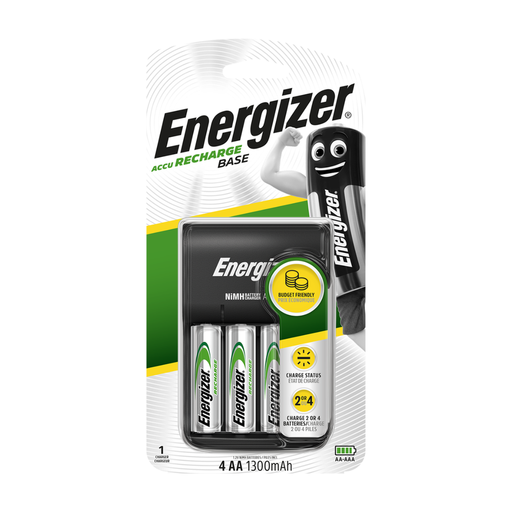 Image unavailable
Consider this USB-input option if you can charge from a suitable powered USB source instead of a wall socket.
The named bundle contains four rechargeable AA 1300 mAh batteries. Check the charger’s input requirements and which USB accessories are supplied.
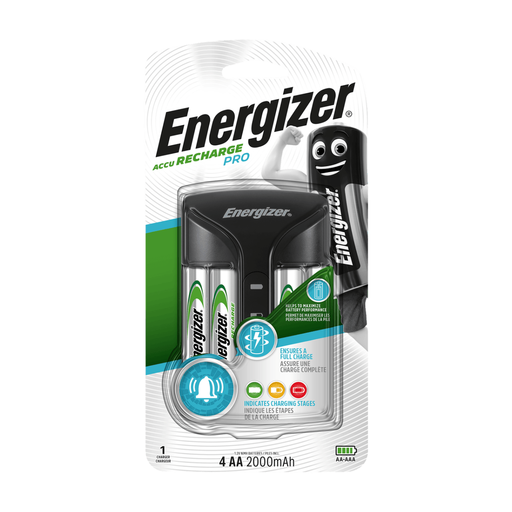 Image unavailable
Consider this charger for a planned AA charging session when you can spare a mains socket.
The named bundle contains four rechargeable AA 2000 mAh batteries. Energizer UK says the Pro Charger handles two or four AA or AAA NiMH cells; its stated charging time may vary by battery.
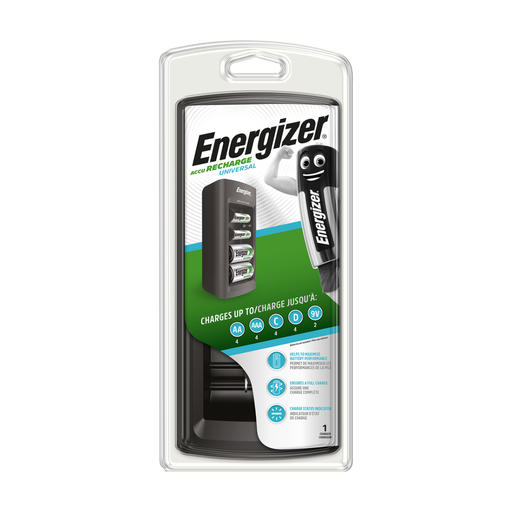 Image unavailable
If you want to prepare several rechargeable AA cells together, check this model’s supported cells and charging format against the set your radio uses.
Confirm whether it draws power from USB or a mains outlet before choosing it to preserve a wall socket. Check the supplied accessories and the conditions behind any charging-time claim.
No: use rechargeable cells of the size and chemistry specified for your exact charger. Panasonic and Energizer describe the charger routes discussed here for NiMH cells, and Panasonic identifies a dry battery as an error condition.
Only if you power it from a suitable USB source that does not itself occupy a wall socket. A USB mains adaptor still uses one; check the charger’s input requirement before relying on a powered port or power bank.
The stated result depends on factors including cell count, capacity and the charge level being measured. Duracell’s four-hour CEF14 claim concerns four 1300 mAh AA NiMH cells reaching approximately 90%, while Panasonic says its BQ-CC55 times vary with temperature and battery condition.
Take them to suitable battery and electrical-waste collection services rather than putting them in household rubbish. GOV.UK advises using appropriate collection points for these products; check local collection arrangements for the batteries and charger separately.