Single-cell timer owners
If your timer takes one AA cell, an individually controlled charger lets you recharge that cell without finding a partner. Panasonic states that its BQ-CC51 needs pairs, whereas the BQ-CC55 accepts a single cell.


Check the timer’s instructions before buying: rechargeable AA NiMH cells are an option only if the timer permits them. A paired-slot charger can suit occasional use if you charge matching pairs, but a timer that takes one cell, or spares used unevenly, calls for documented individual-cell charging. Faster charging and diagnostic features are more relevant if the charger will serve other devices too.
If your timer takes one AA cell, an individually controlled charger lets you recharge that cell without finding a partner. Panasonic states that its BQ-CC51 needs pairs, whereas the BQ-CC55 accepts a single cell.
If you can charge matching pairs before you need them, a paired-slot model may cover your routine. Panasonic’s BQ-CC51 is one example, provided your timer accepts rechargeable NiMH cells.
If you manage AA or AAA cells across several devices, individual charging and per-cell information may matter more than they do for a timer alone. Panasonic and GP Batteries describe these features on particular models; check which functions the model you choose provides.
Start with the timer’s approved battery type and number of cells; then decide whether you need to charge a single cell or can prepare pairs.
| Concern | What to check | Who this matters to |
|---|---|---|
| Timer and cell compatibility | Read the timer’s battery instructions for cell size, number, chemistry and voltage. Choose a charger specified for the rechargeable cells you intend to use. | When a timer specifies a battery type, I want to avoid buying rechargeables it cannot use; around 45% of consumers put timer and cell compatibility first. |
| Single-cell charging | Look for explicit individual charge control, not just a slot count. Panasonic says its BQ-CC51 requires pairs, while the BQ-CC55 can charge one cell. | If my timer runs on one AA, I want to recharge a spare without pairing it with another cell; roughly 33% of consumers prioritise single-cell flexibility. |
| Charging time and feedback | Compare stated charging conditions for the cells you will use, and confirm the required mains connection or USB supply. Check whether the model shows status for each cell. | When I share a charger across devices, I want manageable charging time and useful cell-status information; about 22% of consumers chiefly seek speed or feedback. |
AA describes a cell’s size, not whether the timer accepts rechargeable NiMH cells. A charger cannot make an unsuitable battery appropriate for the timer.
Check the timer manual or battery-compartment instructions before choosing cells and a charger. The Energizer NiMH charger manual warns against charging disposable batteries or other unsupported types.
A charger with several slots may still require cells in pairs. Panasonic says the BQ-CC51 cannot charge one battery, while its BQ-CC55 supports individual charging.
If you need to recharge one timer cell or unevenly used spares, confirm that the exact model explicitly supports single-cell charging.
A 2022 GOV.UK product safety report identified serious electric-shock and fire risks from unsafe plug construction in a particular four-slot charger. Cell size alone also does not establish that a charger supports a battery’s chemistry.
Follow the charger’s battery instructions, check the connection and applicable safety marking for the exact product, and avoid a model subject to a safety alert or recall.
Used batteries need an appropriate collection route rather than ordinary household disposal.
Take them to a battery collection point, such as an eligible supermarket or battery-selling shop, as described by GOV.UK.
Panasonic describes AA/AAA NiMH chargers ranging from paired-cell models to individual-control and diagnostic models.
GP Batteries lists AA/AAA rechargeable bundles and USB chargers, including the B441 starter set and P461 charger.
Energizer’s examined CHVC2 instructions cover charging rechargeable AA/AAA NiMH cells.
These Energizer chargers are choices to consider if your kitchen timer permits rechargeable AA NiMH cells. The USB bundle includes AA cells for preparing spares; check charging arrangements and power requirements against your routine before choosing either model.
 No image available
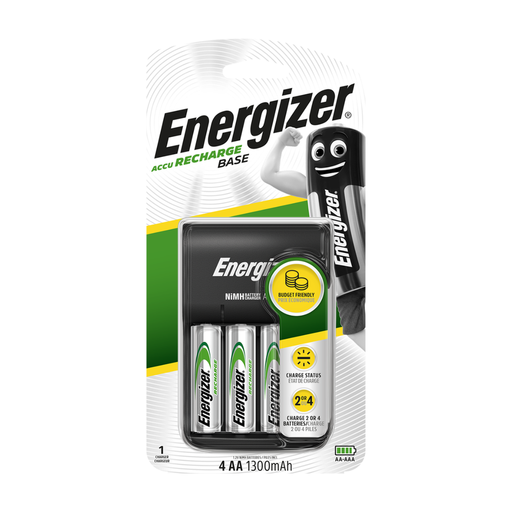
Consider this bundle if your timer accepts rechargeable AA NiMH cells and you prepare spare cells in pairs. It includes four 1300mAh rechargeable AA batteries. The described charging arrangement uses two or four cells, not one on its own; confirm the USB supply you will need.
 No image available
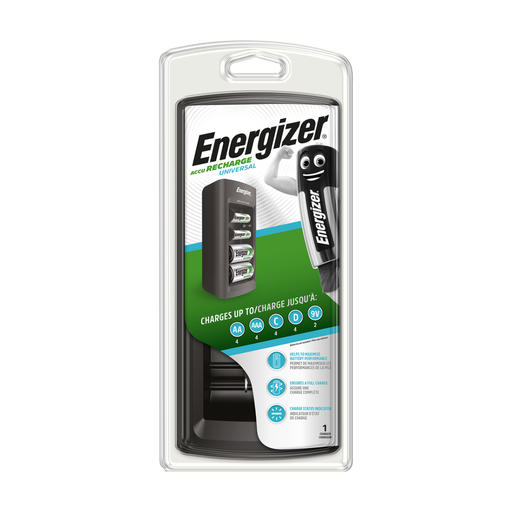
Consider this model if you want to assess one charger for the timer and other household cells. If single-cell charging matters, confirm its supported charging combinations; also check the exact power connection before buying. Use rechargeable AA NiMH cells for the timer only if its instructions permit them.
No: do not put disposable AA batteries in a charger intended for rechargeable NiMH cells. Energizer’s CHVC2 manual warns that charging unsupported rechargeable or disposable batteries may cause leakage, rupture or explosion; follow the instructions for your exact charger and cells.
No, AA size alone does not establish that a timer accepts rechargeable NiMH cells. Check its manual and battery compartment for the required chemistry and voltage; if it specifies disposable 1.5 V cells or rules out rechargeables, do not assume 1.2 V NiMH cells are suitable.
For products covered by the relevant regulations, Department for Business and Trade guidance dated 21 August 2026 says Great Britain continues to recognise CE marking alongside or in place of UKCA marking. That guidance concerns England, Scotland and Wales; check the applicable route and product documentation separately for delivery to Northern Ireland.
Use a charger intended for the cells’ rechargeable chemistry and follow its instructions. Greater Manchester Fire and Rescue Service advises buying replacement batteries and chargers from reputable sellers and checking for a UKCA or CE safety mark; also check that the exact model’s power connection suits your setup.
Take worn-out AA cells to an appropriate battery collection point rather than putting them in household rubbish. GOV.UK identifies many supermarkets and larger battery-selling shops as collection options.