Single-clock households
You want to keep a small set of rechargeable AA cells ready for one wall clock, without choosing a charger sized for several devices.


For one wall clock, a compact charger is a proportionate choice if the clock accepts the rechargeable AA cells you intend to use and the charger supports their chemistry. Individual cell control is worth considering if you will charge one cell at a time or use AA and AAA cells elsewhere; a larger charger makes more sense when several devices create regular charging batches.
You want to keep a small set of rechargeable AA cells ready for one wall clock, without choosing a charger sized for several devices.
You may need to charge one cell at a time or use AA and AAA rechargeables elsewhere. Individual charging control and a status indicator for each slot would help you manage that routine.
You regularly recharge cells for other household devices as well as the clock, so the number of cells a charger accepts at once matters more.
Check the clock’s guidance on rechargeable cells and match the charger to the cells’ chemistry before deciding how many charging slots or status features you need.
| Concern | What to check | Who this matters to |
|---|---|---|
| Keeping a spare set ready | Check support for your rechargeable AA cells and how many cells the charger accepts at once. | When I am preparing cells for one wall clock, I want a compact charger that suits a small spare set; around 60% of consumers put straightforward clock readiness first. |
| Charging one cell flexibly | Look for explicit individual-cell control and the supported combinations of AA and AAA cells. | If I may charge one cell or use AAA cells in another device, I need those arrangements to be supported; roughly 20% of consumers prioritise single-cell flexibility. |
| Charging more cells together | Compare slot capacity, supported cell sizes and chemistry; check the exact model’s power arrangement. | With several household devices using rechargeables, I want to replenish more cells in one session; about 20% of consumers make charging capacity their primary concern. |
AA describes a cell’s size, not its chemistry. Energizer’s Compact Charger instructions warn that charging battery types other than supported NiMH rechargeables can cause leakage, rupture or explosion.
Read the cell label and the charger instructions before use. Never put a disposable alkaline AA cell in a NiMH-only charger.
Extra slots help when several devices produce regular charging batches, but they offer little direct benefit when you are preparing only a small spare set for one clock.
Count the cells you expect to recharge together, then choose a capacity that fits that routine.
A 2025 UK product-safety report from the Office for Product Safety and Standards identified a serious electric-shock risk in the specific EBL C9042W charger it examined. That finding does not describe every charger.
Check the exact model against UK safety alerts or recalls, buy from a traceable seller, and inspect the supplied charger and plug before use.
UK government guidance directs consumers to appropriate battery collection points for portable batteries, including rechargeable AAs.
Keep spent cells separate from household rubbish and take them to an eligible battery collection point.
The BQ-CC55 is a reference point if charging individual compatible cells and seeing each slot’s status matter to you.
Its documented models illustrate options for households comparing larger charging capacity or individual-cell supervision.
The Compact Charger is a reference point for a straightforward AA/AAA NiMH charging routine.
These AA charger choices include battery bundles and a universal charger. Check what comes with the exact variant, how it is powered and whether your clock accepts the rechargeable cells you plan to use.
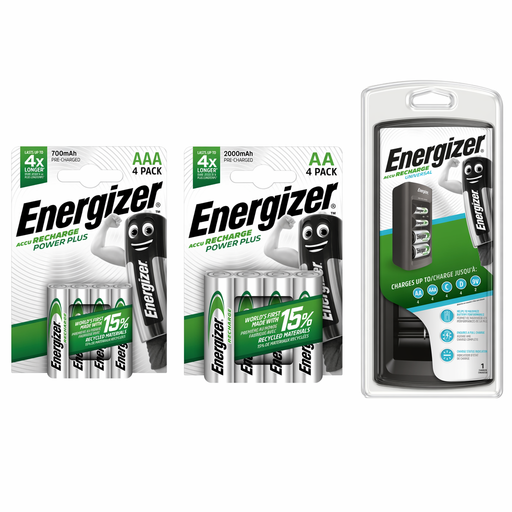 Image unavailable
Consider this kit if you also want rechargeable cells for devices using AA and AAA sizes. Check the exact bundle contents, charger instructions and your clock’s cell guidance before buying.
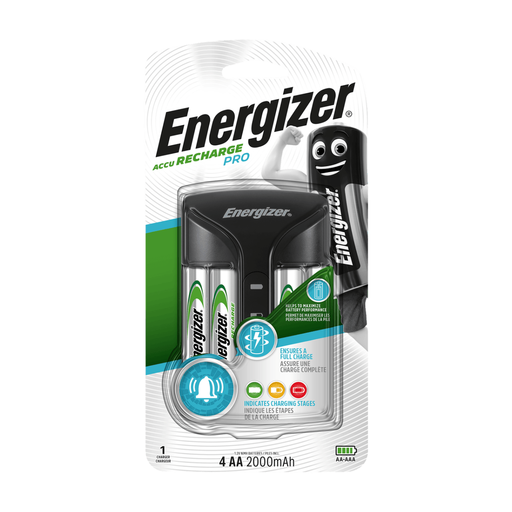 Image unavailable
The named bundle may suit a household preparing spare AA cells for its clock. It specifies four rechargeable AA batteries rated at 2000 mAh each; check the clock’s cell guidance and confirm individual-cell charging in the instructions if you need that feature.
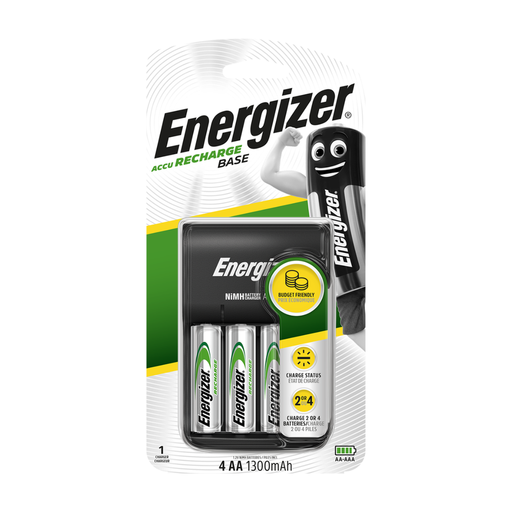 Image unavailable
This USB charger bundle is an option if you have a suitable USB power source on or near the counter. Its name specifies four rechargeable AA batteries rated at 1300 mAh each; check whether a mains USB adapter is included and whether the charger accepts one cell at a time.
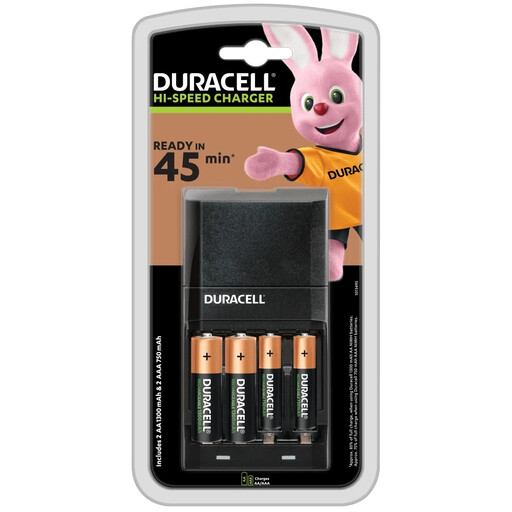 Image unavailable
The named bundle includes two AA and two AAA batteries, which may suit a clock alongside another device using AAA cells. Treat “45 Minute” as the model name rather than a charging-time promise; check the instructions for the applicable cells, power arrangement and single-cell charging options.
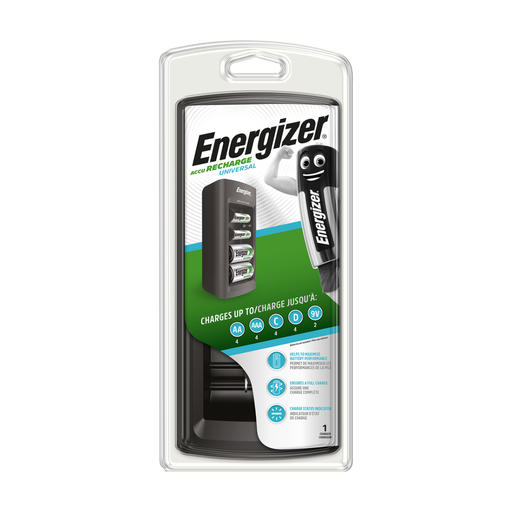 Image unavailable
Consider this charger if you plan to select compatible rechargeable AA cells separately. Before buying, check the exact model’s supported chemistry, slot count, power arrangement and bundle contents against your clock’s requirements.
No. Energizer’s Compact Charger instructions specify NiMH rechargeable batteries only and warn that charging other types may cause leakage, rupture or explosion. Check both the battery label and the charger instructions rather than relying on AA size alone.
Choose a charger whose instructions explicitly allow individual-cell charging. Panasonic states that its BQ-CC55 charges one to four compatible eneloop or eneloop pro AA or AAA cells individually; that feature should not be assumed for other models.
Batteries bearing the crossed-out wheelie-bin symbol should not go in household rubbish, according to UK government guidance. Take spent portable batteries, including rechargeable AAs, to an appropriate battery collection point.
Check the exact model’s instructions, power arrangement and any UK safety alerts or recalls, and use a traceable seller. A 2025 report from the Office for Product Safety and Standards identified an electric-shock risk in the specific EBL C9042W charger it examined; it was not a finding about all chargers.