Regular student-room listeners
If you keep rechargeable AAs ready for frequent CD-player use, clear charge-status indicators and the option to charge fewer than four cells may make the routine easier to manage.


Choose a charger intended for rechargeable AA NiMH batteries, but check the portable CD player’s manual or battery-compartment marking before buying the cells. Independently controlled slots are useful if you need to charge one cell or cells with different remaining charge levels; a USB charger suits a compact desk setup if you have the required power supply. Pay for rapid charging only if short turnaround matters to your routine, and read the conditions attached to any charging-time claim.
If you keep rechargeable AAs ready for frequent CD-player use, clear charge-status indicators and the option to charge fewer than four cells may make the routine easier to manage.
If you sometimes find your cells flat shortly before leaving, charging time may matter more. Compare times for the cells and charging conditions you would actually use rather than relying on the shortest advertised figure.
A compact USB-powered charger may fit a crowded desk or travel bag, provided you can supply the input its instructions require.
Start with the CD player’s battery guidance and the cell chemistry. Then choose a charging arrangement that fits how many cells you use, how quickly you need them and where the charger will draw power.
| Concern | What to check | Who this matters to |
|---|---|---|
| Battery compatibility | Check that both charger and cells are marked for AA NiMH rechargeables, and that the CD player permits rechargeable AA cells. | I want to prepare cells for my CD player without mistaking an ordinary AA battery for a rechargeable one. Around 40% of consumers put chemistry and device compatibility first. |
| Charging turnaround | Compare charging times for your cell capacity and usual number of cells; check full-charge termination and whether slots operate independently if cells have different charge levels. | If I often discover flat cells shortly before listening, waiting for them is my main concern. For around 30% of consumers, turnaround is the primary need. |
| Space and power | Check the charger’s size and required USB input, or confirm the plug supplied with a mains model suits your socket. | A charger needs to fit my limited desk space and work with the power supply I can use there. That setup comes first for around 30% of consumers. |
AA describes the size, not the chemistry. Energizer’s NiMH charger guidance says not to charge non-rechargeable alkaline, carbon-zinc or lithium cells in a NiMH charger.
Keep disposable cells separate, and use only rechargeable cells of a chemistry the charger explicitly supports.
Charging arrangements vary: Panasonic says its BQ-CC55 controls one to four suitable cells individually, while Energizer’s CHV.C3 instructions describe two- or four-cell charging.
If you expect to charge a single cell or cells with different remaining charge levels, check the exact model’s slot instructions before ordering.
Panasonic’s stated 90-minute time concerns two AA eneloop cells. Charging-time claims for other chargers likewise depend on specified cells and operating conditions.
Compare the cell capacity, number of cells and power-input conditions alongside any published time.
Charging equipment needs to be used as instructed. London Fire Brigade advises against covering charging devices and recommends genuine products from a trusted supplier.
Keep the charger uncovered on a stable surface, follow its instructions and stop using damaged equipment.
The BQ-CC55 is a reference point if independently controlled AA/AAA slots and a separate status light for each cell matter to you.
Its P461 USB model and Charge10 mains bundle illustrate different ways to fit charging into a desk setup or a time-sensitive routine.
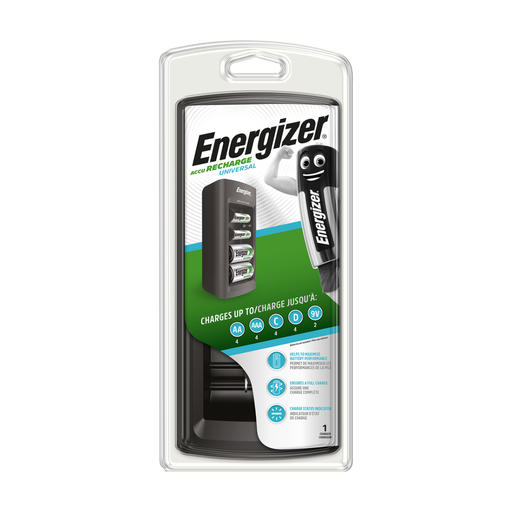
Energizer’s AA/AAA NiMH charger guidance is useful when checking charging arrangements and rechargeable-cell handling.
These charger and kit choices relate to preparing rechargeable AA cells for a portable CD player, including mains and USB setups. Before choosing any included cells, confirm that your player permits rechargeable AA batteries.
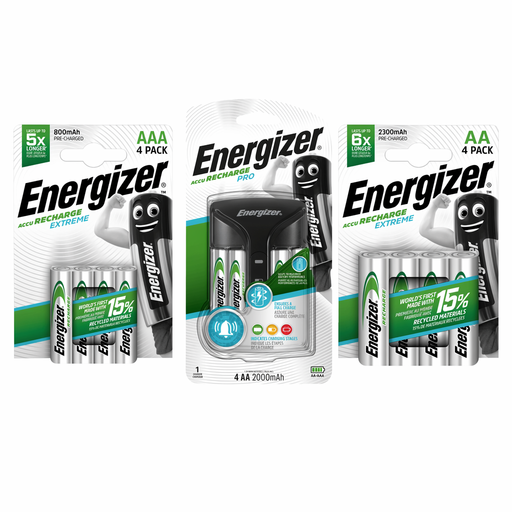 No image available
Consider this kit if you want a charger and rechargeable cells together for your room. Confirm the exact battery sizes and quantities included, and check the player’s guidance before using AA NiMH cells.
If charging one cell at a time matters, confirm the arrangement in the instructions for this exact kit.
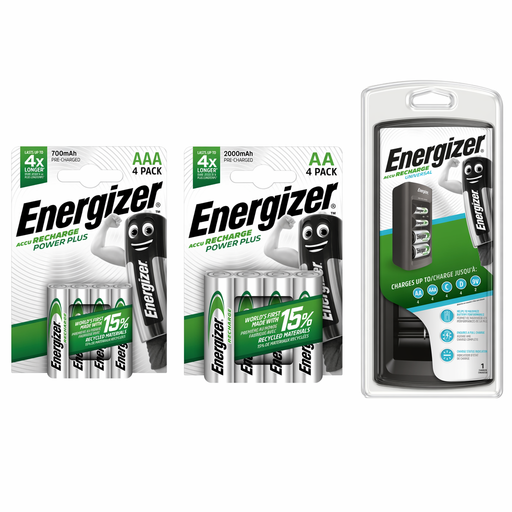 No image available
This charger-and-battery kit is an option for starting a rechargeable AA routine. Check the included cell sizes against what your CD player takes and confirm that the player accepts rechargeables.
If you need a particular charging turnaround, compare the model’s stated time under the conditions you expect to use.
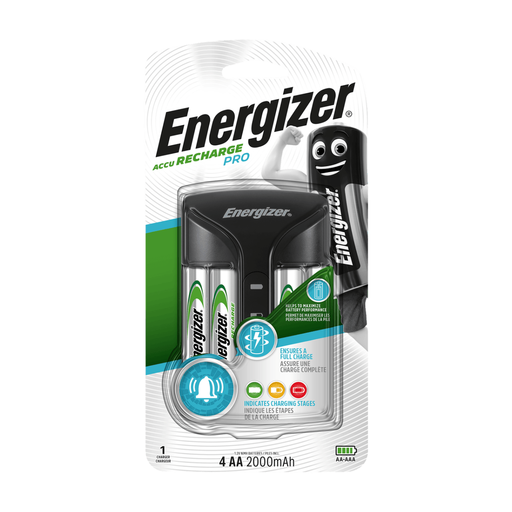 No image available
The four AA rechargeable batteries make this kit worth considering if your player uses AA cells and permits rechargeables. Its named variant is the UK model; confirm the supplied plug when ordering.
If you sometimes need to charge just one cell, check the charger’s permitted cell arrangements before choosing it.
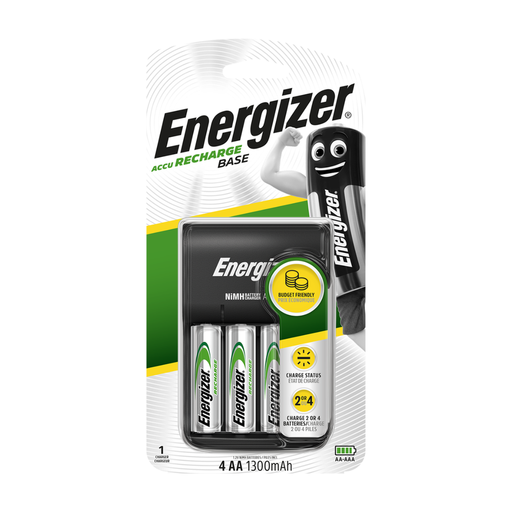 No image available
USB power makes this a candidate for a desk setup where you have a suitable supply. The bundle names four AA 1300mAh rechargeable batteries; check that your CD player permits rechargeable cells.
Confirm this charger’s required USB input and charging arrangements before relying on an existing power supply or planning to charge a single cell.
 No image available
Consider this charger if you are choosing AA NiMH cells separately for your CD player. Check the player’s battery guidance before buying those cells.
Confirm the plug configuration, how many cells the charger takes at once and whether batteries are included if those points affect your setup.
No. Energizer’s NiMH charger guidance says not to attempt to charge non-rechargeable alkaline, carbon-zinc or lithium cells. Use rechargeable cells of a chemistry explicitly supported by the charger.
Only if single-cell charging would be useful for your routine. Panasonic says its BQ-CC55 charges one to four suitable cells individually, whereas Energizer’s CHV.C3 instructions describe two- or four-cell charging; check the arrangement for the exact model you choose.
It will need a supply that meets the charger’s stated input requirement. GP Batteries UK specifies 5 V/2 A for its P461 USB charger; check the requirement of the particular charger you intend to buy rather than applying that figure to other models.
Use appropriate battery and electrical-product collection routes rather than putting them in household rubbish. GOV.UK identifies collection points for portable batteries, including AA rechargeables, and household recycling centres or qualifying retailer take-back schemes for old electrical products.