What to check before buying
Start with the timer’s battery requirements, then decide whether stored-cell readiness or charging flexibility matters more in your routine.
| Concern |
What to check |
Who this matters to |
| Cell and timer compatibility |
Check that the charger specifies AA NiMH rechargeables and that the timer’s instructions permit rechargeable AA cells. Never put disposable AA cells in a NiMH charger. |
If my timer does not accept rechargeables, choosing a charger will not solve the problem. Around 42% of consumers would put compatibility first. |
| Readiness after storage |
Consider how often the timer is used and whether you are willing to recharge stored cells before use. |
When a timer goes unused for long periods, I want its batteries to be ready when needed. Roughly 33% of consumers would make storage suitability their primary concern. |
| Charging flexibility |
Check whether the charger accepts one cell or requires pairs, and read any charge-time claim alongside its stated cell capacity and charge level. |
I sometimes need to prepare one spare cell rather than a matching set. Around 25% of consumers would prioritise charging flexibility. |
Joybuy chargers to consider
These chargers relate to preparing rechargeable AA cells for a timer that permits them. Choose according to the cell quantities and other battery sizes you actually need to charge.
 No image available
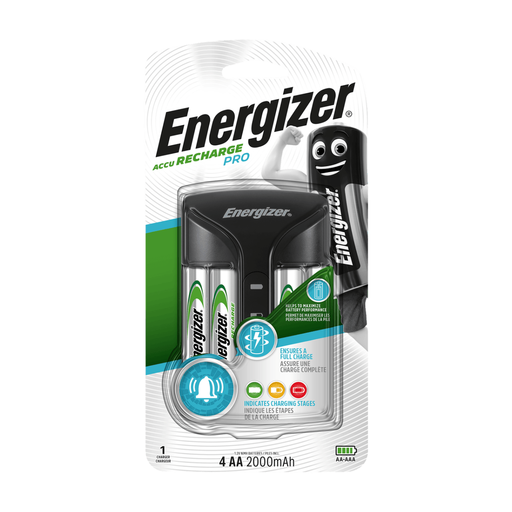
Energizer Pro Charger (UK) with 4 AA 2000 mAh batteries
Consider this bundle if you want to prepare four rechargeable AA cells for a timer that permits them. Its name specifies four 2000 mAh rechargeable AA batteries; confirm the plug and charging arrangement for the unit you buy.
View on Joybuy
 No image available
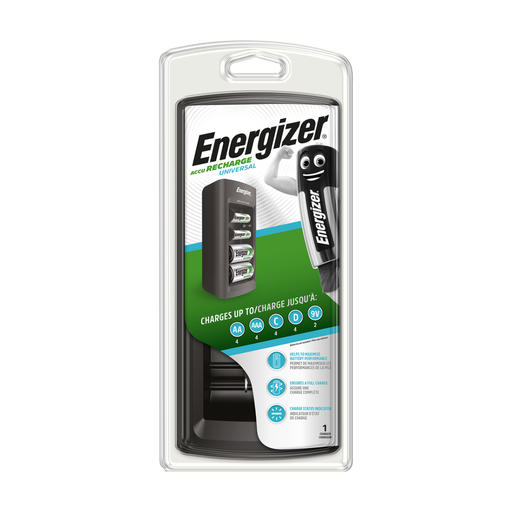
Energizer Universal Battery Charger
Consider a multi-size charger if you also prepare rechargeable batteries for other household devices. For this unit, confirm supported cell sizes and chemistry, AA charging groups and a suitable UK plug before buying.
View on Joybuy
Kitchen timer battery questions
Can I charge ordinary disposable AA batteries?
No. Use a charger only with the rechargeable chemistry it specifies. Duracell’s NiMH charger instructions warn against charging alkaline, zinc-carbon, lithium and other unspecified batteries because unsuitable cells can cause injury or damage.
Are rechargeable AA cells always practical for a kitchen timer?
No. Check the timer’s battery instructions first. Duracell says standard rechargeables lose charge over time and may be less suitable for low-drain equipment left unused for long periods; if readiness after storage matters most, consider whether disposable cells better fit your routine.
Do I need an individual-slot charger for a timer?
An individual-slot charger is useful if you charge one cell at a time or prepare cells in mixed quantities. Panasonic says its BQ-CC55 independently charges one to four compatible AA/AAA eneloop cells; if you always charge a matching pair or set of four, that flexibility may be unnecessary.
How should I dispose of old rechargeable AA batteries in the UK?
Keep them out of household rubbish. UK government guidance directs consumers to battery collection points; check for a suitable local collection point when the cells can no longer be used.


