Households with spare USB power but few sockets
A USB-input charger is worth considering if an available USB source meets its input requirements. Otherwise, an adapter may still take up a wall socket.


Choose a USB-input AA/AAA charger if you already have a spare, suitably rated USB power source: it need not occupy another wall socket directly. If a mains socket is available and you usually charge just one or two remote-control cells, look for a charger that explicitly supports individual NiMH AA charging. USB chargers still need power, while mains chargers use the socket you are trying to keep free.
A USB-input charger is worth considering if an available USB source meets its input requirements. Otherwise, an adapter may still take up a wall socket.
If you usually prepare only one or two AA cells, check small-batch charging and individual slot control before choosing a charger for its bay count.
When remote controls and other devices share rechargeable AA or AAA cells, more independently controlled bays can make a larger charging batch practical.
Start with the power source you can actually spare, then check whether the charger handles your usual number of NiMH AA cells. Bay count and charging speed matter most when they change that routine.
| Concern | What to check | Who this matters to |
|---|---|---|
| Keeping a wall socket free | Match the charger’s USB input rating to an available powered USB source; check what cable or adapter comes with it. | If my sockets are occupied, I need a charger that can use USB power I already have available. Around 36% of consumers put keeping a wall socket free first. |
| Charging a small batch | Check explicit one-cell or two-cell support and whether slots are controlled individually. | When I only need the cells for one remote, I do not want to wait until I have a larger batch to charge. For around 29% of consumers, small-batch flexibility is the primary need. |
| Getting cells ready sooner | Check whether a stated charging time means partial or full charge and which battery capacity and power supply it assumes. | If I forgot to prepare spare cells, the time until they are usable matters more to me than extra bays. Around 21% of consumers chiefly prioritise a shorter turnaround. |
| Charging across the household | Check independently controlled bay count, supported AA/AAA rechargeable chemistry and the required power source. | With several devices using rechargeable cells, I would rather prepare a larger batch in one session. Greater household capacity is the main concern for around 14% of consumers. |
A USB charger still needs adequate power. BatteryStation UK specifies a 15W or 3A USB-C adapter for the XTAR VC4SL and says a low-power phone charger is unsuitable.
Identify the USB outlet, hub, power bank or adapter you would use, then compare its output with the charger’s input requirement.
Incompatible cells can rupture or damage equipment. Duracell’s CEF27 instructions warn against charging alkaline, zinc-carbon, lithium and other unspecified batteries.
Check the markings on both the cells and charger; charge only rechargeable chemistries that the particular charger supports.
More bays help when several household devices share rechargeable cells, but bay count alone does not establish whether a charger handles one or two cells independently.
For one remote, check small-batch support first. Consider eight bays if you regularly prepare cells for other devices too.
Duracell describes its 45-minute result as approximately 85% charge with specified NiMH batteries, not a universal full-charge time.
Read the battery-capacity and charge-level conditions beside any stated time, especially if you need cells ready at a particular moment.
Its C9010N is a USB-C-input route for charging multiple rechargeable AA or AAA cells when suitable USB power is available.
The USB-C VC4SL may suit a household that charges NiMH AA cells alongside other compatible rechargeable formats.
The BQ-CC55 is a mains-charger option when charging a small number of remote-control cells matters more than avoiding socket use.
The Advanced Charger is a mains-powered option for someone prioritising a shorter stated turnaround for a supported batch.
The TJUGO is a mains-powered station for a larger household rotation of rechargeable AA and AAA cells.
These options include a USB-input kit for use with suitable spare USB power and mains-powered kits for households able to allocate a socket. Compare their charging arrangements before choosing one for a small batch of remote-control cells.
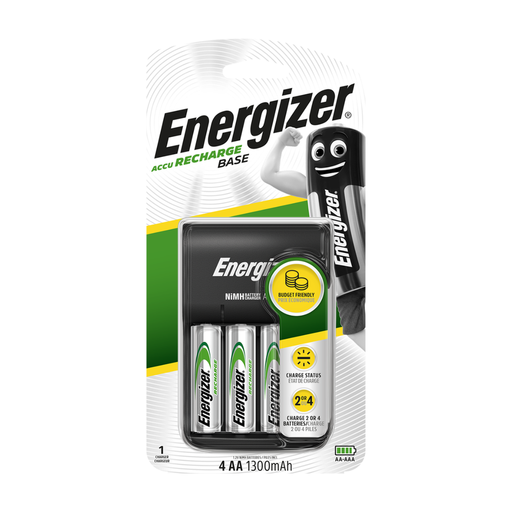 No image available
Consider this USB option if you have a spare powered USB source and want to prepare AA cells for a remote without using a dedicated mains charger.
The bundle name specifies four rechargeable AA batteries rated at 1300mAh each. Check the required USB input, supplied accessories and charging arrangement if you need to charge cells individually.
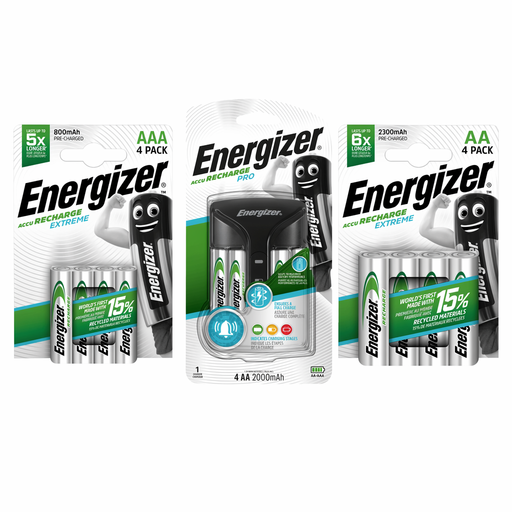 No image available
Consider this kit if a mains socket is available and independently managed charging for a small batch is important.
The bundle includes a Pro Charger and rechargeable AA and AAA batteries. Check the exact battery quantities and capacities in the current listing before choosing the kit; the charger uses a UK mains socket.
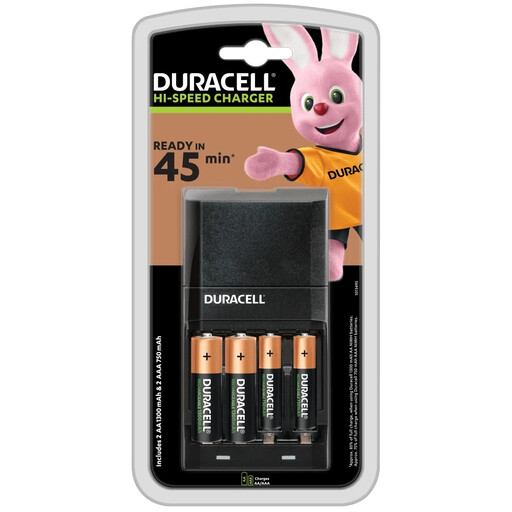 No image available
Consider this mains option if you can spare an outlet and getting a supported pair of AA cells ready sooner matters most.
The named bundle includes two AA and two AAA batteries. Duracell’s approximately 45-minute claim refers to partial charge under specified NiMH battery conditions, not full charge in every use. Confirm the plug type before purchase.
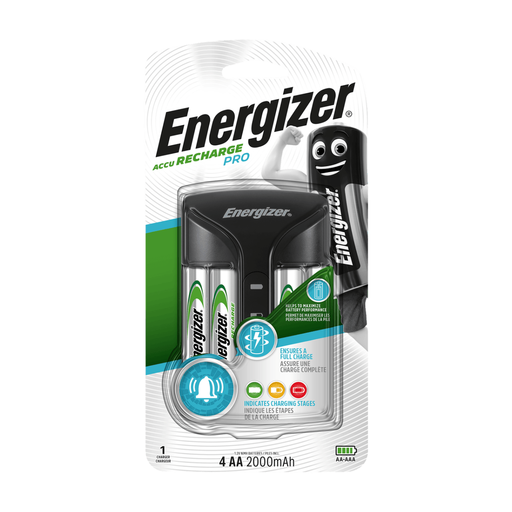 No image available
Consider this kit for preparing AA cells when you can allocate a UK mains socket to charging.
The bundle name specifies four rechargeable AA batteries rated at 2000mAh each. Check the charging arrangement if you need to insert a single cell independently.
It can avoid using another socket directly if you already have a suitable spare USB power source. Check the charger’s input requirement against that source: EBL specifies 5V/2A for its eight-bay model, while BatteryStation UK specifies a 15W or 3A USB-C adapter for the XTAR VC4SL.
Often, but check the remote’s manual and battery-compartment markings first. Duracell says its round rechargeable cells can generally be used where alkaline cells are used unless the device maker states otherwise.
Do not put ordinary alkaline cells in a charger intended for NiMH rechargeables. Duracell’s CEF27 instructions warn that alkaline and other unspecified battery types must not be charged; follow the chemistry restrictions for your particular charger.
Take them to an appropriate battery collection point rather than putting them in general household waste. Check your local collection arrangements for rechargeable cells.