Check your wall clock’s instructions before buying an AA charger: a charger cannot make rechargeable cells suitable for a clock that requires primary 1.5 V batteries. If the clock accepts rechargeable NiMH AA cells, a basic two- or four-cell charger can prepare a spare set; individual slots or faster charging matter more if you also maintain batteries for other devices. Charge on a hard, uncovered surface away from bedding, and avoid leaving the charger unattended overnight.
Who is this for?
Owners preparing batteries for one clock
If you mainly want a spare set ready for a single wall clock, start with its battery instructions. Once you know rechargeable AA cells are permitted, a straightforward charger may meet that need without rapid charging.
Households charging near a bedroom
If the charger will be used near the bed, its location and your charging routine matter alongside its controls. Electrical Safety First advises using a hard surface and avoiding unattended or overnight charging where possible.
People maintaining batteries for several devices
If the clock is one of several devices using rechargeable AA or AAA cells, charging one cell at a time or managing slots independently may be useful. Panasonic Energy specifies individual charge control for its BQ-CC17 charger when used with the compatible cells it names.
What matters when choosing a charger?
Check the clock’s battery requirements before comparing chargers. Then decide how you can charge away from bedding and whether you need to prepare cells for anything beyond this clock.
| Concern |
What to check |
Who this matters to |
| Clock compatibility |
Check the clock’s manual for its required AA cell type and quantity, including whether rechargeable NiMH cells are permitted. |
I want batteries ready for my clock, but a charger is no use to me if the clock requires primary cells. Around 46% of consumers put clock compatibility first. |
| Charging near the bed |
Look for clear charge-status information and plan an attended charging spot on a hard surface away from bedding. |
I can charge while I am awake, but I do not want the charger covered or left running beside the bed overnight. For around 36% of consumers, the charging routine is the primary concern. |
| Useful capacity and flexibility |
Check how many cells the charger accepts at once; consider individual slots or shorter stated charge times if other devices need batteries too. |
I also prepare cells for other devices, so handling different quantities matters more to me than a simple spare set for the clock. Roughly 18% of consumers prioritise that flexibility. |
Mistakes to avoid
-
Buying the charger before checking the clock
Some equipment may not run properly on rechargeable batteries, as AcuRite notes in its device guidance. The answer for your wall clock depends on that clock’s instructions, not on whether the charger accepts AA cells.
Find the clock’s model and check its manual for the permitted battery type and required cell count before choosing rechargeable cells or a charger.
-
Putting ordinary alkaline AA cells in an NiMH charger
Duracell’s charger safety instructions warn that charging unspecified battery types, including alkaline and other primary cells, can cause injury or damage.
Charge only cells marked rechargeable that are explicitly supported by your charger. Keep primary and unidentified cells out of its charging slots.
-
Relying on automatic shut-off for overnight charging
Automatic shut-off does not address a charger placed under bedding or left unattended. Electrical Safety First advises avoiding unattended and overnight charging where possible.
Place the charger uncovered on a clear, hard surface away from bedding, check the plug and cable, and charge when you can monitor it.
-
Choosing rapid charging for a planned spare set
A faster stated charge time may add little to the task if you can prepare compatible AA cells before the clock needs them. Energizer specifies an eight-hour full charge for its Base Charger and a one-hour charge for its 1-Hour Charger; those are manufacturer-stated times for different models.
Decide whether you need quick turnaround for other devices or the ability to charge individual cells before making speed a deciding feature.
Brands to consider for AA charging
Energizer
Energizer’s UK charger range includes basic and faster AA/AAA NiMH models, as well as chargers for additional battery sizes.
- Energizer specifies two- or four-cell charging and an eight-hour full charge for its Base Charger. Its Pro Charger is described with overcharge protection and safety shut-off.
- Choose by the features of the particular model; a quicker charger is not necessary solely because the batteries are for one clock.
Duracell
Duracell offers AA/AAA NiMH chargers with different stated charging speeds and controls.
- Duracell specifies two- or four-cell charging for its Hi-Speed Value Charger and says the model shuts off automatically after charging is complete.
- Duracell’s safety instructions restrict charging to specified rechargeable battery types; its stated charging times should be read with their cell and charging conditions.
Panasonic eneloop
Panasonic Energy describes individual-slot AA/AAA charging in its eneloop charger range.
- Panasonic Energy specifies independent control for one to four compatible AA or AAA cells in the BQ-CC17.
- For a particular model, check the compatible cells and the plug configuration of the version offered; Panasonic Energy says the BQ-CC55 plug varies by sales region.
Joybuy charger choices
These chargers are choices for preparing rechargeable AA cells if your wall clock permits them. Consider how you will power the charger and whether you also prepare batteries for other household devices.
 No image available
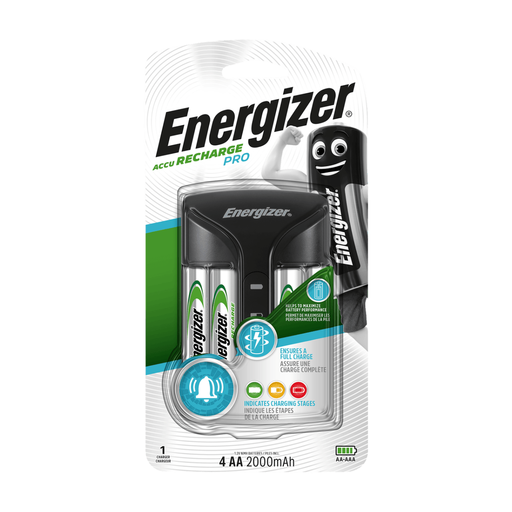
Energizer Pro Charger (UK) with 4 × AA 2000 mAh batteries
Consider this for preparing a spare set if your clock accepts rechargeable NiMH AA cells.
The product title specifies four rechargeable AA batteries rated at 2000 mAh. Energizer describes overcharge protection and safety shut-off for its Pro Charger; these features do not replace attended charging away from bedding.
View on Joybuy
 No image available
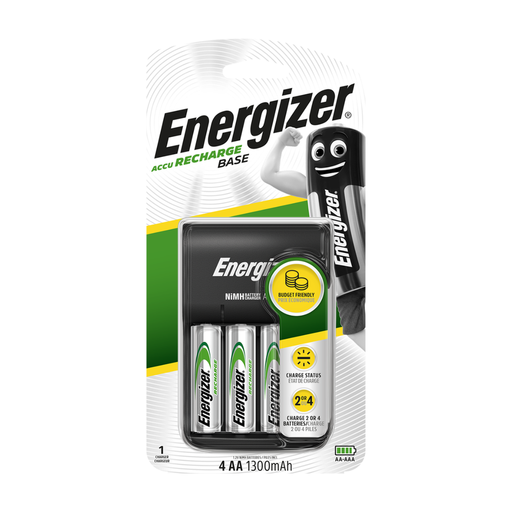
Energizer USB Charger with 4 × AA 1300 mAh batteries
Consider the USB-powered format if your clock accepts rechargeable NiMH AA cells and you have a suitable place to charge while awake.
The product title specifies four rechargeable AA batteries rated at 1300 mAh. Check the required USB power source and whether a suitable adapter is included before buying.
View on Joybuy
 No image available
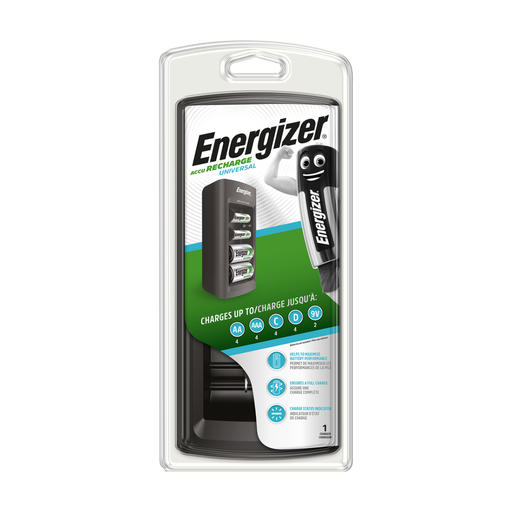
Energizer Universal Battery Charger
Consider this format if a compatible wall clock is one of several devices for which you prepare rechargeable batteries.
Check the supported cell sizes, whether AA cells are included, and the controls and charging time of the exact version offered if those details affect your choice.
View on Joybuy
Frequently asked questions
Will my AA wall clock work with rechargeable batteries?
Check your clock’s own instructions before relying on rechargeable AA cells. AcuRite warns that some rechargeable batteries may not properly power certain devices; that does not establish the requirements of your particular clock. If its manual specifies a battery type or nominal 1.5 V cells, follow those instructions.
Do I need a fast charger for one wall clock?
A fast charger is not usually necessary if your clock accepts rechargeable cells and you can prepare a spare set in advance. Energizer specifies an eight-hour full charge for its Base Charger and a one-hour charge for its 1-Hour Charger; faster turnaround is more relevant when other devices also need cells at short notice.
Can I leave AA batteries charging beside the bed overnight?
Avoid making overnight bedside charging your routine. Electrical Safety First advises avoiding unattended or overnight charging where possible and charging on a hard surface. Keep the charger uncovered and away from bedding, and follow its instructions.
Where can I take used rechargeable AA batteries?
Take used rechargeable AA batteries to a battery collection point. GOV.UK says most waste batteries can be taken to a local supermarket or a larger shop that sells batteries.


