Planned home-office recorder users
If recordings follow a predictable schedule, you can prepare a pair or set of rechargeable AA cells overnight and may not need faster charging.


Choose a charger that explicitly supports AA nickel-metal hydride (NiMH) rechargeable cells, then match its charging slots and stated time to your recording routine. A 2- or 4-cell charger can suit planned preparation; independently controlled slots are more useful for loose spares, while faster charging matters most when a recording is close. Check your recorder manual before relying on rechargeable AA cells.
If recordings follow a predictable schedule, you can prepare a pair or set of rechargeable AA cells overnight and may not need faster charging.
If you sometimes discover flat spares shortly before recording, compare the stated charging time for your cells and look for a clear completion indicator.
If you rotate AA cells between a recorder and other devices, or charge uneven quantities, independently controlled slots may let you charge the cells that need attention without assembling a full set.
Start with the recorder manual: check its AA battery count and guidance on 1.2 V NiMH rechargeables. Then choose a charger for the number of cells you prepare and the time available before recording.
| Concern | What to check | Who this matters to |
|---|---|---|
| Flexible charging | Check the minimum cell count and whether slots charge independently. Panasonic specifies individual charging for one to four AA or AAA eneloop cells in its BQ-CC55. | If I rotate loose AA spares across several devices, I want to charge an incomplete set without waiting for a matched pair; around 42% of consumers put this flexibility first. |
| Readiness before recording | Compare stated charging times for your AA NiMH cells’ capacity and the number charged together; check how completion is indicated. | When a meeting or interview is near, I need to know whether my spare cells can be prepared in time; roughly 33% of consumers make shorter waiting time their main concern. |
| Planned charging | Check whether the charger takes your usual pair or set and provides a clear completion indication. Energizer specifies an eight-hour full charge for its Base Charger, which takes two or four AA or AAA NiMH cells. | If I can put batteries on charge between workdays, a straightforward routine matters more to me than speed; about 25% of consumers prioritise planned charging. |
AA describes the cell size, not whether it is rechargeable. Energizer’s NiMH charger instructions warn that charging other battery types may cause leaking, rupture or explosion.
Use AA NiMH rechargeable cells only in a charger that explicitly supports them, and keep disposable AA batteries separate.
A stated time can depend on the number, capacity and condition of the cells. Duracell’s four-hour figure for its Hi-Speed Value Charger refers to approximately 90% charge with Duracell 1300 mAh AA NiMH batteries.
Check the conditions behind a time claim and leave a buffer before an important recording.
ANSMANN specifies that its Powerline 8 charges one to eight AA or AAA NiMH or NiCd cells, but that capacity may go unused if you normally prepare only one recorder’s batteries.
Count the rechargeable cells you rotate across devices before choosing extra slots.
GOV.UK advises that batteries and electrical products should not go into household rubbish when they are no longer wanted or working.
Take spent rechargeable AA cells to a suitable battery collection point and recycle a failed charger as electrical waste.
Its UK AA and AAA NiMH range includes chargers intended for planned charging and shorter turnarounds.
Its Hi-Speed Value Charger is a two- or four-cell AA and AAA option with automatic shutoff.
The BQ-CC55 is relevant when charging loose AA or AAA eneloop cells individually matters more than keeping to a paired set.
The Powerline 8 is aimed at people managing a larger rotation of AA and AAA rechargeable cells across devices.
These listings include three charger-and-battery kits and a separate charger for preparing AA cells. Compare their bundle contents and charging arrangements with the number of batteries your recorder uses.
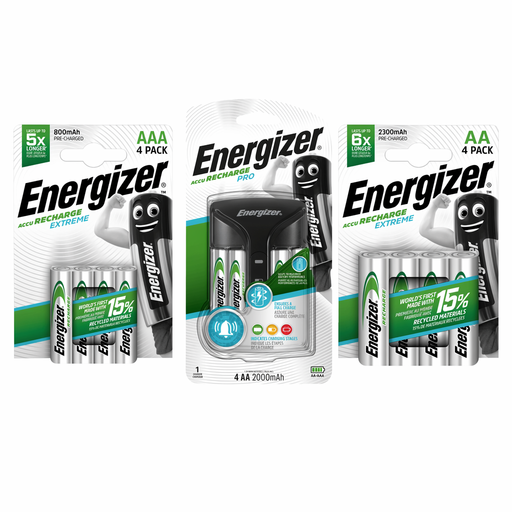 No image available
This kit may suit a routine of preparing recorder spares alongside other rechargeable cells. Confirm the included battery quantities and the charging time that applies to the AA cells you intend to use.
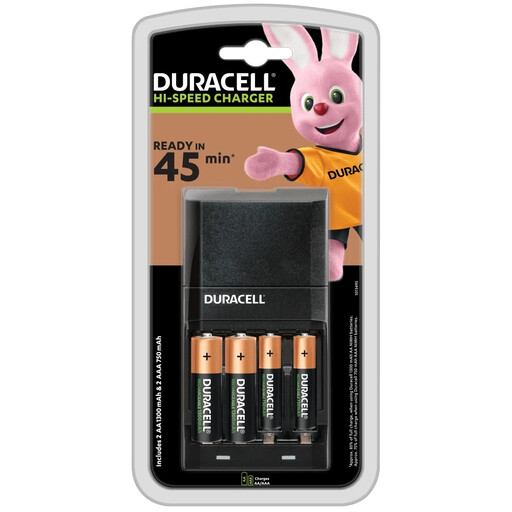 No image available
This kit includes a pair of AA batteries, making it worth considering if your recorder takes two. Check whether the 45-minute claim describes a full charge or a lower charge level before planning around it.
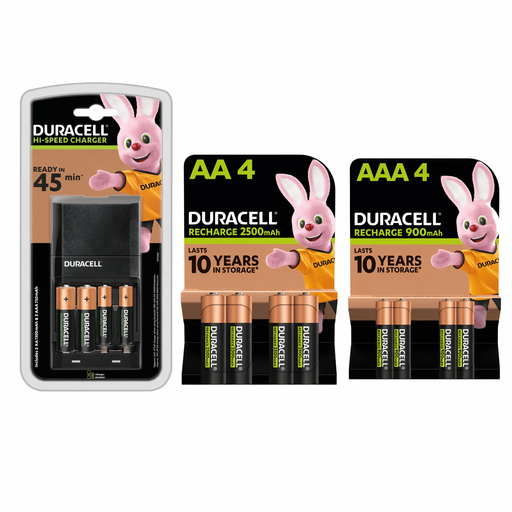 No image available
This charger-and-battery kit is an option for setting up a rechargeable AA routine. Check how many AA cells the bundle contains; its stated 45-minute result for two AA cells is approximately 85% charge, not a confirmed full charge.
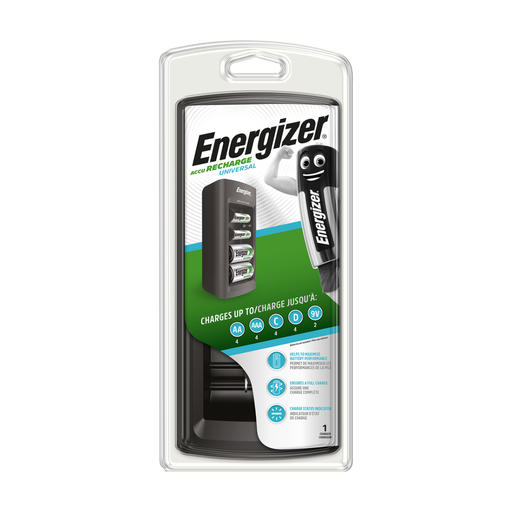 No image available
Consider this separate charger if you already have rechargeable AA cells to prepare for your recorder. Confirm its simultaneous AA charging capacity, slot control and plug configuration against your intended routine.
No: use only rechargeable cells of a chemistry the charger explicitly supports. Energizer’s NiMH charger instructions warn that charging other battery types may cause leaking, rupture or explosion.
Individual charging is useful if you often top up a single spare or charge uneven quantities. If you consistently charge a complete recorder set together, a two- or four-cell charger may meet that routine; check its required minimum cell count.
Not without checking the conditions behind it. Cell count, capacity, condition and temperature can affect the time; Duracell describes its Hi-Speed Value Charger’s four-hour result as approximately 90% charge with Duracell 1300 mAh AA NiMH cells.
Keep both out of household rubbish. GOV.UK advises using appropriate battery collection facilities for portable batteries and an electrical-waste recycling or applicable take-back route for an old charger.