
24/7 Customer Support

Free returns

Same-day & Next-day Delivery

Quality Guaranteed

Unlock Your Welcome Offers: FREE Delivery | Up to 80% OFF | Free 30-day JoyPlus trial
Download the APP
Buying ab workout equipment can seem straightforward until you compare wheel width, padding, adjustment systems and storage measurements. Marketing often focuses on visible features while overlooking the details that determine whether equipment is comfortable, controllable and practical in a UK home.
A compact ab machine may suit someone who wants guided movement, while an ab roller wheel requires more control and floor space during use. A Pilates ring, meanwhile, can support core, leg and arm exercises without taking up much room. The right choice depends on your experience, available storage and the type of training you are likely to use consistently.
An ab roller wheel creates a demanding rolling movement, but difficulty is not automatically a sign that it suits every user. Beginners may struggle to control the return phase, particularly on a slippery floor or when the wheel has a narrow base.
Before buying, check the wheel diameter, base width, handle grip and surface guidance. A wider wheel with a grippy cover may offer more control than a narrow design, although good technique remains essential.
Some ab machines provide only one fixed position. This can make the movement feel too easy or too demanding, depending on your height, strength and experience. Padding is also important: thin or poorly positioned support can make kneeling uncomfortable and discourage regular use.
For an adjustable ab trainer, look for clearly stated incline settings, height positions and padding materials. These specifications are more useful than vague claims about intensity or results.
A product may fit when assembled but become awkward to store in a flat, narrow cupboard. Check the full dimensions, folded dimensions where supplied, and product weight. A 9.69 kg machine, for example, may be manageable to move but not convenient if it must be lifted frequently.
For flats, shared homes and spare bedrooms, foldable home gym equipment can be particularly useful. However, confirm that folding does not require complicated dismantling or leave parts vulnerable to damage.
The equipment should remain predictable during movement. For an ab roller wheel, a wide wheel base and non-slip outer material can help maintain contact with the floor. Use it on a stable, non-slip surface and follow the supplied instructions.
For an ab machine, examine the roller construction, frame material and knee support. ABS is a common hard plastic used in consumer equipment. It can provide a lightweight, wipe-clean structure, but the overall design, joints and padding also affect day-to-day usability.
An adjustable ab trainer with multiple height or incline options can accommodate different fitness levels more effectively than a single-position model. The MERACH machine listed below includes two incline settings and five height adjustments, allowing users to alter the setup as their control develops.
Do not assume that every adjustment is suitable for every body type. Check the dimensions and ensure the machine can be placed on a stable surface with enough room for the full movement.
Compact abdominal exercise equipment should be simple to clean and store. Look for wipe-clean surfaces, accessible moving parts and clear assembly instructions. A Pilates ring requires no installation, while some ab rollers arrive partially assembled and need their handles fitted before use.
For battery-powered displays, check what the display records and whether batteries are included. A repetition or time counter can support routine tracking, but it should not replace controlled technique or sensible progression.
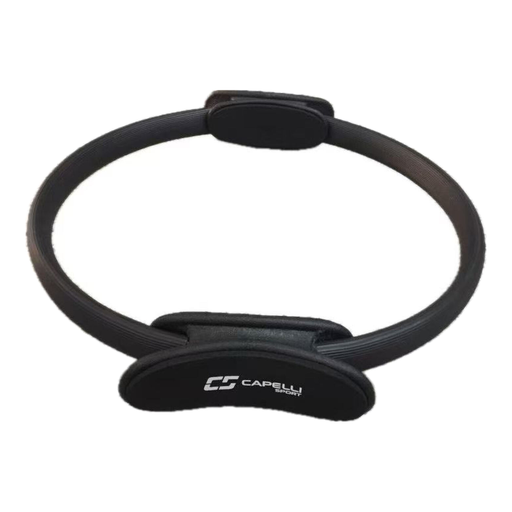
Why This Fits Their Persona: A lightweight option for people beginning home Pilates and strength training, especially where storage space is limited or equipment needs to be carried between rooms.
It avoids the need for a bulky multi-station unit and requires no installation. Its resistance-based design can be used for controlled core, leg and arm exercises rather than relying on a single movement.
PP and PE construction; portable ring format; suitable for Pilates, resistance and balance-focused routines.
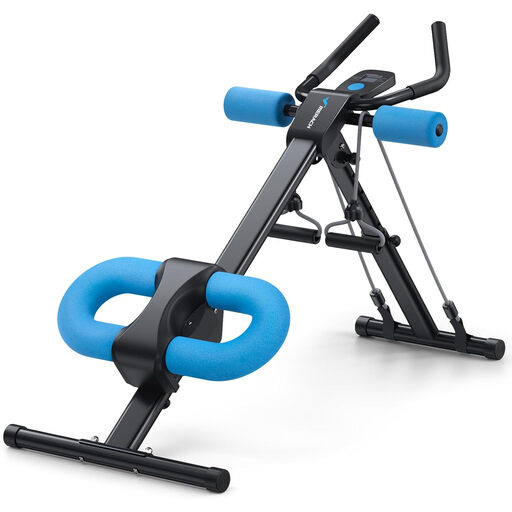
Why This Fits Their Persona: Suits users who want a more structured setup for home or gym sessions, with adjustment options and a built-in display for basic workout tracking.
The foldable format addresses storage concerns, while two incline settings and five height adjustments avoid the limitations of a fixed-position ab machine.
ABS construction; thick sponge padding; LCD display for exercise count, time and calorie readings; stated dimensions of 70 x 35 x 115 cm.
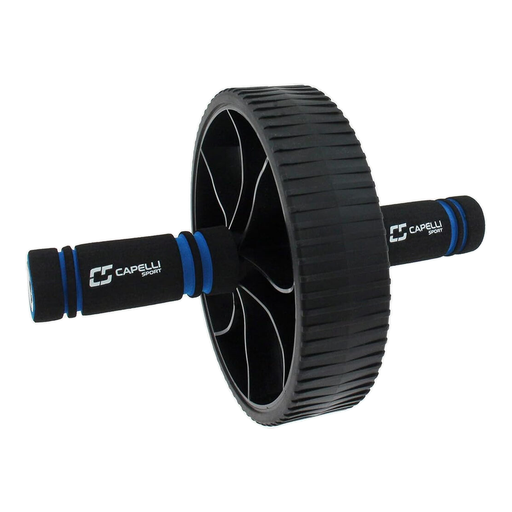
Why This Fits Their Persona: Designed for experienced users seeking a compact challenge for core and balance training at home or in a gym, provided they can maintain controlled form.
The wide wheel base and TPR cover address grip and stability concerns. The product also provides clear surface and control warnings, which should be followed during use.
17 cm wheel diameter; 4.2 cm wheel width; stainless steel tube; PP and EVA foam handles with a TPR outer wheel cover.
Place equipment on a stable, non-slip surface with enough clearance for your arms, knees and torso. Assemble products according to the supplied instructions and check handles, rollers, hinges and padding before each session.
Start with a manageable range of motion and stop if you cannot maintain control. An ab roller should not be used by children, and anyone with an existing health concern should seek appropriate medical advice before starting a new exercise programme. Wipe equipment with a dry or slightly damp cloth after use, then store it in a cool, dry place.
We have compiled a complete, real-time list of products that fully satisfy these strict selection criteria and UK safety regulations.
An ab machine with adjustable height or incline settings can provide a more structured starting point than a free-rolling wheel. Begin at the least demanding setting, follow the instructions and prioritise controlled repetitions over quantity.
Lifespan depends on frequency of use, user weight, flooring, storage and maintenance. Regularly inspect the wheel, tube, handles and joints for looseness, cracks or excessive wear. Avoid wet or uneven surfaces and store the roller dry.
Many basic products, including Pilates rings and ab roller wheels, require no electricity. An ab machine with an LCD display may use batteries for counting repetitions, time or calorie readings. Check the product specification to confirm whether batteries are included and whether the display is essential to the exercise itself.