
24/7 Customer Support

Free returns

Same-day & Next-day Delivery

Quality Guaranteed

Unlock Your Welcome Offers: FREE Delivery | Up to 80% OFF | Free 30-day JoyPlus trial
Download the APP
As a Joybuy Product Recommendation Officer, I often hear from tradespeople and seasoned DIYers about the frustration of a project being derailed by poor-quality consumables. When it comes to power sanding, the abrasive itself is just as important as the tool. Choosing the wrong type can mean wasted time, money and a finish that falls short of professional standards.
Many users fall into a few common traps. They might buy abrasives where the grit sheds almost immediately under pressure, or select a paper that clogs with paint or softwood resin within minutes, rendering it useless. Another frequent issue is simply buying the wrong size or attachment type, leaving you with a pack of incompatible sheets. This guide will help you navigate the specifications that matter, ensuring you get the right abrasive for the job every time.
While the grit number is a familiar starting point, the true performance of abrasives for power sanders depends on a few key construction details. Overlooking these can lead to poor results and frequent, costly replacements.
The vast majority of high-performance abrasives for general workshop use are made from aluminium oxide abrasives. This material offers an excellent combination of hardness, toughness and longevity, making it suitable for sanding everything from softwoods to ferrous metals.
However, the grain is only as good as the adhesive holding it in place. Look for abrasives with a full resin bond. This indicates that the aluminium oxide grains are anchored to the backing with a strong, heat-resistant resin. Cheaper alternatives with weaker glue bonds are the primary culprits behind grit shedding, where the abrasive particles fly off the paper long before they are actually worn out.
The grit number (or P-grade) indicates the coarseness of the abrasive. Using the right grit at the right stage is fundamental to achieving a smooth, flawless finish efficiently. A typical workflow might involve:
For those undertaking varied projects, a mixed grit sandpaper pack can be a practical and cost-effective way to ensure you have the full range on hand.
Abrasives come in several formats, and matching them to your tool is non-negotiable.
Based on these critical parameters, we've identified several abrasives that are well-suited to specific user needs and project types.
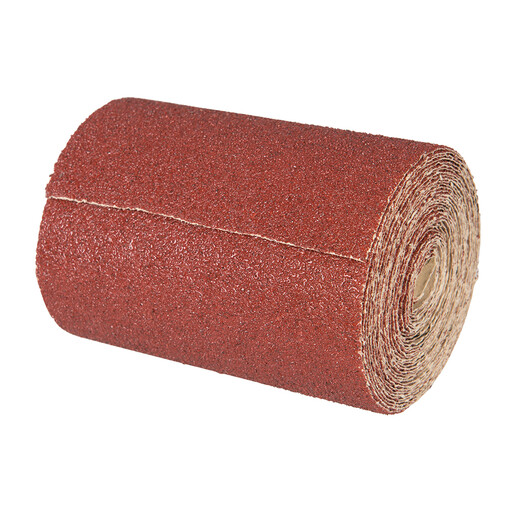
Why This Fits Their Persona: Ideal for carpenters, joiners or decorators tackling large surface areas like flooring, doors or drywall. The 10-metre roll format minimises downtime from changing sheets, improving workflow efficiency on site.
The open-coat structure and full resin bond create a clog-resistant sandpaper surface that resists loading up with paint or wood resin, directly countering the "useless after five minutes" problem.
Highly economical for professional use; can be cut to fit various tools like 1/2-sheet sanders and manual blocks, offering excellent versatility.
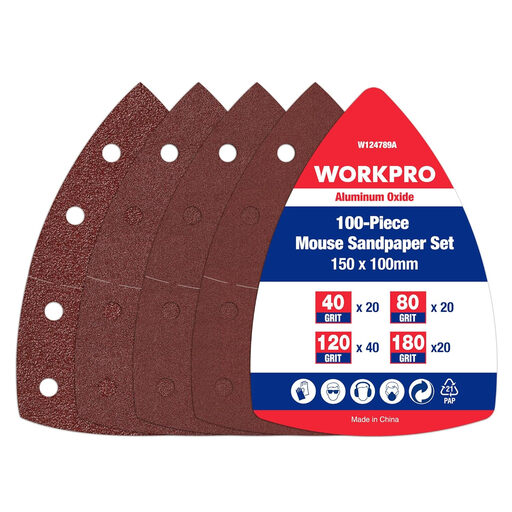
Why This Fits Their Persona: Perfect for furniture restorers or those working on intricate projects with tight corners and detailed profiles. The included mixed grit sandpaper pack (40, 80, 120, 180) covers the entire process from stripping to finishing.
These are purpose-built detail sander sheets with a secure hook-and-loop backing, eliminating the incompatibility issue of trying to cut standard sheets for a detail sander.
The 11-hole pattern provides efficient dust extraction for a cleaner workspace. The 2-in-1 perforated design allows for even finer detail work.
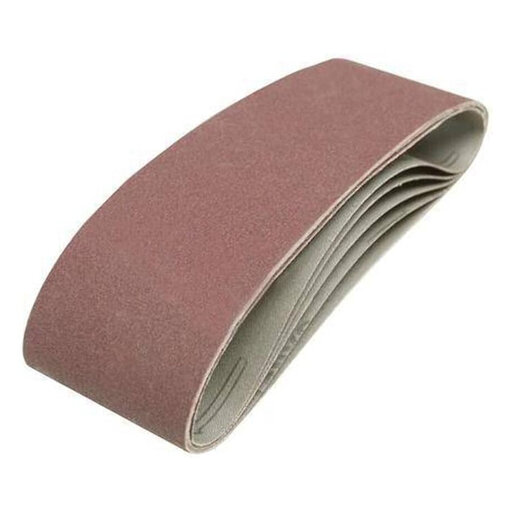
Why This Fits Their Persona: For tradespeople needing to rapidly remove material, such as stripping old paint from floorboards or aggressively levelling rough-sawn timber. The coarse 40 grit is designed for maximum stock removal.
These sanding belts use a tough GX51 cloth backing with a full resin bond, designed to withstand the high speed and pressure of a belt sander without tearing or shedding grit like flimsy paper alternatives.
Features an overlap joint with an extra top-skive, a design detail that reduces chatter and vibration for a more controlled operation during aggressive sanding.
We have compiled a complete, real-time list of products that fully satisfy these strict selection criteria and UK safety regulations.
To maximise the life of your abrasives, prioritise clog-resistant sandpaper, which features an "open-coat" design with more space between the abrasive grains. Secondly, always use your sander's dust extraction port connected to a suitable vacuum. This removes waste material before it can build up. Finally, avoid applying excessive pressure; let the tool and the abrasive do the work. Too much force generates heat, which can melt paint or wood resin and cause it to load up on the paper instantly.
Aluminium oxide abrasives are the industry standard for their excellent versatility and durability on both wood and metal. Other types exist for more specialised tasks. Silicon carbide is harder but more brittle, making it effective for sanding very hard materials like stone or glass. Ceramic alumina is exceptionally tough and long-lasting, often found on premium belts and discs for aggressive grinding. For most workshop projects, aluminium oxide provides the ideal balance of performance and cost.
Yes, a quality sandpaper for wood and metal, such as one made from aluminium oxide, is effective on both materials. The key to success is using the correct grit progression for each material and application. When aiming for a fine finish on metal, you may achieve a better result by wet sanding (if the abrasive's backing is suitable for wet use) to help clear debris and dissipate heat.