
24/7 Customer Support

Free returns

Same-day & Next-day Delivery

Quality Guaranteed

Unlock Your Welcome Offers: FREE Delivery | Up to 80% OFF | Free 30-day JoyPlus trial
Download the APP
Buying absorbent pads sounds straightforward until you compare pack sizes, absorbency labels and intended uses. A sanitary pad is not suitable for bladder leakage, while a puppy training pad cannot replace a personal hygiene product. Choosing based only on a familiar brand or the lowest price can lead to leaks, discomfort and unnecessary waste.
This guide explains the practical differences between absorbent pads, the specifications worth checking and suitable options for UK households.
Sanitary pads and menstrual pads are designed for menstrual flow, with shapes and lengths intended for underwear gussets. Incontinence pads are made for urine leakage and often use a different absorbent core and odour-control construction. Maternity breast pads are shaped for use inside a bra, while puppy training pads are designed to protect floors.
Always check the product’s stated purpose. For example, Always Discreet Incontinence Pads Women Normal are marked for urinary incontinence and should not be used for menstrual protection.
Ultra-thin pads can be discreet and comfortable, but thickness alone does not indicate total capacity. A normal-flow menstrual pad may be suitable for daytime use but less appropriate overnight or during heavier flow. Similarly, an ultra-mini bladder leakage pad is intended for light leakage rather than substantial wetness.
Look at the product’s size, intended level of protection and replacement guidance together.
A large pack may appear economical, but the actual value depends on the number of pads, how frequently they need changing and whether individually wrapped pads are useful for carrying in a handbag or storing hygienically.
Calculate the cost per pad before purchasing. Also check whether the product is disposable, reusable or intended for one specific use.
Start with the body area and type of fluid involved:
A close fit helps reduce movement and side leakage, but a pad should not feel excessively tight, rough or bulky.
Materials such as cellulose or wood pulp may be combined with super absorbent polymer (SAP) to capture and retain liquid. The top sheet should move moisture away from the surface, while a leak-resistant backing helps protect clothing or flooring.
Terms such as leak-proof pads, “rapid absorption” or “odour control” should be interpreted alongside the product description. They do not mean a pad can hold unlimited liquid. Replace the pad when saturated, uncomfortable or according to the supplied instructions.
For odour-control pads, check whether odour management is listed as a product feature and whether fragrance is included. People seeking sensitive-skin pads should review the materials and stop using the product if redness, itching or persistent irritation develops.
Longer or wider pads generally provide more coverage, but the correct choice depends on underwear style and personal movement. Always Ultra Pads Normal Size 1 contains 104 pads for normal daily menstrual use, while Always Ultra Pads Long Size 2 contains 88 longer pads intended to provide additional coverage.
Individually wrapped pads are useful for travel, work, school, care routines and discreet storage. Keep disposable pads in a cool, dry place and follow the packaging guidance for shelf life and batch information.
The following options are matched to distinct household needs rather than ranked against one another.
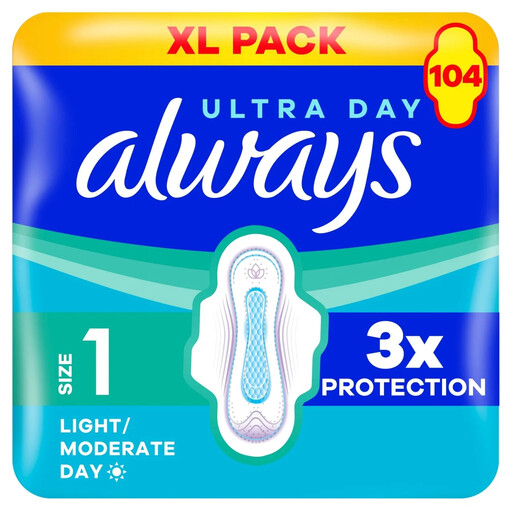
Why This Fits Their Persona: A 104-pad pack is practical for regular daytime menstrual protection and households that prioritise a lower cost per pad.
The normal Size 1 format clearly identifies its intended coverage, rather than relying on a vague “all-day” label.
Ultra-thin construction, adhesive backing and a 104-pad pack for normal daily flow.
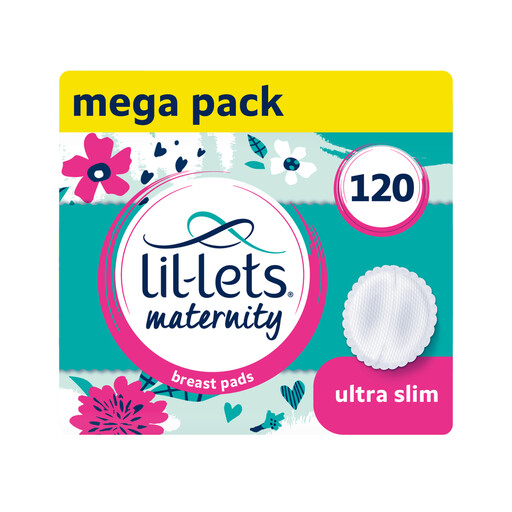
Why This Fits Their Persona: Breastfeeding mothers seeking soft, portable and neatly stored protection may value the four packs of individually wrapped pads.
The product is specifically shaped and described for breast milk leakage, avoiding the mismatch of using a menstrual or bladder pad.
Ultra-thin design, adhesive backing and individual wrapping, supplied as 120 pads.
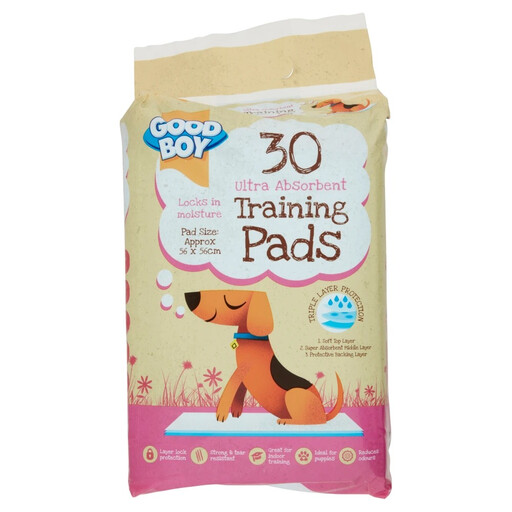
Why This Fits Their Persona: Puppy owners, indoor dog households and carers needing a floor-protection option can use these pads in a designated location.
The plastic side-down instructions and stated floor-protection purpose make its placement and use clear.
Absorbent core, leak-resistant backing, quick-drying surface and odour neutraliser.
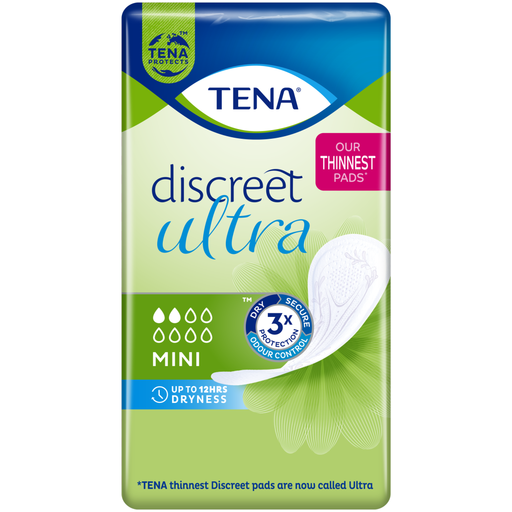
Why This Fits Their Persona: Adults seeking a compact option for light bladder weakness may prefer individually wrapped pads that fit into a handbag or pocket.
Its Ultra Mini format is clearly positioned for light bladder weakness, helping prevent overestimating the coverage needed.
Individually wrapped, slim construction and stated odour-control features; supplied as 20 pads.
We have compiled a complete, real-time list of products that fully satisfy these strict selection criteria and UK safety regulations.
Place adhesive-backed pads centrally in clean, dry underwear and press them firmly into position. Change sanitary pads, incontinence pads and maternity breast pads when saturated or uncomfortable. Do not flush disposable pads, wrappers or backing paper; place them in a suitable waste bin.
For pet training pads, put the absorbent side upwards and the plastic backing against the floor. Keep used products away from children and pets, and follow the packaging instructions for storage.
It depends on the product and amount of fluid. Change the pad when it is wet, saturated, displaced or uncomfortable. TENA Discreet Ultra Mini instructions state changing every four to eight hours as needed and not wearing one for more than 12 hours. Always follow the specific product label.
Not necessarily. Sanitary pads are designed for menstrual flow, while incontinence pads are designed for urine leakage and may include different shaping, absorbent materials and odour-control features. Select the product according to its stated use.
Compare the price per pad, pack quantity and expected replacement frequency. Larger packs can reduce repeat ordering, while individually wrapped pads may reduce contamination when carried outside the home. Do not use a pad for longer than recommended simply to reduce spending, as this may cause leakage or discomfort.