
24/7 Customer Support

Free returns

Same-day & Next-day Delivery

Quality Guaranteed

Unlock Your Welcome Offers: FREE Delivery | Up to 80% OFF | Free 30-day JoyPlus trial
Download the APP
Acacia wood servingware can make everyday meals and dinner parties feel more considered, but attractive photographs do not always reveal whether a piece will work well in a real kitchen. A shallow dish may look stylish yet allow snacks to spill, while a large wooden serving bowl can become awkward if its dimensions do not suit your cupboard or dining table.
Before buying, look beyond grain colour and rustic styling. The most useful questions concern construction, layout, care requirements and how often you expect to use the item.
Natural variation is part of the appeal of acacia wood, but an attractive grain pattern does not automatically indicate a suitable serving piece. Check the product description for the material, shape, dimensions and recommended cleaning method. A handcrafted servingware item may have individual variations, so expect differences in tone and grain rather than a perfectly uniform finish.
A three-section serving dish or four-compartment serving dish can keep nibbles separated, but small sections may not suit larger fruit, sandwiches or generous portions of salad. Consider what you usually serve: dips and olives need less room than crisps, pastries or chopped vegetables. Raised edges are also useful because they help contain food when the dish is being carried from the kitchen to the table.
Acacia wood servingware generally needs more careful handling than glass, ceramic or stainless steel. Soaking, dishwasher cycles and prolonged moisture can affect the wood’s surface and shape. A product that requires hand washing is not necessarily inconvenient, but this maintenance should fit your routine before you purchase.
Look for clearly stated acacia wood construction and care instructions. Acacia has a naturally varied appearance, with light and dark grain patterns that make each piece visually distinct. For food presentation, the product information should indicate that the item is intended for serving food and explain how to clean it.
Avoid treating descriptions such as “naturally antibacterial” as a substitute for safe food handling. Wooden serving pieces still need to be cleaned promptly, dried thoroughly and used with fresh food in accordance with normal kitchen hygiene practices.
Dimensions are particularly important for a wooden serving bowl, cheese board or large salad servers. For example, a 26 x 26cm bowl offers a substantial footprint for salads and snacks, while a 37 x 23cm cheese board provides a more elongated layout for cheese, crackers and fruit. Measure your storage shelves as well as your dining table, especially if you live in a compact UK kitchen.
Choose the format according to the food you serve most often:
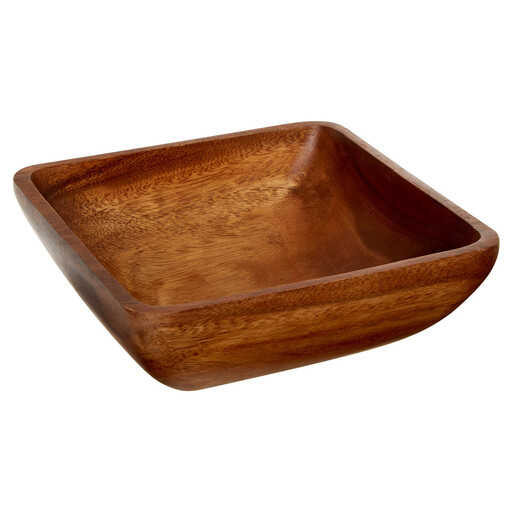
Why This Fits Their Persona: A straightforward starting point for UK households wanting one versatile bowl for salads, snacks or shared dishes without buying a full matching collection.
Its high sides help contain contents, while the stated 26 x 26 x 8cm dimensions make the capacity and table footprint easier to judge before purchase.
Square format; high sides; suitable for salads, nibbles and snacks; wipe-clean care routine.
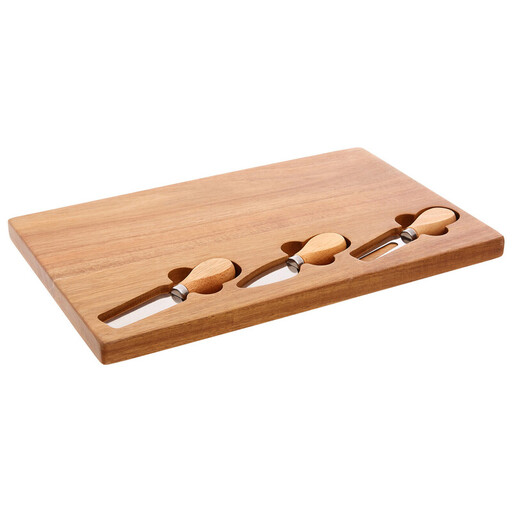
Why This Fits Their Persona: Suits hosts who want a coordinated presentation for cheese, charcuterie and fruit at supper clubs, festive gatherings or relaxed weekend entertaining.
The 37 x 23cm size is stated clearly, and the integrated storage section keeps the three included knives with the board rather than requiring separate storage.
Three stainless steel cheese knives; built-in knife storage; generous serving surface; suitable for cheese and charcuterie.
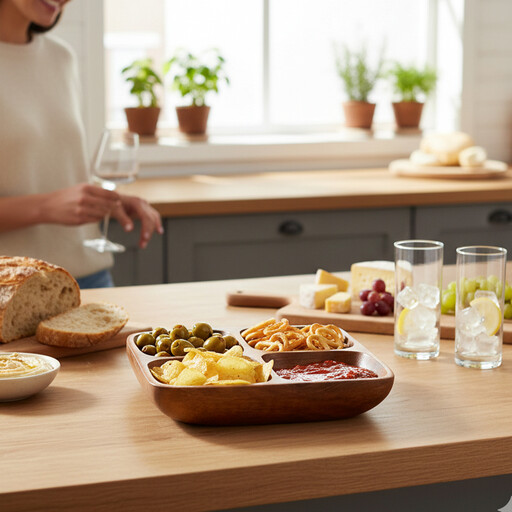
Why This Fits Their Persona: A practical choice for hosts who regularly serve several separate snacks, dips, condiments or appetisers at once.
Four deep compartments separate foods, reducing mixing and making a multi-item spread more orderly than a single flat platter.
Four sections; rounded base; square layout; suitable for nuts, olives, fruit, dips and cheeses.
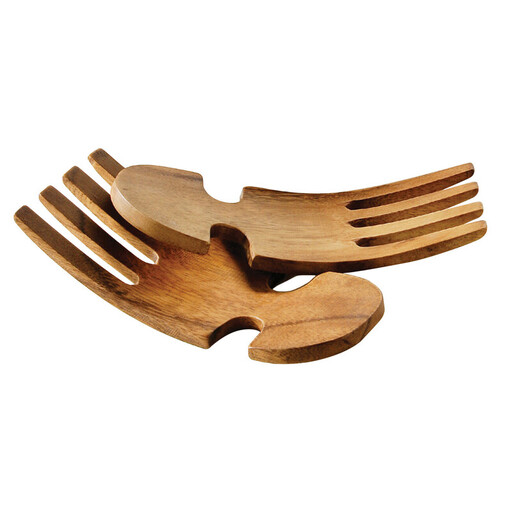
Why This Fits Their Persona: Designed for people who make leafy, pasta or fruit salads regularly and want a matching pair of serving utensils for everyday meals and barbecues.
The curved shape and rounded handles address grip and serving control, while the hand-wash guidance sets realistic maintenance expectations.
Set of two; curved profile; rounded handles; suitable for leafy, pasta and fruit salads.
To preserve acacia wood servingware:
These steps help reduce moisture-related damage and maintain the wood’s natural appearance. Retire a piece if it develops deep cracks, splinters or a surface that can no longer be cleaned effectively.
We have compiled a complete, real-time list of products that fully satisfy these strict selection criteria and UK safety regulations.
Acacia wood can be used for food presentation when the product is specifically made for serving and is maintained according to its instructions. Clean it promptly, avoid soaking and do not assume that every wooden decorative item is food-contact suitable.
Its usable lifespan depends on construction, frequency of use and maintenance. Regular hand washing, thorough drying and appropriate oiling where advised can help preserve the surface. Replace pieces showing deep splits, splinters or persistent odours.
There is no electricity or ongoing energy cost. The main maintenance expense is occasional food-safe mineral oil if recommended by the manufacturer. The greater consideration is time: these pieces usually need hand washing and careful drying rather than a dishwasher cycle.