People adapting a device they already use
If reading, writing, screen navigation, captions or reminders are difficult, try the relevant controls on your phone, tablet or computer in the apps you use each day.


Start with the everyday task that is difficult, then try relevant accessibility settings on a device you already use. Consider specialist software or an alternative input device if the built-in option does not work for that task; for a specialist communication aid, AbilityNet and Ace Centre advise assessment and a trial to match the person’s access and communication needs.
The starting point changes with the task: reading a screen, entering text, keeping track of information and communicating with others call for different checks.
If reading, writing, screen navigation, captions or reminders are difficult, try the relevant controls on your phone, tablet or computer in the apps you use each day.
A screen reader, magnification, dictation or an alternative keyboard may address a specific barrier. Check the operating system, app and input method together rather than choosing by a feature name alone.
For augmentative and alternative communication (AAC), the way a person accesses and uses an aid matters as much as its features. AbilityNet and Ace Centre emphasise individual needs, assessment and trial when choosing specialist communication equipment.
Define the task before choosing a device or tool. For each possible route, try the complete task with the intended app, account and method of control.
Consider when: Reading, writing, captions or basic device control are the main difficulties and you already have a suitable phone, tablet or computer.
Keep in mind: A setting on the device does not establish that the particular app or website you need will work with it.
Consider when: The built-in option does not let you complete the task, or you need a dedicated way to read a screen or operate a device.
Keep in mind: The software or peripheral must work with your operating system and routine, and may require setup or practice.
Consider when: You are choosing a specialist aid for a person who needs an alternative way to communicate.
Keep in mind: AbilityNet and Ace Centre advise matching the aid to the person’s communication and access needs through assessment and, where possible, a trial.
| Priority | What to check | Your needs |
|---|---|---|
| Everyday task | Identify the exact reading, writing, communication or task-tracking activity. Try the steps you need to complete, not just a feature demonstration. | I want to capture information in a meeting, keep track of appointments or use a particular app; the right starting point depends on which task is difficult. |
| Compatibility | Check the device model, operating-system version, required app or website, account and external connections. Google notes that Android accessibility features can vary by device and market. | A feature is useful to me only if it works in the app and with the keyboard, microphone or other input method I rely on. |
| Communication access | For specialist AAC, assess how the person selects messages and whether the aid fits their visual, motor, language and communication needs. Arrange a trial where possible, as advised by AbilityNet and Ace Centre. | The aid needs to be usable in my real conversations, not merely have an appealing list of features. |
| Notes and reminders | Check how reminders are entered and noticed, and whether notes or recordings need to move between a planner, phone or required work or study system. | I mainly need help keeping track of tasks or capturing information, rather than another way to operate a computer. |
| Work or study support | Check the applicable support process before selecting workplace or study equipment. GOV.UK advises students using its Disabled Students’ Allowance route not to buy equipment before assessment. | If the tool is for my job or course, I need to know which assessment and setup arrangements apply before choosing it. |
An aid may be difficult to use if its access method does not suit the person’s movement, vision, language or communication setting.
For specialist AAC, seek an individual assessment and a trial where possible, as AbilityNet and Ace Centre advise.
Allow for the time needed to try the setup and arrange training or continuing support.
Availability can vary by device and software version, while a particular app or external input device may affect the task you need to complete.
Test that task from start to finish with the intended device, app, account and input method before changing equipment.
The recommended equipment and arrangements may be determined through the student-support process. GOV.UK’s Disabled Students’ Allowance guidance says not to buy equipment before assessment.
If you plan to use that route, complete the applicable assessment process before selecting study equipment.
A tool intended for a particular job must work with its required software and workplace setup. GOV.UK also identifies Access to Work as a potential route for specialist equipment or assistive software, subject to eligibility.
Discuss the task and required setup with your employer, and check whether Access to Work applies before choosing workplace-specific equipment.
These references help identify features to try on an existing device or software route; their inclusion does not establish that a particular app or accessory will be compatible.
For people using an iPhone, iPad or Mac who want to explore built-in accessibility controls.
For people exploring reading, screen navigation or other accessibility features on an Android phone or tablet.
For desktop or laptop tasks that may call for built-in screen reading, voice access or alternative input.
For Windows users considering a dedicated screen reader.
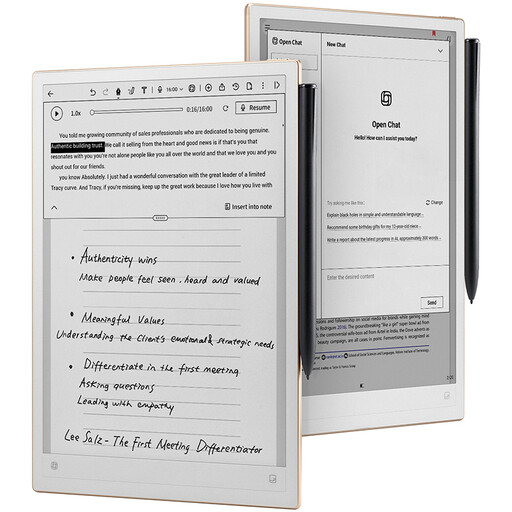
This digital notebook is an option to examine if your main task is capturing notes and organising work or study information. Check its transcription conditions and how it fits your existing workflow.
 No image available
Consider this for handwritten notes, transcription and task planning. Its listing states 16-language transcription requires an internet connection; confirm that your required language, apps and note workflow are compatible. The stated specifications include four microphones and a stylus, but no speaker or reading light.
Yes, if you can test the task on a device you already use. GOV.UK notes that phones, tablets and computers often have built-in accessibility features; try the relevant setting in your actual app before deciding whether you need another tool.
Test the complete task on the intended operating-system version, app or website and input method, including any external device. Google notes that Android feature availability can vary by device and market, so a feature name alone is not a compatibility check.
For complex AAC selection, seek an individual assessment and a trial where possible. AbilityNet and Ace Centre advise matching the aid to the person’s abilities, preferences and communication needs rather than choosing from specifications alone.
GOV.UK says Access to Work may support eligible people with specialist equipment or assistive software for work. Check the applicable arrangements before choosing a tool: its factsheet distinguishes the route in England, Scotland and Wales from arrangements in Northern Ireland, the Channel Islands and the Isle of Man.
Not if you are using the GOV.UK Disabled Students’ Allowance route: its guidance says not to buy equipment before assessment. Follow the process for your applicable funding body so the recommended equipment and support can be identified first.