What to check before choosing
Check essential programmes and services before committing to hardware. Then decide whether the existing screen can stay or whether a different TV interface, streamer or programme guide would make everyday use easier.
Smart TV
Consider it when: One integrated screen and interface suits the household, and the exact TV, remote and required apps can be checked.
Bear in mind: TV-wide settings may not carry into apps; Google TV says its caption preferences might not apply to certain apps.
Separate streamer
Consider it when: The existing screen is suitable but its menus lack the navigation tools the viewer needs. Apple TV 4K, Fire TV and Google TV document different spoken-navigation and display options.
Bear in mind: Feature availability can depend on the particular model, language and app; programme access tracks still need checking separately.
Sky TV route
Consider it when: Voice Guidance, guide labels for access services and voice-led control would make finding programmes easier on a suitable Sky setup.
Bear in mind: Third-party apps have their own access controls. Sky Glass hands-free voice control also requires a Streaming TV subscription and use within four metres of the television.
| Concern |
What to check |
Who this matters to |
| Subtitles, signing and caption readability |
Find subtitles or signing on regularly watched programmes. Check caption appearance and how playback controls work in each main app. |
If following speech depends on readable captions or signing, a subtitle setting alone is not enough. Around 31% of consumers might put this access need first. |
| Audio description and spoken navigation |
Try spoken guidance in Home, Search and Settings; separately check for a selectable audio-description track on intended titles. |
Being able to find a programme independently matters alongside hearing its visual action described. Roughly 31% of consumers may prioritise those linked needs. |
| Physical control and interface readability |
Try the remote or alternative input method, then inspect magnification, contrast and text settings in the device and main apps. |
When buttons or on-screen text make daily navigation demanding, simpler control becomes the deciding factor. About 23% of consumers might place it first. |
| Service access and programme discovery |
Confirm that regular channels and apps work on the exact setup, and look for access labels on representative programmes. |
Finding and starting familiar viewing without a difficult search may matter more than one particular device feature. Approximately 15% of consumers might prioritise this need. |
Brands and platforms to consider
These are reference points for comparing access features across devices and services, not substitutes for checking the exact model, app and programme.
Apple
Apple TV 4K is a separate-streamer route for households considering spoken navigation, display adjustments, captions and alternative controls.
- Apple documents VoiceOver with braille-display support, Zoom, captions and subtitles for deaf and hard-of-hearing viewers, audio descriptions, and Switch Control.
- Apple says features and content vary by country or region and Apple TV hardware model. Check the intended apps and titles as well as the exact device.
Amazon Fire TV
Fire TV offers another streaming-device or smart-TV platform to assess when spoken menus and adjustable display options matter.
- Amazon documents VoiceView, captions, Screen Magnifier and text-display options for Fire TV.
- Amazon says feature and language availability can vary by device. Its VoiceView guidance covers Fire TV remotes rather than the Fire TV Remote App; audio description also depends on the selected content.
Google TV
Google TV is a platform to examine on an integrated TV or compatible streaming device when TalkBack, captions or alternative controls are priorities.
- Google documents TalkBack, caption controls, Switch Access, accessibility shortcuts and high-contrast text.
- Google says caption preferences might not apply to certain apps. Check the exact hardware and the apps used most often.
Sky
Sky Glass, Sky Stream and Sky Q are routes to consider when programme-guide access labels and guided navigation are important.
- Sky documents Voice Guidance, guide highlighting for subtitles, audio description or sign language, high contrast, Screen Magnifier and voice controls.
- Third-party TV apps use their own access controls. Sky Glass hands-free voice control requires a Streaming TV subscription and use within four metres of the television.
Netflix
Netflix is a content service to check alongside any hardware choice when subtitles or audio description are central to regular viewing.
- Netflix documents audio-description search and labels, as well as options to customise subtitle and closed-caption appearance.
- Netflix says some programmes may not offer audio description for every season or episode. Check the titles the household intends to watch.
Joybuy smart TVs for an integrated setup
These TCL Google TV models are choices for a household considering one integrated TV and streaming interface. Choose a screen size that suits the viewing space, then check the exact model’s accessibility controls and the access options in the apps and programmes you use.
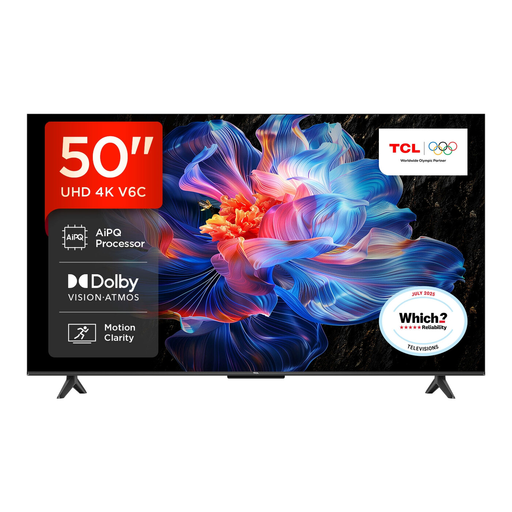 Image unavailable
TCL 50V6C 50-inch Google TV
For an integrated TV and streaming setup where a 50-inch screen suits the room.
Direct LED display with 4K HDR, as stated in the product name. Before choosing it for accessibility, check the controls on this exact model and the required features in the household’s apps and programmes.
View on Joybuy
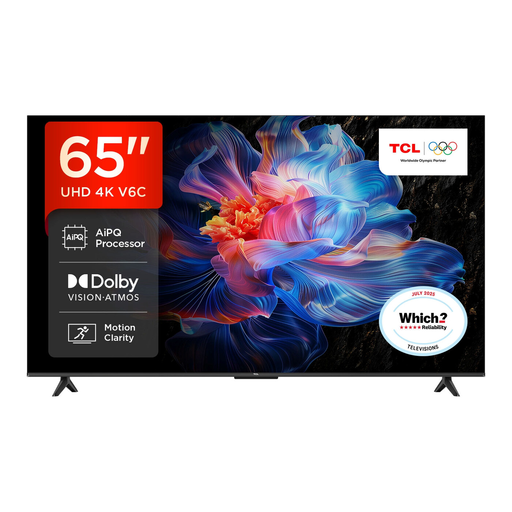 Image unavailable
TCL 65V6C 65-inch Google TV
For an integrated TV and streaming setup if a 65-inch screen fits the viewing space.
Direct LED display with 4K HDR, as stated in the product name. Check the exact TV’s navigation and control options, then confirm captions or audio description in the intended apps and titles.
View on Joybuy
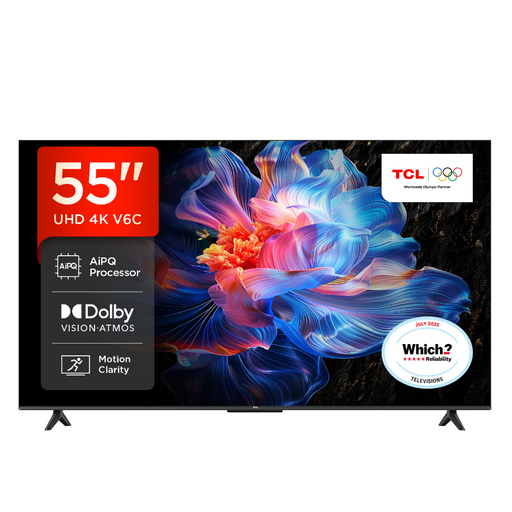 Image unavailable
TCL 55V6C 55-inch Google TV
For a household considering a 55-inch screen with TV and streaming in one device.
Direct LED display with 4K HDR, as stated in the product name. Try the accessibility settings on this model and check whether the main apps honour the caption controls the viewer needs.
View on Joybuy
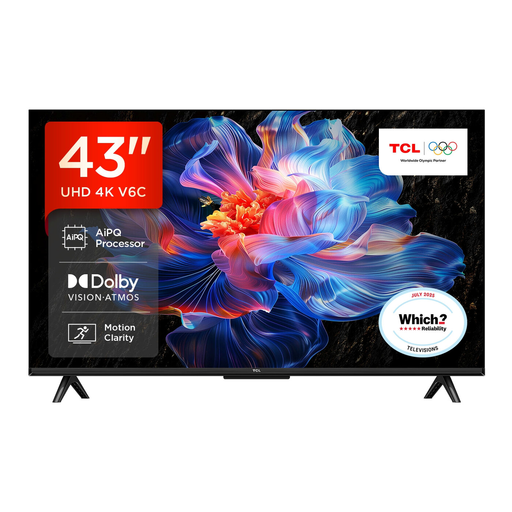 Image unavailable
TCL 43V6C 43-inch Google TV
For an integrated setup where a 43-inch screen suits the room and the viewer’s needs.
Direct LED display with 4K HDR, as stated in the product name. Check this model’s remote and navigation settings, plus access-track availability in regularly watched programmes.
View on Joybuy
Questions about accessible TV and streaming
Will an accessible TV provide subtitles, audio description or signing for every programme?
No. A TV or streamer can provide navigation and display tools, but the service and programme must offer the relevant access option. Netflix notes that audio description can vary by season or episode, so check regularly watched titles rather than relying on the device’s feature list.
Should I turn on subtitles and audio description in the device or the app?
Check both the device’s accessibility settings and the app’s playback controls. Google TV says its caption preferences might not apply to certain apps, while Netflix provides audio and subtitle choices during playback on TVs and streaming devices.
How can I find audio-described programmes before watching?
Look for an audio-description label or search option on the service you intend to use. Netflix documents audio-description labels and search, while Sky documents programme-guide highlighting and voice-led discovery on supported Sky routes; confirm the option on the particular title.
Do UK broadcast channels and streaming services follow the same access-service rules?
No. Ofcom distinguishes the statutory access-service arrangements for broadcast television and on-demand services in the UK. Those service-level rules should not be taken as a guarantee that a particular streaming title or device has the access feature the household needs.
What should we try when a new setup is ready?
Try the complete viewing journey with the person’s preferred controls: navigate Home and Search, open the main apps, start familiar programmes and select the required subtitles or audio description. Check both menus and playback, because an accessible device interface and an available programme track are different things.


