People who need clearer on-screen information
Larger text, stronger contrast, magnification or spoken reading may make messages, websites and service information easier to use. Age UK identifies sight-related barriers to using everyday devices.


Choose a tablet by testing the accessibility settings and input method needed for the person’s everyday tasks before comparing ordinary specifications. An iPad is worth considering for Apple’s built-in tools, while an Android tablet may suit someone who prefers its spoken feedback, display controls or alternative inputs; in either case, check the exact model’s features and software support. Arrange setup help where it is needed, and check a refurbished device’s condition and compatibility before committing to it.
Larger text, stronger contrast, magnification or spoken reading may make messages, websites and service information easier to use. Age UK identifies sight-related barriers to using everyday devices.
Someone with limited mobility or dexterity may need spoken navigation, voice control or another input method. The method needs to work for their actual tasks, not just appear in an accessibility menu.
Setup, practice and ongoing help can affect whether a tablet gets used. Age UK offers digital instruction guides, while local support and device programmes have their own availability and eligibility conditions.
Start with how the person will read, hear and control the tablet, then check the exact model’s software support and who can help set it up.
Consider it when: Apple’s VoiceOver, text and display controls, spoken reading or voice control suit the person’s tasks.
Check first: Apple says features and apps can vary by iPad model, region and language; confirm the exact model’s iPadOS compatibility and test the required tools.
Consider it when: TalkBack, display adjustments, captions or a preferred alternative input work well for the person.
Check first: Google says accessibility navigation and feature names can vary by device and market; software-update support also needs checking for the exact model.
| Concern | What to check | Who this matters to |
|---|---|---|
| Readable information | Try text and display sizing, contrast, magnification and spoken reading on messages and websites. Magnification can leave less content visible at once. | If I struggle to read a message or find a website button, a larger screen alone may not solve it. Roughly 31% of consumers would put readable information first. |
| Easier control | Try unlocking, navigation and typing with the intended voice, touch or accessory input; confirm accessory compatibility. | When precise gestures are difficult, I need a way to complete a call or message without repeated attempts. Around 25% of consumers would prioritise easier control. |
| Calls and audio | Test captions in the intended calling app, along with visible alerts and suitable audio settings. Caption availability can depend on the app or content. | If speech in calls or videos is hard to follow, I need an alternative I can use in those apps. About 19% of consumers would make communication access their main concern. |
| Setup and continued use | Identify a source of setup help and check the exact model’s update position. For a refurbished tablet, inspect its condition and what comes with it. | I may be comfortable using a tablet once someone helps configure it, but I also need help if a setting changes. Roughly 25% of consumers would put support and continued use first. |
Apple and Google both describe variations in feature availability or navigation across models and markets. A listed feature does not show whether the person can complete their usual tasks with it.
Try reading a message, finding a website control, joining a call and adjusting text or captions on the intended tablet.
Software compatibility is model-specific: Apple publishes an iPad compatibility list, while Samsung and Lenovo describe model-dependent update information.
Get the precise model identifier and check its software position, battery condition, charger, warranty and return terms before buying.
Connecting to Wi-Fi, adjusting accessibility settings and learning to get online may require help. UK digital-inclusion guidance treats skills, support and confidence as part of access.
Arrange a helper or suitable local session and record the settings that work for the person.
Age UK’s Connected Age tablet-loan scheme ended in August 2022. AbilityNet describes donated-device support for eligible people in specified areas.
Check current local availability and eligibility before making a device programme part of the plan.
An iPad may suit someone whose tasks work well with Apple’s built-in accessibility tools.
Galaxy Tab models may be worth examining if Samsung’s Android accessibility settings and UK setup guidance fit the person’s needs.
Lenovo tablets are worth comparing by full model code when alternative-input settings and published support plans matter.
These tablets offer different screen sizes and input possibilities for everyday online tasks. Try the accessibility settings needed by the intended user and check software support for the exact model before choosing.
 No image available
Consider this model if an 11.45-inch screen is a useful size for trying reading and navigation tasks.
The listing specifies Wi-Fi connectivity and 128GB storage. Check the accessibility controls and software support on this exact model; online use away from Wi-Fi needs another connection method.
 No image available
Consider this iPad if Apple’s accessibility tools and a compatible alternative input suit the person’s tasks.
The listing states compatibility with Apple Pencil and Magic Keyboard; both accessories are sold separately. Check the required features and current iPadOS compatibility for this exact model.
 No image available
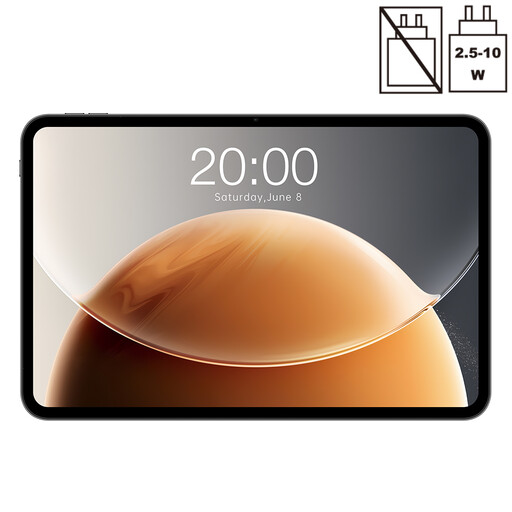
Try this model if a 13.4-inch display is a size the person can comfortably hold and use for reading tasks.
The listing states dual-SIM 4G and Wi-Fi connectivity. Screen size does not establish text readability or ease of touch control, so test those settings and check model-specific software support.
 No image available
Consider this tablet if the person wants to try a stylus as an alternative to finger input.
The listing describes magnetic stylus support and an 11.2-inch display. Confirm stylus compatibility and package contents, then test the required accessibility settings and check software support for the exact model.
 No image available
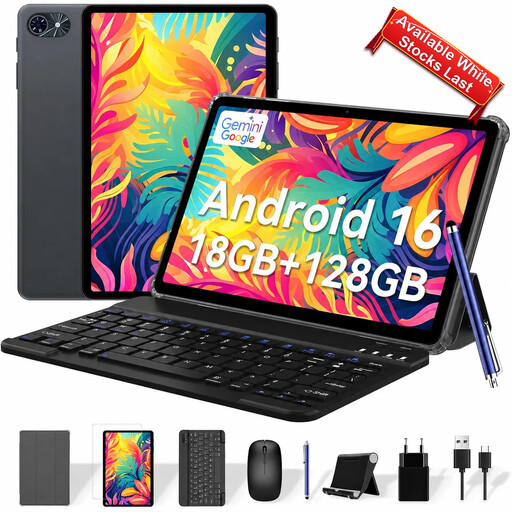
Consider this model if typing on a keyboard may be easier than using the touchscreen for messages and online forms.
The product title states that a keyboard is included. Confirm the package contents, try the keyboard with the intended tasks and check the exact model’s accessibility settings and software support.
Not automatically: test text sizing, contrast, magnification and spoken reading on the exact tablet first. Age UK explains that devices can be configured to read content aloud, while a larger screen by itself does not show whether website controls and messages will be usable.
They may be able to use another interaction method, but it needs testing on the chosen model. Google describes TalkBack and other Android accessibility options while noting that feature names and navigation can vary by device and market.
Check its precise model identifier and current software compatibility, then inspect its battery condition, charger and return terms. Apple lists compatible iPads, while Samsung and Lenovo provide model-dependent update information; the brand and screen size are not enough to establish support.
Yes, particularly if setup or learning to use online services is a barrier. Age UK offers digital guides, and local help or device programmes may be available; check current provision and eligibility in the person’s area rather than assuming a particular scheme applies.