
24/7 Customer Support

Free returns

Same-day & Next-day Delivery

Quality Guaranteed

Unlock Your Welcome Offers: FREE Delivery | Up to 80% OFF | Free 30-day JoyPlus trial
Download the APP
Finding the right tools can transform a creative idea into a finished piece of art. For many hobbyists and artists, the search for a versatile, easy-to-use medium ends with acrylic paint pens. These tools combine the vibrant, opaque colour of acrylic paint with the control of a marker, but navigating the options can be tricky. With so many choices available, how do you know which set is right for your project, whether you're decorating rocks, personalising a mug or creating detailed canvas art?
This guide is designed to help you understand the key features to look for in acrylic markers. We will explore different tip types, ink properties and colour ranges to help you make an informed choice. We'll also share some of our top recommendations to get you started on your next creative endeavour.
Before diving into specific products, it's useful to understand what sets different craft pens apart. Considering these factors will help you select a pen that matches your artistic needs.
The tip, or nib, of the pen dictates the kind of line you can create.
The quality of the acrylic ink is crucial for the final result. Look for pens with highly pigmented, opaque ink that provides strong coverage, especially if you plan to work on dark surfaces.
Most acrylic markers are multi-surface paint markers, suitable for a wide range of materials. For projects that will be handled frequently or placed outdoors, such as painted rocks or custom mugs, choosing waterproof paint markers is essential. The ink in these pens is designed to be permanent and lightfast once fully cured, ensuring your artwork remains vibrant and doesn't fade over time. This makes them ideal as paint pens for rocks, wood paint pens and even glass paint pens.
The number of colours you need depends entirely on your projects. For simple outlining or monochrome designs, a basic set of black and white might be all you require. However, for vibrant illustrations or detailed craftwork, a larger set with a wide spectrum of colours, including metallics and neons, can provide greater creative freedom.
Here are a few standout options that cater to different creative needs, from detailed illustration to broad-stroke crafting.
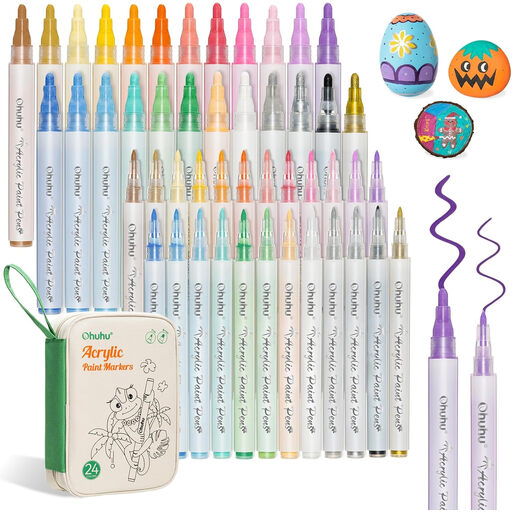

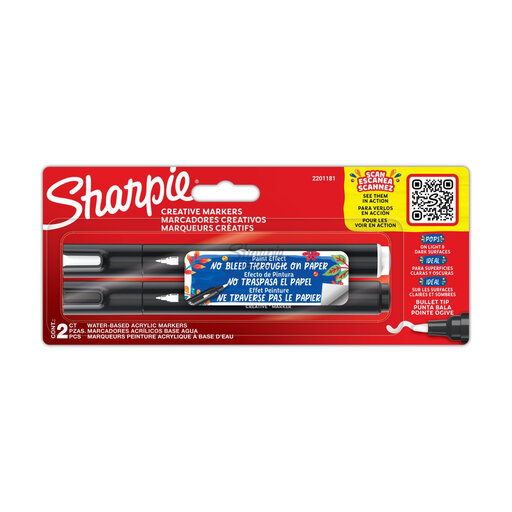
While these recommendations cover a range of uses, your perfect creative tool might be something different. For a wider selection of pens suitable for art, crafts and design, explore our full range of Plastic Art Pens.
1. How do you make acrylic paint pens permanent? Most high-quality acrylic ink is permanent on porous surfaces like wood, paper and canvas once it has fully dried. For non-porous surfaces like glass or ceramics, you can often increase durability by baking the item in an oven. Always check the manufacturer's instructions, but a common method is to let the paint air-dry for 24 hours, then bake at a low temperature (e.g., 180°C) for about 30-60 minutes. This helps cure the paint, making it more resistant to washing and wear.
2. Can you use acrylic paint pens on fabric? Yes, acrylic markers work well on fabric. For best results, pre-wash the fabric without using fabric softener. After applying your design, allow the paint to dry completely (usually for at least 24 hours). To make the design washable, heat-set it by placing a cloth over the design and ironing it on a medium-high setting for a few minutes.
3. What is the difference between acrylic markers and alcohol markers? The primary difference lies in the ink. Acrylic paint pens contain opaque, water-based paint that sits on top of a surface, providing solid coverage similar to traditional paint. They are versatile and work on many materials. Alcohol markers contain translucent, dye-based ink that soaks into paper and is primarily used for blending and creating smooth colour gradients, making them a favourite for illustrators and comic artists working on paper.