
24/7 Customer Support

Free returns

Same-day & Next-day Delivery

Quality Guaranteed

Unlock Your Welcome Offers: FREE Delivery | Up to 80% OFF | Free 30-day JoyPlus trial
Download the APP
Transforming blank window panes, tired worktops, or plain cabinet doors is one of the simplest ways to refresh a living space without committing to permanent renovations. Whether you want to add privacy to a street-facing ground-floor flat window, cover worn cupboard fronts, or design bespoke temporary illustrations for seasonal displays, selecting the right material is essential. Many buyers find themselves torn between static cling films that rely entirely on cohesive friction and self-adhesive vinyl sheets engineered for firm, long-lasting surface renewal.
Navigating the choices requires understanding how different surface coverings interact with domestic finishes. Applying the wrong material to an unsuitable surface often results in unsightly air bubbles, curling edges, or frustration during removal. Furthermore, if you plan to personalise plain vinyl or glass with custom illustrations, hand lettering, or decorative patterns, you need colour mediums that provide solid opacity without beading or running. This guide breaks down the essential factors to consider when choosing surface films and complementary decorative tools for your home.
A frequent oversight is treating static cling films and sticky-back plastic as interchangeable products. Static cling films possess no adhesive layer; they rely purely on clean, non-porous contact surfaces like smooth window glass to stay in place. In contrast, self-adhesive vinyl sheets utilise a pressure-sensitive adhesive backing designed to grip flat surfaces such as wood veneer, desks, and laminate shelving. Attempting to use static cling on textured or porous materials will result in immediate detachment, while applying strong adhesive vinyl to delicate glass can make future removal and residue cleanup considerably more labour-intensive.
Rushing the application process without thoroughly degreasing and clearing the surface is the primary cause of unsightly air pockets and peeling corners. Even minute particles of household dust, grease, or lint create raised bumps beneath thin vinyl or cling sheets, weakening contact. For both window films and worktop covers, surfaces must be completely clean and fully dry before laying the material down. Smoothing the sheet incrementally from the centre outwards helps achieve a flat, professional finish free from trapped air.
When hand-decorating clear static clings, window glass, or blank vinyl wraps, standard dye-based markers or watercolour pens are inadequate. They tend to bead up on smooth plastic, take hours to dry, and appear faint or translucent against natural light. To create distinct designs, high-opacity, water-resistant acrylic inks are necessary. Acrylic-based formulations cling to slick, non-absorbent surfaces cleanly, drying to a solid, vibrant finish that resists accidental smudging while retaining fine lines.
The intended installation area dictates whether you need a non-adhesive cling or a self-adhesive vinyl sheet. Match the backing style to the surface stability and how frequently you intend to replace or reposition the covering.
If you are customising plain sheets or drawing direct accents onto glass and craft panels, the ink formulation and tip shape determine design quality and speed of execution.
Carefully measuring the project area prevents premature seam joins and reduces material waste, ensuring a cohesive look across wider furnishings.
Review our selected vinyl covering and high-opacity dual-tip marker sets designed to upgrade smooth household fixtures, glass panels, and creative surface projects.
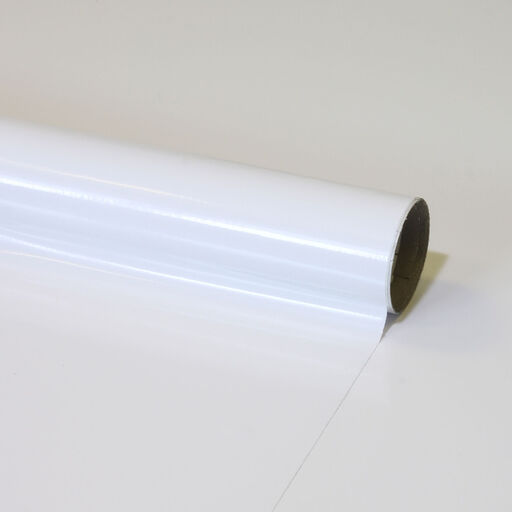
Why This Fits Their Persona: This cut-to-fit vinyl sheet offers a practical 45cm by 2m roll dimension, making it suitable for resurfacing bedside tables, cabinet doors, and shelving in rental flats or home offices. The crisp white gloss finish provides a clean, modern aesthetic that brightens interior spaces without requiring paint.
Because it is designed as a sticky back plastic rather than a loose cling, it adheres securely to clean, dry surfaces, avoiding edge lifting and slipping on everyday domestic furniture.
Its roll format allows you to measure and trim the exact length required for your specific furniture layout, giving a neat finish on smooth home and office surfaces.
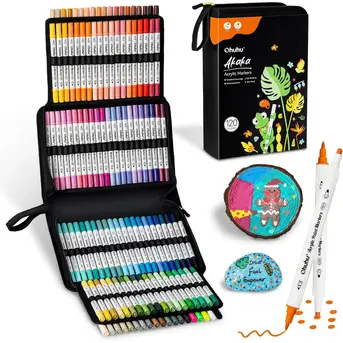
Why This Fits Their Persona: Featuring 120 colours, this expansive set supplies an extensive tonal range for illustrating directly onto glass, ceramic, rock, wood, and paper. The dual tip design pairing brush and dot tips gives you fine control over lettering, outlining, and decorative dot patterns on custom surface projects.
The high opacity, water-resistant ink prevents the patchy translucency and running that often spoil attempts to decorate slick glass or synthetic sheets with standard craft pens.
With broad material compatibility covering glass, ceramic, fabric, wood, paper, and eggs, it provides the versatility needed to create bespoke decorative accents across varied craft media.
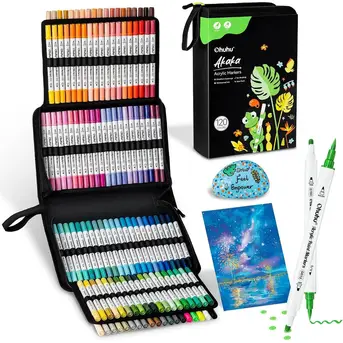
Why This Fits Their Persona: Equipped with 120 colours, this dual tip set provides brush and dot tips suited for filling broad sections as well as placing precise, repetitive point accents. The formula delivers high opacity and water resistance across glass, rock painting, wood, ceramics, fabric, and paper.
Its dense acrylic ink formulation grips non-porous glass and ceramic surfaces evenly, preventing the bead-up and colour separation common with ordinary water-based felt pens.
The pairing of flexible brush application with dedicated dot tips allows seamless transitions from broad colour blocking on display glass to intricate decorative detailing on craft items.
If you require alternative roll widths, textured privacy patterns, frosted window finishes, or specialised application squeegees for your home project, explore our wider catalogue of surface films and craft accessories.
Start with a clean, dry, and dust-free surface. Peel away only a small section of the backing paper at one edge, align the vinyl sheet with your furniture corner, and press it down. Gradually peel back more backing paper while smoothing the sheet outward with a felt-edged scraper or clean cloth to push air out as you proceed.
Yes, high-opacity, water-resistant acrylic paint markers bond well with smooth glass and synthetic surfaces like vinyl. Ensure the glass or film is free of oils and completely dry before sketching. The ink dries into a solid, opaque film that stays put during ordinary handling yet can be scraped away cleanly from untreated glass when redesigning.
Wipe smooth vinyl coverings gently with a soft microfibre cloth dampened with mild soapy water, avoiding abrasive scouring pads or harsh bleach cleaners that can scratch the finish. For hand-painted glass accents, dust lightly with a dry cloth to preserve fine detailing without disturbing the cured acrylic pigments.