
24/7 Customer Support

Free returns

Same-day & Next-day Delivery

Quality Guaranteed

Unlock Your Welcome Offers: FREE Delivery | Up to 80% OFF | Free 30-day JoyPlus trial
Download the APP
From the winding roads of the Peak District on a motorcycle to the vibrant underwater world off the Cornish coast, life’s greatest adventures deserve to be captured. But choosing the right device to do so can be a challenge. The market is filled with action cameras boasting an array of technical specifications, making it difficult to know which one truly fits your needs.
This guide is designed to cut through the clutter. As the Joybuy Product Recommendation Officer, my role is to provide clear, practical advice to help you select a camera that will reliably capture your experiences in stunning detail. We will explore the key features to look for and highlight a few standout models for different types of users.
Before diving into specific products, let's consider the features that matter most. Focussing on these core elements will help you narrow down your options and find the ideal camera for your activities.
The term 4K action camera is now a common standard, and for good reason. A 4K resolution (3840 x 2160 pixels) captures four times the detail of traditional 1080p HD, resulting in sharper, more vibrant footage. This extra detail is not just for viewing on a 4K television; it also gives you the flexibility to crop and reframe your shots in editing without a significant loss in quality. For creators making content for platforms like YouTube, 4K is essential for a professional look.
Pay attention to frame rates, measured in frames per second (fps). A rate of 60fps provides smoother motion than the standard 30fps, which is ideal for fast-paced action. Rates of 120fps or even 240fps allow for dramatic, ultra-smooth slow-motion playback.
Shaky footage can ruin even the most exciting moments. A camera with stabilisation is non-negotiable for any kind of action sport. There are two main types:
For activities like using a motorcycle camera or skiing, robust stabilisation is one of the most critical features to consider.
An action camera needs to be tough. Look for models built to withstand drops, dust and extreme temperatures. Waterproofing is another key consideration. Some cameras are inherently waterproof without any additional housing, making them convenient for spontaneous use in the rain or for snorkelling. Others require a separate case to become a fully functional underwater camera for diving. Always check the IP rating and the specified depth and duration limits.
Based on features, versatility and user feedback, here are our recommendations for action cameras that cater to a variety of needs.
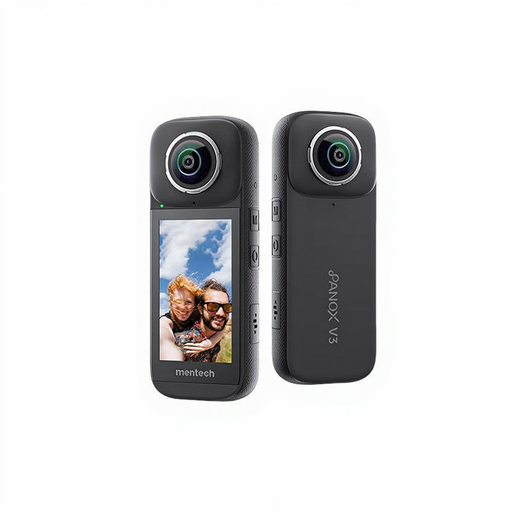
Why It Stands Out: The Mentech PanoX V3 moves beyond traditional video by capturing the entire scene in 5.7K 360° video and stunning 12K photos. Its major advantage is the ability to shoot first and frame later, ensuring you never miss the action. It is also waterproof up to 10 metres without a case and features built-in GPS for overlaying data like speed and route, making it an excellent choice for motorsports and travel vlogging.
Pros:
Who is it for? Content creators and adventurers who want to capture immersive, all-encompassing footage. It is particularly well-suited for motorcyclists, skiers and travel vloggers who value the creative freedom of 360° video and the convenience of a rugged, all-in-one design.
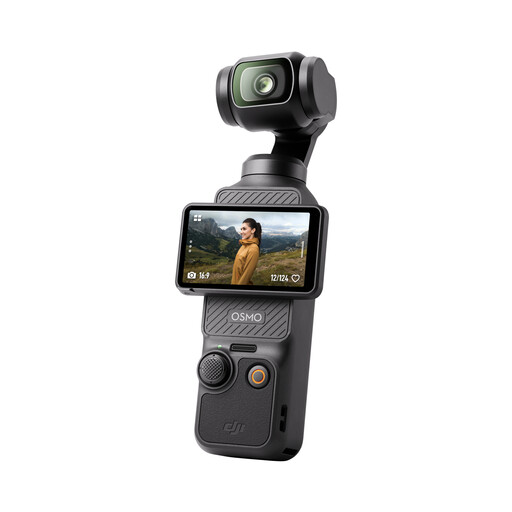
Why It Stands Out: The DJI Osmo Pocket 3 is built around a different philosophy. It combines a high-quality camera with a 3-axis mechanical gimbal, delivering exceptionally smooth, cinematic footage that electronic stabilisation often cannot match. Its large 1-inch CMOS sensor provides excellent performance in low-light conditions, and the smart ActiveTrack 6.0 feature keeps subjects perfectly in frame.
Pros:
Who is it for? This is an ideal vlogging camera and a powerful tool for anyone creating content for YouTube. It excels in situations where footage quality and stability are the top priorities, such as interviews, walk-and-talk segments and capturing smooth B-roll. While not inherently rugged or waterproof, its compact size and video capabilities are its main strengths.
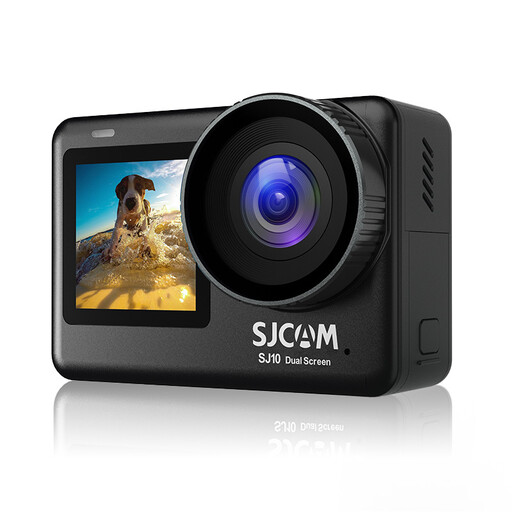
Why It Stands Out: The SJCAM SJ10 Pro offers a versatile and user-friendly package. Its dual-screen design, featuring a large rear touchscreen and a smaller front-facing display, makes it easy to frame shots whether you are behind the lens or in front of it. It delivers crisp 4K video at 60fps and is waterproof down to 30 metres with the included housing, making it a reliable companion for diving and water sports.
Pros:
Who is it for? A great all-round choice for action sports enthusiasts and vloggers. Its combination of a front screen, solid 4K performance and deep waterproofing (with the case) makes it a flexible tool for everything from skiing and fishing to creating content on the go.
Our recommendations cover a range of popular uses, but the world of action cameras and accessories is vast. If you are looking for different features, or perhaps need specific accessories like a new camera screen or mounting kit, we have a wider selection available.
Explore our full range of cameras and accessories to find the perfect match for your next adventure.
1. Do I really need a 4K action camera? While 1080p is sufficient for casual sharing, a 4K action camera offers significant advantages. The higher resolution provides much greater detail, which is noticeable on most modern screens. It also gives you the creative freedom to crop, zoom or pan across your footage during editing without a major loss of quality, making it the recommended standard for anyone serious about video.
2. What is the difference between electronic and mechanical stabilisation? Electronic Image Stabilisation (EIS) is a digital technique where the camera's software smooths out shaky footage, which can sometimes result in a slight crop of the image. Mechanical stabilisation, found in devices like the DJI Osmo Pocket 3, uses a physical gimbal with motors to counteract movement, keeping the camera itself level. This generally produces smoother, more natural-looking results, especially during heavy motion.
3. Can I use an action camera for vlogging? Absolutely. Many models are excellent as a vlogging camera. For this purpose, look for features like a front-facing screen for framing yourself (like on the SJCAM SJ10 Pro), effective stabilisation for walk-and-talk shots and the ability to connect an external microphone for clearer audio.