Active outdoor POV recorders
For hiking, cycling, skiing, surfing or travel footage, you need a secure viewpoint during movement. Check the mount against your equipment and activity, then plan how you will power the camera through the outing.


Choose a conventional action camera for a fixed, wide-angle view that is ready to use with minimal reframing; choose a 360-degree camera if selecting the angle afterwards matters more than a simpler editing workflow. A small wearable camera suits a less obtrusive hands-free view. Whichever format you choose, check the exact mount, water-use conditions, battery and storage plan, and rules at the place you intend to film.
For hiking, cycling, skiing, surfing or travel footage, you need a secure viewpoint during movement. Check the mount against your equipment and activity, then plan how you will power the camera through the outing.
For swimming, snorkelling or other water use, match the planned depth, duration and water impact to the camera’s stated conditions. A bare-camera rating and a rating with a dedicated housing are different configurations.
If the action may move out of frame, 360-degree capture gives you an angle to select later, with more editing to do. If a small first-person setup matters more, assess a wearable camera and its particular attachment.
Decide whether you need a fixed view, an angle chosen after recording or a small wearable setup. Then check the mounting and water conditions for the activity itself.
Choose it when: You can position a fixed, wide-angle view before recording and want straightforward action footage.
Trade-off: Action outside that view may be missed; water protection depends on the camera’s configuration and sealing.
Choose it when: You cannot reliably point the camera towards changing action and want to select a view afterwards.
Trade-off: Reframing takes editing time, and lenses need careful protection; check underwater capture conditions separately.
Choose it when: A small hands-free viewpoint is more useful than a larger camera on a rigid mount.
Trade-off: Attachment and water suitability depend on the exact camera and accessory; some magnetic mounts carry specific warnings.
| Concern | What to check | Who this matters to |
|---|---|---|
| Stable action footage | Check that the mount fits your equipment and activity, and which recording modes support stabilisation. | When filming while cycling or hiking, I want the camera to stay attached and the view to remain usable during movement; around 33% of consumers put stable, fixed-view action footage first. |
| Water protection | Compare the planned depth and water impact with the exact bare-camera or housing rating; follow its cover and seal instructions. | For swimming or snorkelling, I need to know which camera configuration suits the water use before taking it in; roughly 27% of consumers make water protection their primary concern. |
| Flexible framing | Check the reframing workflow and how you will protect exposed lenses during the activity. | If I cannot predict where the action will happen, choosing the view afterwards matters more to me than a quick edit; around 20% of consumers prioritise that flexibility. |
| Low-profile recording | Check the included attachment, its retention method and any warnings that apply to a magnetic mount. | While travelling, I would rather wear a small camera than manage a larger mounted setup; about 20% of consumers put a less obtrusive hands-free view first. |
Ratings change with the camera and housing configuration. DJI recommends the Osmo Action 5 Pro Waterproof Case for long underwater sessions or high water-impact pressure; Insta360 warns that underwater 360-degree footage from X5 can have stitching issues despite its stated 15 m rating.
Compare the planned depth, duration and impact with the exact model’s instructions. Inspect and close the specified covers and seals before entering water.
Your activity may call for a camera-specific housing or compatible replacement seals.
Insta360 X5 lets you select a view after recording, but making a conventional clip from 360-degree footage adds a reframing step. Its exposed lenses also need attention during outdoor use.
Decide whether recovering angles you might otherwise miss is worth that editing work, and plan how to protect and carry the lenses.
The British Film Commission advises checking whether filming on public land needs local-authority permission. Film London notes that places open to the public can still be privately owned or managed.
Check the named venue, landowner, activity operator or local authority before relying on a particular mount, pole or filming plan; seek permission where required.
Insta360 warns that people with pacemakers should not wear GO 3S on the chest or use its Magnet Pendant.
If that warning applies to you, choose a different compatible attachment and check how it will be retained during the activity.
These brands illustrate different camera formats and model-specific conditions, rather than a reason to choose a brand without checking the particular camera.
HERO13 Black is a conventional action-camera option for fixed-view footage and camera-specific lens accessories.
Osmo Action 5 Pro is a conventional action camera with manufacturer-stated stabilisation modes and distinct bare-camera and cased water ratings.
Its X5, Ace Pro 2 and GO 3S illustrate 360-degree, conventional action and compact wearable formats respectively.
These conventional action and 360-degree cameras offer different ways to record outdoor or travel footage. Choose the format first, then confirm the mount and water conditions for your activity.
 No image available
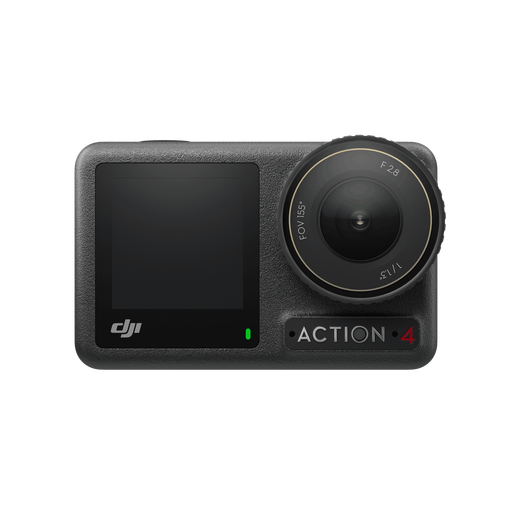
A fixed-view action-camera option for outdoor recording; confirm that your intended mount fits before relying on it for an activity.
The product name specifies 4K/120fps recording, a 155° field of view and a 1/1.3-inch sensor. Check the sealing conditions before water use and plan recording time around your chosen settings.
 No image available
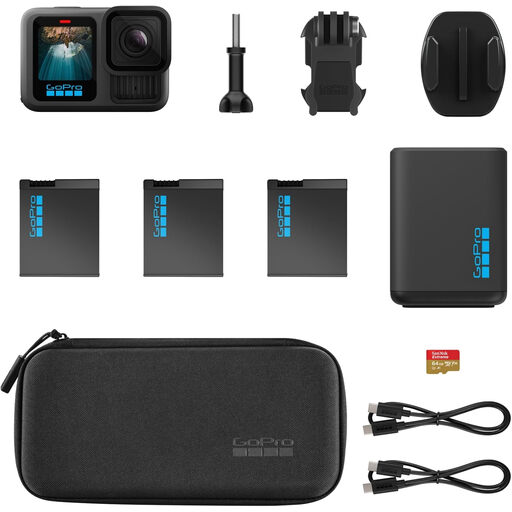
Consider this fixed-view action-camera bundle if you want to plan power for a longer outing; check its included accessories against your intended attachment.
GoPro states a 10 m waterproof rating for HERO13 Black with its standard lens, but lens configurations can change that limit. Check the fitted lens and sealing instructions for your water activity.
 No image available
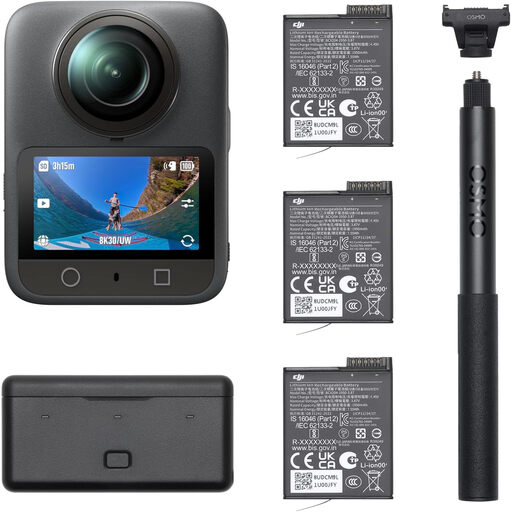
Consider 360-degree capture when the direction of travel action is difficult to predict; check how you will select a view from the footage afterwards.
The product name specifies native 8K 360° video and a three-battery combo. Confirm the mount, water-use requirements and editing workflow for your trip.
 No image available
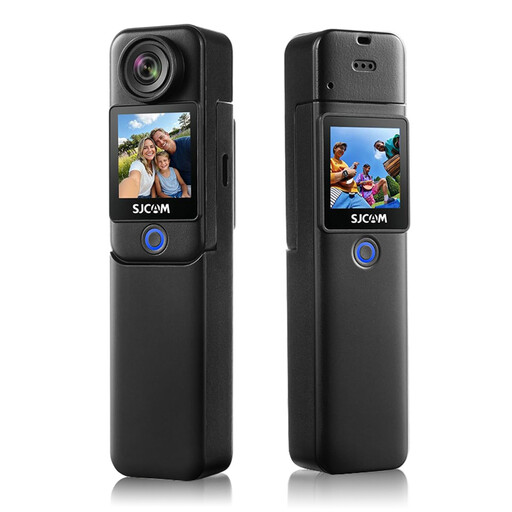
A conventional action-camera option when you want a fixed outdoor view; check attachment compatibility for your equipment.
The product name specifies 6-axis electronic image stabilisation and a 30 m water rating with the case. Check the case’s sealing instructions and your planned recording time before use.
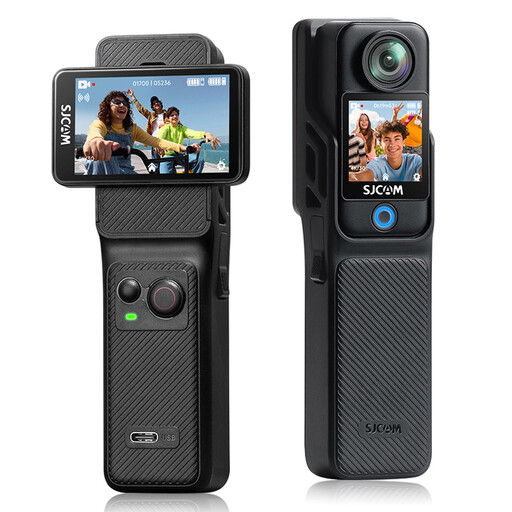 No image available
Consider the flip touchscreen if you need to check a fixed view while setting up travel or outdoor footage; confirm how the camera attaches to your equipment.
The product name specifies 6-axis electronic image stabilisation and a 30 m water rating with the case. Check the case’s sealing instructions rather than treating that figure as a bare-camera rating.
You need a housing when your planned use falls outside the bare camera’s stated conditions, or where its manufacturer calls for one. DJI rates Osmo Action 5 Pro to 20 m without its Waterproof Case and 60 m with it, and recommends the case for prolonged underwater recording or high water-impact pressure. Insta360 rates Ace Pro 2 to 12 m bare and 60 m with its Dive Case. Check the exact model’s instructions and seals before immersion.
A depth rating alone does not settle underwater image stitching. Insta360 rates X5 to 15 m but warns that underwater 360-degree recording can have stitching issues; it recommends the Invisible Dive Case for better stitching results. If you do not need reframing, consider whether a conventional fixed view would simplify your filming and editing.
Check the rules for the particular location and filming setup rather than assuming public access grants permission. The British Film Commission advises checking whether filming on public land needs permission from the relevant council or local authority; Film London notes that publicly accessible places may be privately owned or managed. Ask the venue or activity operator about mounts and other equipment before you go.
No: Insta360 says people with pacemakers should not wear GO 3S on the chest or use its Magnet Pendant. If that warning applies, check a different compatible mounting method and how securely it can be retained during your activity.