POV-first skiers
You want the first-person view to capture your turns and the slope around you. Field of view, stabilisation at your chosen recording setting and a mount that stays in position matter more to this decision than resolution alone.


Choose an action camera for the part of a ski run you most want to get right: a stated cold-weather operating range and manageable battery changes for repeated runs, or a wider view and suitable recording modes for immersive footage and later editing. Before buying, check the exact bundle, your recording mode and whether the mount fits your helmet; a manufacturer's battery figure does not promise a full day of skiing.
You want the first-person view to capture your turns and the slope around you. Field of view, stabilisation at your chosen recording setting and a mount that stays in position matter more to this decision than resolution alone.
You plan to film several runs and would rather not manage batteries or cards repeatedly on the mountain. Check the selected model's stated operating range, battery options and storage.
You want to slow clips down or crop them into different formats. Recording modes matter, but so do the card and the time and storage needed to handle the files afterwards.
For a ski run, start with the one concern that would most affect your footage or your ability to keep recording, then check the camera and bundle against it.
| Concern | What to check | Who this matters to |
|---|---|---|
| Stable, immersive POV | Check field of view and stabilisation at your intended resolution and frame rate, plus mount compatibility with your helmet. | If I want the slope and my turns in the same shot, I need a wide view that stays steady when I move. Roughly 33% of consumers would put stable ski-run POV first. |
| Cold-day continuity | Check the model's stated operating range, the conditions behind its battery claim and the battery and storage options in the exact bundle. | Several runs in the cold make repeated battery or card changes inconvenient for me. Around 27% of consumers would prioritise fewer recording interruptions. |
| Editing flexibility | Check the available resolution and frame-rate combinations, crop workflow, compatible card and the devices you will use to edit. | I want to slow a turn down or make different crops from one clip, and I am prepared to handle the files afterwards. About 20% of consumers would make editing flexibility their primary concern. |
| Bundle contents | Compare the battery count, attachment hardware, card and any specialist lens in the particular bundle. | If I only plan to record a few holiday runs, I want the gear needed for my setup without choosing accessories I will not use. Roughly 20% of consumers would put bundle suitability first. |
Recording settings and conditions can change runtime. DJI describes runtime measurements for its Action 5 Pro as controlled-environment reference data; do not transfer a quoted figure to another model or your own ski-day setup.
Plan for the mode you intend to record in and consider a compatible spare battery for repeated runs.
Standard, Adventure and specialist skiing bundles can contain different batteries and attachment hardware. A camera that suits your recording needs still needs an appropriate way to attach it to your particular helmet.
Check the exact contents against your planned shot, including the mount, battery count, card and any lens you need.
GoPro states that HERO13 Black with its Ultra Wide Lens Mod is waterproof to 5 m, compared with 10 m when fitted with the included standard lens. The stated limit therefore depends on the lens configuration.
Choose the lens for the view you want, and check the applicable waterproof rating before using that configuration in other activities.
The Osmo Action 6 is relevant when a stated cold operating range and internal storage are priorities for repeated runs.
The HERO13 Black Ultra Wide Edition is relevant if capturing a particularly wide first-person view is central to the shot.
The Ace Pro 2 is relevant if you intend to crop footage or produce slow-motion clips after the trip.
These action-camera bundles offer different starting points for ski-run footage, from wide-angle capture to planning for repeated runs. Check each bundle's contents and the attachment required for your helmet before choosing.
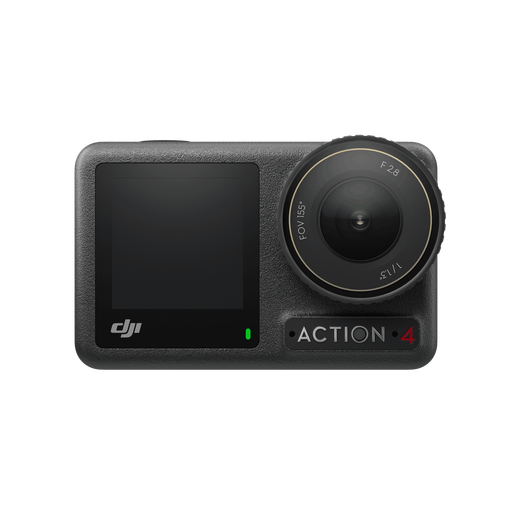 No image available
Consider this bundle for recording runs you may want to slow down later; check that its attachment fits your helmet.
The product title specifies 4K/120fps recording, a 155° field of view and a 1/1.3-inch sensor. Battery duration will depend on use and conditions.
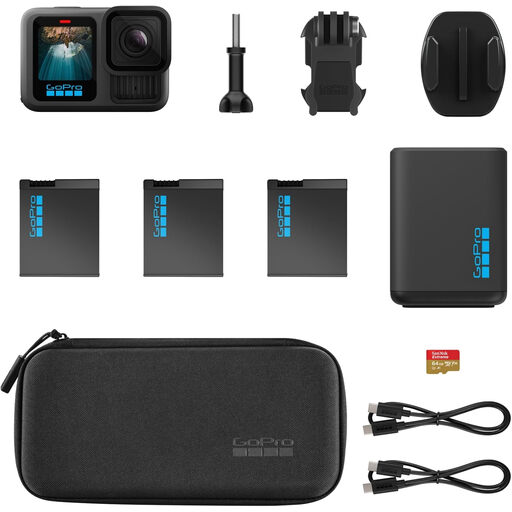 No image available
Consider the Extended Power Bundle if you expect to record repeated runs; check the included battery and charging equipment against your plans. Confirm that the attachment method suits your helmet, and do not assume this bundle includes the Ultra Wide Lens Mod.
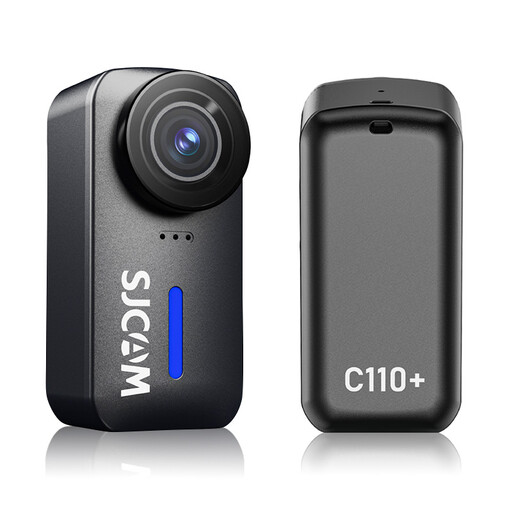 No image available
The stated 170° view makes this a camera to consider for a broad ski-run POV. Its title also specifies gyro stabilisation; check the operating-temperature guidance and helmet attachment for your intended use.
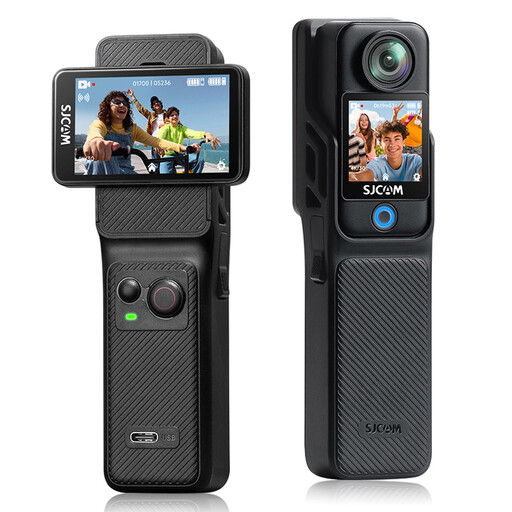 No image available
Consider this model if a wide view and stabilisation are priorities for your run. Its title specifies a 154° view and 6-axis EIS; check cold-weather guidance, helmet fit and which battery accessories come with this bundle. The advertised 437-minute figure depends on additional battery equipment.
 No image available
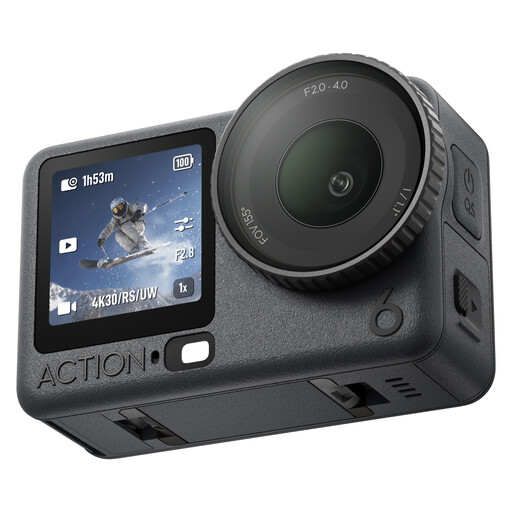
Consider this model if cold operating guidance and internal storage matter for repeated runs. DJI states a −20°C to 45°C operating range and 50GB of built-in storage for the Action 6; the product title specifies a 1/1.1-inch square sensor. Check the mount and your preferred field-of-view and stabilisation settings. Neither the temperature range nor the stated battery duration guarantees a full ski day.
Yes, if the selected camera's operating guidance covers the conditions you expect, but that guidance does not guarantee battery runtime. DJI states −20°C to 45°C operation for the Osmo Action 6, while Insta360 recommends the same operating range for the Ace Pro 2. Plan your batteries around your recording mode and the length of your day.
Choose a card that meets the maker's requirements for your exact camera and recording mode. DJI recommends U3/A2/V30 cards for the Osmo Action 6; GoPro's HERO13 Black Creator Edition specifications call for V30 or UHS-3. Check compatibility before travelling, particularly if you intend to use high-frame-rate recording.
Take spare batteries and power banks in cabin baggage rather than checked baggage. The UK Civil Aviation Authority gives that direction to passengers; check your airline's additional baggage requirements before flying.
Do not assume permission at a particular resort. GOV.UK advises travellers to account for legal differences abroad; check guidance for your destination and the resort operator's current filming, helmet-mount and lift-use rules before setting up the camera.