Cyclists recording their rides
If you want a usable view of a commute, road ride or trail, consider the mounting position alongside the camera’s stabilisation and controls.


Choose a conventional action camera if you want to frame a forward-facing view before setting off and keep editing straightforward. Choose a 360-degree camera if deciding the final angle afterwards matters more; allow time to reframe and export the footage. Either way, check that the mount fits your activity, the water protection covers your intended use and the power setup suits the length of your outing.
If you want a usable view of a commute, road ride or trail, consider the mounting position alongside the camera’s stabilisation and controls.
For hiking, paddling, surfing or filming near water, distinguish the camera body’s stated water protection from situations that call for a compatible housing, secure retention or spare power.
A 360-degree recording lets you select different final angles after the activity, provided you are willing to spend time reframing and exporting it.
Choose it when: you want to set a forward or rider-facing view before a ride or hike and have less reframing to do afterwards.
Trade-off: the recorded angle depends on where you aim and secure the camera before setting off.
Choose it when: you want to select a forward, rearward or other view from the recording after the activity.
Trade-off: producing a conventional video involves choosing a frame and exporting it, while lens protection and mount placement need attention.
| Concern | What to check | Who this matters to |
|---|---|---|
| Stable footage in motion | Check stabilisation at your intended recording settings and test the camera on a securely fitted mount. | If road vibration or trail impacts make my footage hard to use, keeping the moving view steady is my priority. Around 33% of consumers put stable motion footage first. |
| Mount and viewpoint | Confirm the camera interface fits the intended handlebar, body or helmet-compatible mount without obstructing controls or protective equipment. | I need the angle to show the part of the ride I care about without a loose or intrusive attachment; around 27% of consumers prioritise secure mounting and viewpoint. |
| Water protection | Match the exact camera-and-housing specification to spray, submersion or water impact, and check compatible retention accessories. | For paddling or filming close to water, I need protection suited to the exposure rather than a general waterproof label. Water and weather are the primary concern for around 20% of consumers. |
| Power, audio and controls | Check runtime under your chosen settings, compatible spare power and, if speech matters, microphone and wind-protection options. | On a longer outing, I want to keep recording and operate the camera when conditions change; around 20% of consumers chiefly need recording endurance, workable controls or audio. |
Water protection depends on the model and conditions. DJI specifies the Osmo Action 5 Pro for 20 m without its waterproof case and 60 m with it, and recommends the case for prolonged underwater filming or high water-impact pressure.
Compare your intended exposure with the exact camera-and-case specification, then check covers, seals and a suitable retention method.
Depending on the activity, a compatible case, tether, float or lens protector adds equipment to carry and fit.
A camera’s viewpoint and security depend on the fitted mount. A handlebar, body or helmet-adjacent position changes what appears in frame and how the equipment sits during the activity.
Choose the viewpoint, confirm the mount fits the camera and mounting surface, and make a short test recording. Follow the protective-equipment maker’s instructions rather than modifying equipment to fit a camera.
Changing positions may call for another compatible mount, adapter or secondary retention strap.
Published battery figures depend on the conditions used for the claim; recording settings and temperature matter when planning a longer ride or hike.
Check runtime for the modes you intend to use and confirm the battery and charging accessories fit the exact camera.
An outing without charging access may require compatible spare batteries and a way to charge them.
Route-access signs, landowner conditions and wildlife guidance can affect where you go and how you record. GOV.UK’s Countryside Code tells visitors to follow signs showing where they may go and who may use a right of way.
Check the particular site or landowner’s conditions before filming, especially for organised or commercial activity, and avoid disturbing wildlife or other users.
A reference point for conventional action cameras and activity-specific accessories.
Relevant if you want a conventional camera with compatible mounting and lens accessories.
Relevant if recording around the rider or hiker and choosing the final framing later is the priority.
These conventional and 360-degree cameras address different ways of recording an active outing. Decide how you want to frame the footage, then check mounting, water protection and power for your activity.
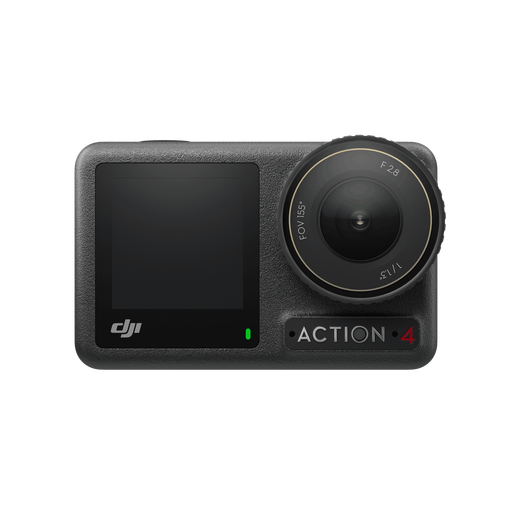 Image unavailable
For a forward-facing view of cycling or other outdoor movement, this conventional camera offers a route that does not require reframing a 360-degree recording.
The product title lists 4K/120 fps recording, a 155° field of view and a 1/1.3-inch sensor. Confirm the included batteries and runtime conditions before planning a long outing, and check that the mount and water protection suit your activity.
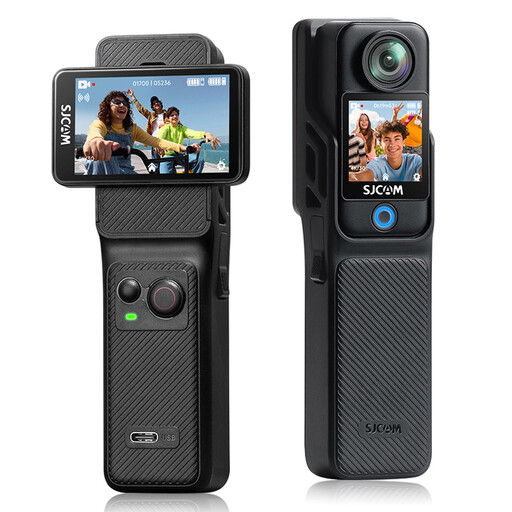 Image unavailable
This conventional camera is a choice to examine if you want to set the view before cycling or hiking and use screens on the camera.
The product title lists six-axis electronic image stabilisation, dual touchscreens, a 154° lens and 30 m waterproofing with the case. Confirm whether the case, handle and auxiliary battery needed for your intended setup are included, as well as the fit of your mount.
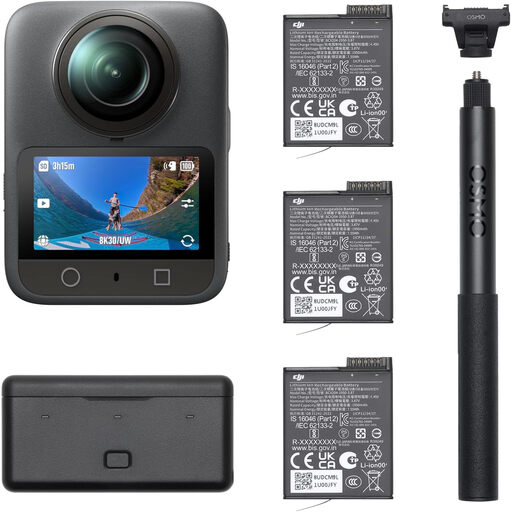 Image unavailable
Consider this 360-degree camera if you want to choose the final direction of a ride or outdoor clip after recording and are comfortable with that editing step.
The product title lists 8K 360° video and three batteries in the Adventure Combo. Check the complete mounting setup and its secure fit for your activity; confirm the camera’s water specification and any required protection before wet use.
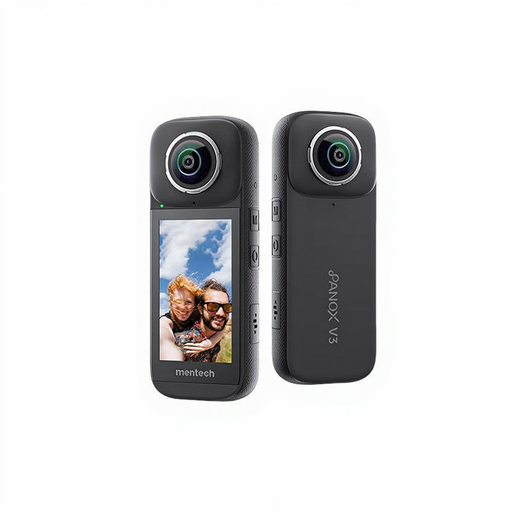 Image unavailable
This is another 360-degree route for choosing the final viewpoint after an outdoor recording.
The title lists in-camera editing and a 3.0-inch touchscreen. Check the exact video modes before choosing it for a required resolution, as the product information gives differing video-resolution descriptions. Confirm battery endurance, mount fit and the water conditions for your intended use.
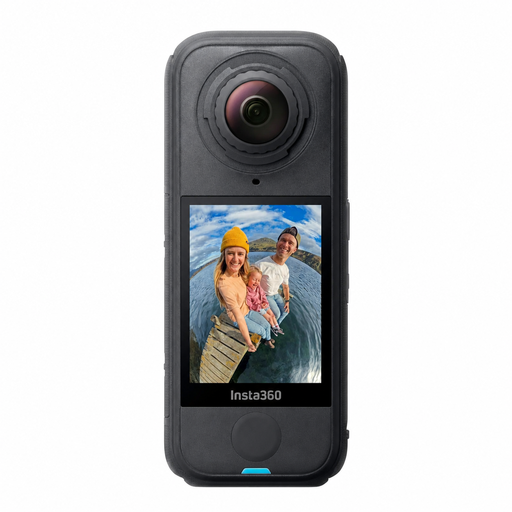 Image unavailable
Consider this model if selecting a final crop after a ride appeals to you and camera weight affects your mounting choice.
The product title lists a 165 g camera, 8K 360° recording and replaceable lenses. An invisible selfie stick is sold separately. Check the mount’s fit, battery endurance and water protection for your planned outing.
Use the exact camera model’s stated water conditions to decide whether a housing is needed. DJI specifies 20 m without a case and 60 m with its waterproof case for the Osmo Action 5 Pro, and recommends the case for prolonged underwater filming or high water-impact pressure; other camera-and-case combinations need their own checks.
A camera does not change where cycling is permitted. GOV.UK’s Countryside Code says to follow signs showing where visitors may go and who may use a right of way; check the particular route and any site conditions before setting off.
Check the landowner and the conditions for the particular location and type of filming rather than assuming one rule covers every park. Bannau Brycheiniog National Park Authority says permission is required to film on National Park land it manages or owns; its policy is not a rule for all UK National Parks.
Do not assume that every personal ride recording is treated like organisational video surveillance. The Information Commissioner’s Office says its guidance for organisations using video surveillance does not cover processing purely in a personal or household context; how footage is used matters, particularly if an organisation records or uses images of identifiable people.
Avoid approaching, crowding or pursuing animals to obtain footage. The UK Government’s Marine and Coastal Wildlife Code provides guidance for reducing disturbance in England; check the guidance and local conditions applicable to the coast you are visiting.