
24/7 Customer Support

Free returns

Same-day & Next-day Delivery

Quality Guaranteed

Unlock Your Welcome Offers: FREE Delivery | Up to 80% OFF | Free 30-day JoyPlus trial
Download the APP
By Joybuy Product Recommendation Officer
Whether you are filming a Lake District hike, a family holiday, cycling around town or a new YouTube channel, action cameras offer portable video capture without the weight of a traditional camcorder. However, impressive specifications do not always translate into practical performance.
This guide explains which features matter, which marketing claims need closer checking and which camera types suit different UK users. For more general video equipment, you can also browse our range of camcorders for video recording.
A camera described as “adventure-ready” may still require a waterproof housing. Some models are waterproof without additional protection, while others only achieve their quoted depth when used with a supplied case.
For example, the GoPro HERO is listed as waterproof to 10 metres without housing, whereas the SJCAM C400 reaches 30 metres with its waterproof case. The Sony ZV-1 II is not water-resistant, so it should not be used in rain or near splashing water without suitable protection.
Always check:
A 4K action camera can record a high-resolution video file, but the result also depends on the sensor, lens, frame rate, bitrate, lighting and stabilisation. Some lower-cost cameras list 4K recording but may use interpolation rather than a native 4K sensor output.
For everyday travel and social media, 4K at 30fps may be sufficient. If you want smooth slow motion for skiing, cycling or skateboarding, look for 4K at 60fps or 120fps. Remember that high frame rates can use more storage and battery power.
The initial price is only part of the cost. You may also need:
Check what is included in the bundle before comparing prices. A camera with several batteries may be more practical for a full day outdoors than a cheaper camera with one small cell.
Resolution describes the number of pixels recorded, while frame rate describes how many frames are captured per second. A 4K/30fps setting is suitable for many travel videos. A 4K/120fps mode can create slow-motion footage, although some products only support this in a dedicated slow-motion mode.
High-resolution video produces large files. Confirm the supported card type and maximum capacity. For example, several SJCAM models support microSD cards up to 128GB, while the SJCAM C400 lists support up to 512GB. Use a suitable speed-rated card, particularly for high-bitrate 4K recording.
A camera with image stabilisation can reduce visible shake while walking, cycling or running. Electronic image stabilisation uses software and sensor data to adjust the footage, while mechanical gimbal stabilisation physically keeps the camera more level.
An electronic system, such as 6-axis EIS found on selected SJCAM models, is useful in a compact sports camera. A 3-axis mechanical gimbal, as used by the DJI Osmo Pocket range, can produce a different style of smooth movement but is more delicate and generally unsuitable for underwater use.
A larger sensor can capture more light, but low-light results also depend on the lens aperture, processing and stabilisation. A wide field of view is useful for cycling, skiing and outdoor adventure filming, but it can make faces appear stretched near the edge of the frame.
For controlled vlogging or indoor content, a 1-inch sensor camera such as the Sony ZV-1 II or DJI Osmo Pocket 3 may offer more control over exposure and background separation than a small rugged sports camera. A compact video camera with a vari-angle or rotating screen can also make solo framing easier.
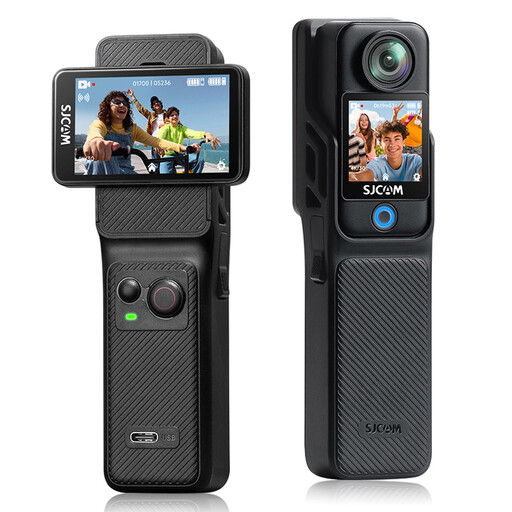
Why This Fits Their Persona: A practical option for students, families and first-time creators who want a small sports camera for cycling, holidays and casual vlogging without a complicated setup.
The listing specifies 4K/30fps recording, 6-axis stabilisation, a 30-metre waterproof case and an included 64GB memory card.
Dual touchscreens, 5GHz Wi-Fi, 2K/60fps recording and a listed battery setup capable of extended recording with the auxiliary handle.
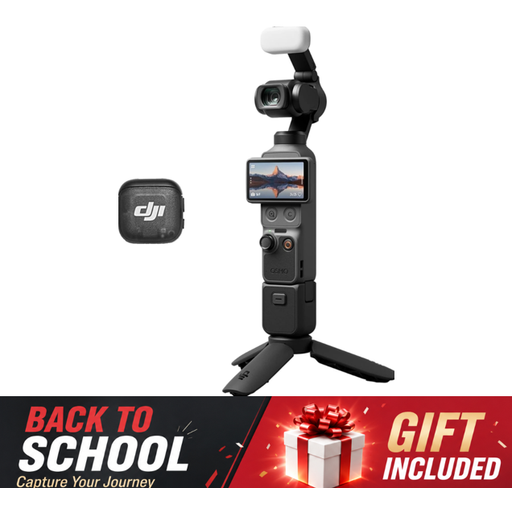
Why This Fits Their Persona: Suited to YouTube creators and travel vloggers who prioritise smooth handheld footage, subject tracking and a pocket-sized form factor.
Its 3-axis stabilisation is mechanical rather than relying only on digital cropping. It is not waterproof, so the product’s limitation is clear before purchase.
The listed features include a 1-inch CMOS sensor, 4K/240fps recording, 2x lossless zoom, 107GB built-in storage and a rotatable screen.
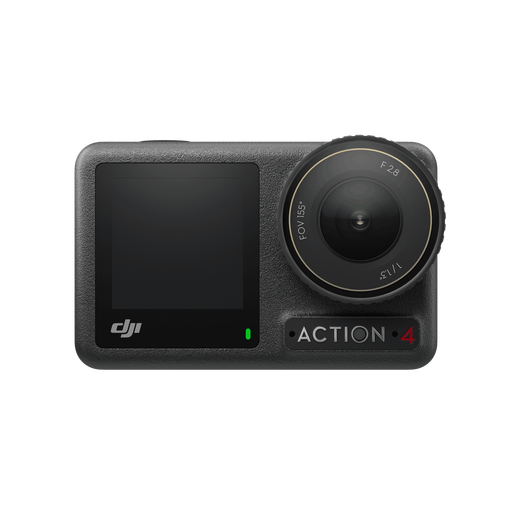
Why This Fits Their Persona: A strong match for surfers, divers, cyclists, hikers and families who need a rugged outdoor adventure camera with spare power for longer days.
The listing states an 18-metre waterproof rating without a case, a -20°C operating specification and an Adventure Combo with three batteries.
It records 4K/120fps, offers a 155° field of view, 10-bit colour recording and direct connection to selected DJI microphone transmitters.
We have compiled a complete, real-time list of products that fully satisfy these strict selection criteria and UK safety regulations.
Yes, but suitability depends on the type of content. A rugged sports camera is practical for cycling, travel and outdoor filming, while a gimbal vlog camera can provide smoother walking footage. For interviews or indoor videos, check for a microphone input or wireless microphone compatibility.
Recording time varies with resolution, frame rate, stabilisation, temperature and screen use. High-resolution modes usually consume more power. Carrying spare batteries or a charging case is sensible for day trips. Cold weather can also reduce usable battery time, so keep spare cells protected from low temperatures.
A 360 camera records the scene around the device, allowing you to reframe the angle during editing. It can be useful for cycling, skiing and creative travel content where the subject may move unpredictably. If you prefer straightforward recording with minimal editing, a conventional wide-angle action camera may be simpler.