
24/7 Customer Support

Free returns

Same-day & Next-day Delivery

Quality Guaranteed

Unlock Your Welcome Offers: FREE Delivery | Up to 80% OFF | Free 30-day JoyPlus trial
Download the APP
Whether you are recording a cycle through the Peak District, skiing in Scotland, diving on holiday or creating videos for YouTube, action cameras offer a compact way to capture movement. However, similar-looking models can differ considerably in stabilisation, waterproofing, battery performance and practical usability.
The right choice depends less on the biggest number on the box and more on how you intend to record. A waterproof action camera for diving has different requirements from a vlogging camera for indoor filming, while a camera for cycling needs secure mounting and dependable image stabilisation.
A label such as “4K” does not automatically mean that every recording will look sharp. Check the frame rate, sensor size, lens aperture and stabilisation system as well. A 4K action camera recording at 30fps may suit travel and everyday use, while 4K 120fps is more useful for slow-motion sports footage, provided there is sufficient light and storage.
Some entry-level models also describe interpolated footage as 4K. Read the specification carefully to identify whether the camera uses a native recording mode or an upscaled one.
Water resistance may apply only to the camera body, or only when an included housing is fitted. For example, some cameras are suitable for shallow water without a case but require the waterproof housing for deeper immersion or high-speed water sports.
Before buying, check:
A case should be inspected for sand, hair and debris before every underwater session. Even a small obstruction can compromise the seal.
Battery estimates often vary according to resolution, frame rate, temperature, stabilisation and screen use. A quoted maximum may be measured at a lower resolution or with an auxiliary battery handle. Cold weather can also reduce running time, which matters when choosing a camera for skiing or winter hiking.
For longer outings, look for removable batteries, a charging case, USB-C charging or a bundle with spare batteries. A long-battery action camera can be more useful than a higher-resolution model that needs frequent charging.
For general travel, family footage and social media, 4K at 30fps provides a detailed image without creating excessively large files. For fast movement, 4K at 60fps gives smoother footage. A 4K 120fps camera can create slow-motion clips, although high frame rates usually require more light and storage.
Also check the available recording formats. H.265 can reduce file size compared with H.264, but older editing devices and software may offer better compatibility with H.264.
A camera with image stabilisation uses electronic or mechanical methods to reduce visible shake. Gyro-based electronic image stabilisation is useful for cycling, motorcycling and walking. Mechanical three-axis stabilisation, found on some pocket gimbal cameras, can provide a different style of smooth movement but is generally less suitable for underwater or high-impact use.
Wide lenses between roughly 150° and 170° capture more of the surroundings, which is helpful for sports and group scenes. They may also create fisheye distortion, so check whether the camera includes fisheye correction.
Confirm the supported microSD capacity and speed rating. High-resolution recordings can fill a card quickly, and some models require a fast U3 or V30 card to avoid dropped frames.
For UK outdoor use, consider:
A dual-screen action camera can make self-recording easier, while a 360 camera gives you the option to reframe footage after recording. This is useful when the subject may move unpredictably, but 360 footage normally involves additional editing and larger files.
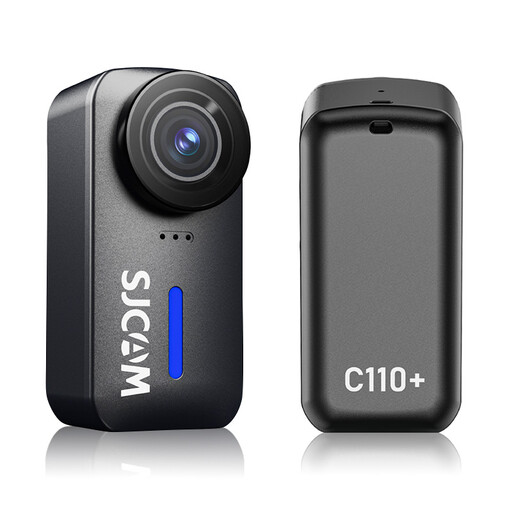
Why This Fits Their Persona: A compact option for first-time users recording cycling, holidays, family activities or casual outdoor clips around the UK.
The specification states 4K at 30fps, gyro stabilisation and up to 30m waterproofing with the included housing, making the conditions of use clearer.
82g body, 170° lens, 20MP photos and up to 120 minutes at 2K/30fps.
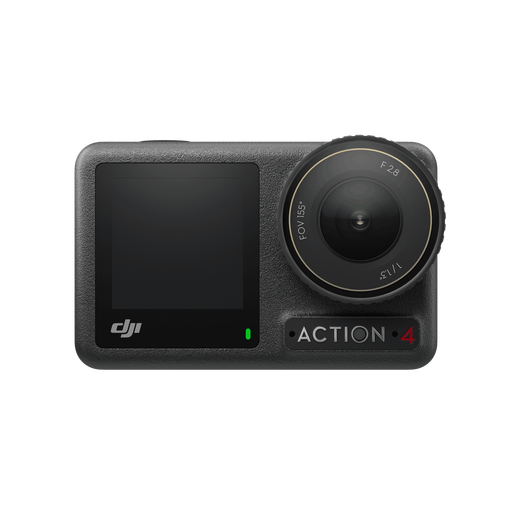
Why This Fits Their Persona: Suitable for creators who want a capable outdoor camera for travel, vlogging, water sports and changing light.
The listing specifies 4K/120fps, a 1/1.3-inch sensor, three stabilisation modes and 18m waterproofing without a case.
Three extra batteries, charging case, 155° field of view and direct DJI microphone connectivity.
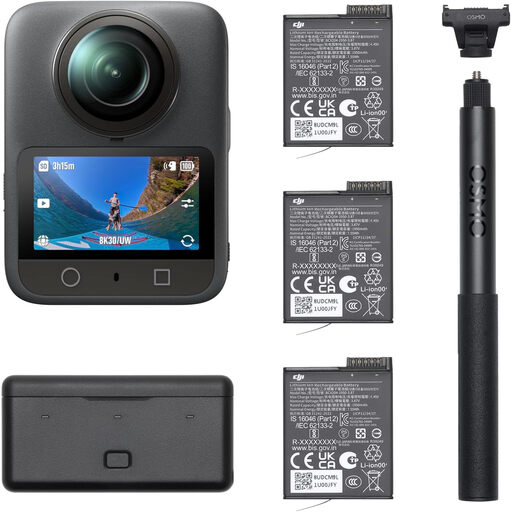
Why This Fits Their Persona: Designed for users who want 360-degree capture for skiing, cycling, travel highlights and footage that can be reframed later.
It clearly identifies native 8K 360° video, 4K/120fps single-lens-style recording and included batteries rather than relying on resolution alone.
1-inch 360° imaging, three batteries, an invisible selfie stick and four microphones.
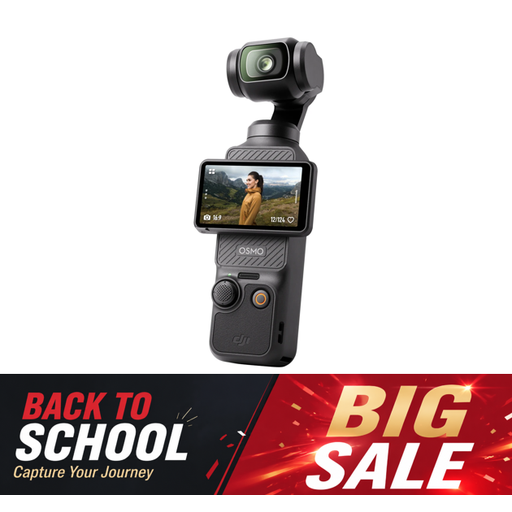
Why This Fits Their Persona: A pocket-sized choice for walking videos, interviews, indoor content and camera for YouTube use where subject framing matters.
Its 3-axis mechanical stabilisation and ActiveTrack 6.0 provide a different solution from basic electronic stabilisation, while the camera is clearly listed as not waterproof.
1-inch CMOS sensor, rotating 2-inch screen, 4K/120fps recording and subject tracking.
We have compiled a complete, real-time list of products that fully satisfy these strict selection criteria and UK safety regulations.
Before leaving home, fully charge the camera and format the memory card using the camera menu. Record a short test clip to confirm that the selected resolution, frame rate and stabilisation mode work as expected.
For cycling or motorcycling, tighten every mount and use a safety tether. Do not adjust settings while moving. For skiing, keep spare batteries close to your body rather than in an exposed outer pocket. For diving or sea swimming, inspect the case seal, close all covers and rinse the equipment with fresh water afterwards.
If you plan to edit on a phone, check app compatibility before travelling. Large 4K and 360 files may require substantial storage, mobile data or a computer-based workflow.
Yes, particularly when you need a lightweight outdoor camera with wide-angle coverage. Check battery capacity, charging options, low-light performance and whether the camera can transfer files conveniently to your phone.
An action camera is generally designed for movement, mounts and exposure to dust or water. A vlogging camera may prioritise subject tracking, audio connections, a larger sensor or a front-facing screen. A pocket gimbal model can be suitable for walking videos but may not be appropriate for rain or underwater use.
The main ongoing costs are memory cards, spare batteries, protective cases and charging equipment. High-resolution recording uses more storage, while 360 footage may require more editing space. Choosing a bundle with batteries, a case or a memory card can reduce the need for immediate accessories, but always confirm compatibility and safety requirements before purchase.