Choose a conventional action camera for a compact, forward-facing setup on fast-moving trips; choose a 360-degree camera if selecting the viewpoint afterwards matters more. A rugged compact camera makes more sense for handheld stills and zoom, while a mounted phone is worth considering for occasional recording only if its protection, mounting and footage meet your needs. For any route, check the exact mounting position, water-use conditions and recording time before relying on it during a trip.
Who is each setup for?
Cyclists recording rides
If you need a forward-facing view on changing road or trail surfaces, decide where the camera will sit before choosing its size and mount. Cycling UK notes that mounting position affects the size and shape of camera that works in practice. Stabilisation, weather exposure, power and controls also matter when recording a ride.
Water-trip and all-weather adventurers
If your camera may encounter rain, splashes or immersion, match the planned activity to its stated water-use conditions. A depth rating for the bare camera does not by itself settle whether a housing is advisable for prolonged underwater filming or forceful water impact.
Creators who want to choose the view later
If you do not want to commit to one angle while riding or paddling, 360-degree recording lets you select a view afterwards. That flexibility brings an editing step, storage planning and, for the Insta360 X5, specific cautions about underwater stitching.
What matters when choosing?
Conventional action camera
Choose it when: You want a compact, mounted camera aimed at a known viewpoint for cycling or another fast-moving activity.
Accept: You set the viewpoint before recording, and water protection and battery duration depend on the model and conditions.
360-degree action camera
Choose it when: Capturing the surroundings now and selecting the final angle later is central to the footage you want.
Accept: Reframing adds editing work; Insta360 also warns that X5 underwater 360 footage can have stitching issues.
Rugged compact camera
Choose it when: Handheld outdoor stills, close-ups and zoom matter more than a hands-free point-of-view recording setup.
Accept: Do not assume a rugged compact such as the OM SYSTEM TG-7 will fit a helmet, chest or handlebar action-camera mount.
Mounted smartphone
Choose it when: You need occasional recording and your existing phone already meets your footage requirements.
Accept: A mount alone does not establish the phone’s stabilisation, water protection or resistance to a fall.
After choosing the type of camera, start with the recording position and conditions of use, then plan power and storage for the session.
| Concern |
What to check |
Who this matters to |
| Stable footage and safe mounting |
Check stabilisation in your chosen recording mode and physical fit at the intended mounting position. Keep bicycle controls, lights and helmet fit unobstructed. |
If I am recording a bumpy ride, I need a usable view without letting the camera interfere with safe riding. Around 33% of consumers put stable footage and safe mounting first. |
| Water and physical protection |
Match the depth rating and any housing guidance to immersion and water impact; check cover and seal instructions. |
For paddling or wet-weather trips, I need to know which conditions the camera can withstand before taking it into the water. Water and physical protection come first for around 27% of consumers. |
| Recording time and storage |
Compare battery claims at the resolution and frame rate you intend to use, then check the exact model’s supported card requirements. |
On a long outing, I want enough power and compatible storage to cover the part I plan to record. Around 20% of consumers make recording time and storage their primary concern. |
| Flexible framing |
Check whether you need 360-degree capture, how you will reframe and export it, and any underwater stitching guidance. |
When the interesting action could happen in several directions, I would rather choose the final view afterwards than aim at one fixed angle. Flexible framing is the main priority for around 20% of consumers. |
Mistakes to avoid
-
Assuming a waterproof depth covers every water activity
A bare-camera rating has conditions. DJI says the Osmo Action 5 Pro’s battery and USB-C covers must be closed and recommends its Waterproof Case for long underwater shooting or high water-impact pressure. Insta360 warns that underwater 360 filming with the X5 can produce stitching issues.
Check the manufacturer’s guidance for your depth and activity, including seals, covers and care after saltwater use.
The intended conditions may call for a compatible protective or dive housing.
-
Buying a mount before choosing the viewpoint
A handlebar, chest or helmet position changes both the view and the fit requirements. Cycling UK notes that mounting location affects practical camera size and shape; footage should not take priority over bicycle control or helmet fit.
Choose the viewpoint, then check the camera, attachment point and mount instructions for that exact combination. Keep controls and lights clear.
Changing position later may require another compatible mount or a vibration-control accessory.
-
Treating a battery claim as a full-trip guarantee
Recording duration varies by mode and test conditions. GoPro’s published HERO13 Black durations, for example, differ between 1080p30 and higher-resolution modes, so one figure cannot describe every trip.
Plan batteries and compatible storage around the resolution, frame rate and length of footage you actually intend to record.
Longer sessions may require spare batteries, charging equipment or additional compatible microSD cards.
-
Applying personal-trip assumptions to organised filming
The Information Commissioner’s Office distinguishes purely personal or household recording from organisational processing of footage showing identifiable people. A club, employer or other organised use may therefore need a different assessment from recording a personal ride.
Before organised recording or sharing, check the ICO’s guidance against the actual purpose, people filmed, storage and intended use of the footage.
Relevant brands to consider
GoPro
The HERO13 Black is a conventional action-camera option for a compact mounted setup with compatible lens and mounting accessories.
- GoPro specifies HB-Series Lens Mod compatibility, Magnetic Latch Mounting and a 1900mAh Enduro battery for HERO13 Black.
- GoPro’s stated continuous recording times exceed 2.5 hours at 1080p30 and 1.5 hours at 4K30 or 5.3K30; those mode-specific claims are not a duration for every setting.
DJI
The Osmo Action 5 Pro is a conventional action-camera reference for buyers weighing high-frame-rate recording, electronic stabilisation and water exposure.
- DJI specifies recording up to 4K/120fps, RockSteady and HorizonSteady modes, and a 20m waterproof rating without its Waterproof Case.
- DJI requires the battery and USB-C covers to be closed and recommends a case for prolonged underwater use or high water-impact pressure.
Insta360
The X5 represents the 360-degree route when selecting the final viewpoint after an activity matters more than recording a single fixed angle.
- Insta360 specifies X5 360-degree video up to 8K30 and UHS-I V30 or faster microSD support.
- Although Insta360 rates the X5 to 15m, it warns of underwater 360 stitching issues, recommends an Invisible Dive Case for optimal results and says to remove lens guards before use in or around water.
OM SYSTEM
The TG-7 is a rugged compact-camera alternative when handheld outdoor photography and zoom take priority over hands-free footage.
- OM SYSTEM specifies a 25–100mm lens, 12MP sensor, 4K video and ratings of 15m waterproofing, 2.1m shockproofing, −10°C freeze-proofing and 100kg crushproofing for the TG-7.
- Those ratings do not establish that the TG-7 fits an action-camera mount or suits a particular hands-free viewpoint.
Action and 360-degree cameras on Joybuy
These conventional and 360-degree action cameras relate to mounted, moving-footage setups. Choose between a fixed viewpoint and later reframing before comparing their recording modes, water-use conditions and accessories.
 No image available
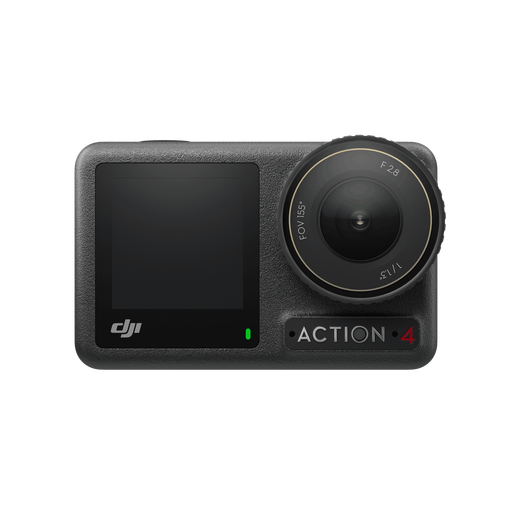
DJI Osmo Action 4 Adventure Combo
Consider this conventional action camera if you want a fixed viewpoint for an active trip. Its listed recording mode is 4K/120fps, with a 1/1.3-inch sensor and 155° field of view.
Before planning an extended recording or water activity, check runtime in your chosen mode, what the combo includes, the water-use conditions and fit with your intended mount.
View on Joybuy
 No image available
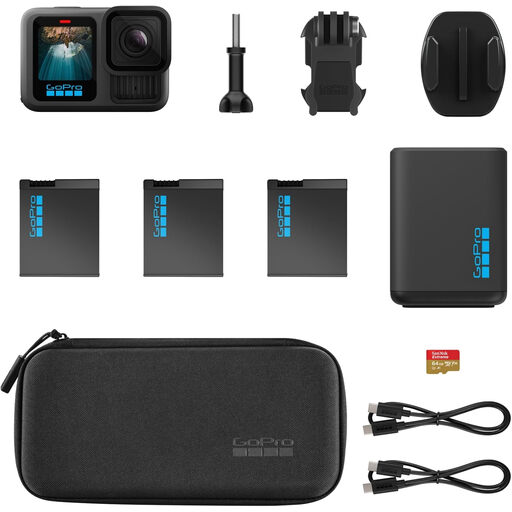
GoPro HERO13 Black Extended Power Bundle
This conventional action-camera bundle is relevant if you want a mounted, forward-facing viewpoint and to plan for spare power. GoPro specifies a 1900mAh Enduro battery for the HERO13 Black camera.
Check the bundle contents and compatible mount for your position. GoPro’s battery-duration claims vary by recording mode, so plan power against the settings you intend to use.
View on Joybuy
 No image available
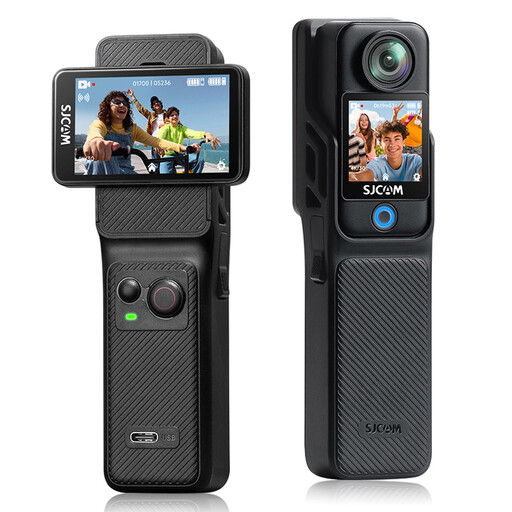
SJCAM C400 4K Action Camera with 2.29-inch Flip Display
Consider this fixed-viewpoint camera if a flip display helps you set up a shot. The product name specifies six-axis electronic image stabilisation and waterproofing to 30m with a case, not as a bare-camera rating.
The stated recording duration of up to 437 minutes depends on a handle and auxiliary battery. Check whether those parts are included, the recording conditions behind that figure and mount compatibility for your activity.
View on Joybuy
 No image available
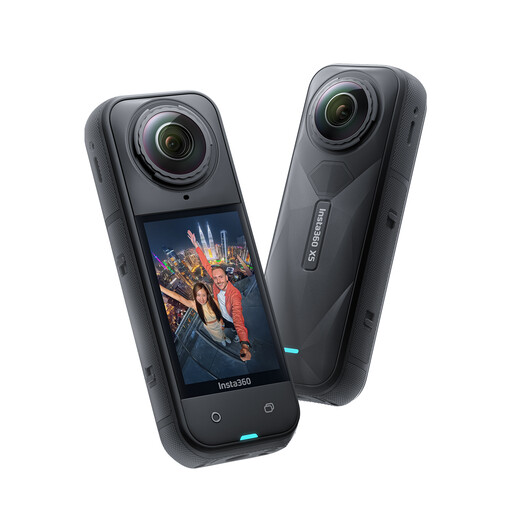
Insta360 X5 Standard Bundle
Choose this 360-degree route if selecting the view after recording is central to your trip footage. Insta360 specifies up to 8K30 360-degree video and UHS-I V30 or faster microSD support for the X5.
Check the bundle contents, power and mount for your session. For water trips, follow Insta360’s X5 guidance: underwater 360 footage can have stitching issues, and the company recommends an Invisible Dive Case for optimal results.
View on Joybuy
 No image available
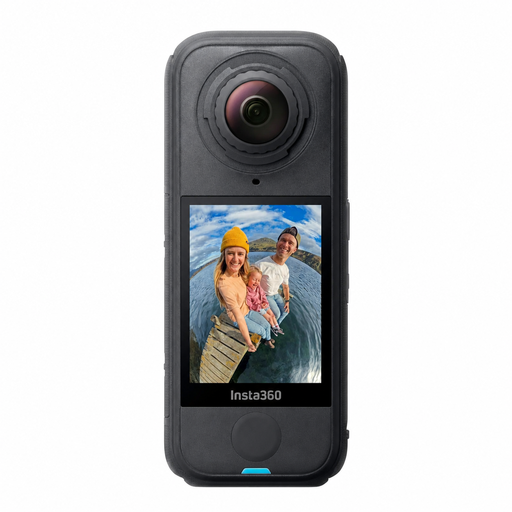
Insta360 X4 Air 165g 8K 360 Camera
This 360-degree camera suits a trip where you want to choose the viewpoint later and are weighing the stated 165g camera weight. Its product name specifies 8K recording and replaceable lenses.
Before taking it onto water or a longer ride, check the exact water-use guidance, recording time, storage requirements and compatibility with your intended mount.
View on Joybuy
Questions before you buy
Can I mount an action camera on my bicycle or helmet?
Choose a mount only if the exact combination leaves bicycle control, visibility, lights and helmet fit intact. Cycling UK notes that mounting position affects practical camera size and shape, while the Department for Transport’s Highway Code says a cycle helmet should conform to current regulations, fit correctly and be securely fastened. Check the helmet and mount manufacturers’ instructions before attaching anything.
Is a waterproof camera suitable for every water activity?
No: match its rating and conditions to the depth and type of water exposure you expect. DJI requires closed battery and USB-C covers on the Osmo Action 5 Pro and recommends its case for prolonged underwater filming or high water-impact pressure. Insta360 warns that underwater 360 footage from the X5 can have stitching issues and recommends an Invisible Dive Case for optimal results.
Which memory card should I use for a longer recording?
Use a card that meets the exact camera’s supported specification, then plan capacity around your recording settings and session length. DJI specifies microSD support up to 1TB for the Osmo Action 5 Pro; Insta360 specifies UHS-I V30 speed class or higher for the X5. Check the chosen model’s card guidance rather than assuming those requirements apply to another camera.
Do privacy rules change if I record for a club or employer?
Organised filming needs to be assessed differently from a purely personal trip. The Information Commissioner’s Office says its organisational video-surveillance guidance does not cover processing purely for personal or household activities; it also explains that portable cameras, including those attached to bikes, can capture identifiable people. For club, employer or other non-personal use, check current ICO guidance against who is recorded and how footage will be stored and shared.


