What should you check before choosing?
Start with where the camera will sit and what it might be exposed to. Then check whether its power, storage and editing workflow fit the footage you want to bring home.
| Priority |
What to check |
Your needs |
| Stable mounted footage |
Check the stabilisation modes for your recording settings, the camera’s field of view and a mount suited to the exact helmet, chest or handlebar position. Confirm how the mount is secured. |
I want to follow a ride without having to hold the camera or keep correcting its position. |
| Water protection |
Compare the stated depth with the planned exposure, including duration and water impact. Check the conditions for closing covers and fitting any required case; DJI, for example, specifies different bare-camera and cased ratings for Osmo Action 6. |
For swimming or water sports, I need protection that matches what will actually happen to the camera, not just a depth number. |
| Power and storage |
Confirm the compatible card type, speed and capacity, then check battery availability for the chosen mode and conditions. Insta360 specifies a UHS-I V30-or-faster microSD card for X5. |
A long outing calls for enough recording space and a way to keep filming when the battery runs down. |
| Framing and editing |
Decide whether you can aim a conventional camera during the activity or would use 360-degree footage to reframe later. Check the recording format and the steps needed to export a clip. |
If I cannot predict where the action will happen, choosing the viewing angle afterwards could be useful; for quick clips, I would rather keep editing simple. |
| Other footage |
Consider audio in your intended mounting position and light conditions, rather than judging video resolution alone. For stills, check whether optical zoom or close-up shooting matters more than hands-free mounting. |
I may want usable sound or photographs as well as action footage. If I mainly shoot distant or close-up still subjects, a rugged compact deserves consideration. |
Which brands illustrate the options?
These model examples show different approaches to outdoor recording; the details below apply to the named models, not every camera from each brand.
DJI
Osmo Action 6 illustrates the conventional action-camera route for users checking mounted video and water protection.
- DJI specifies waterproofing to 20 m without a case and 60 m with its waterproof case for Osmo Action 6.
- Those ratings depend on the stated operating conditions, including closed covers and a tightened lens cover; DJI recommends a case for prolonged underwater use or high water-impact pressure.
GoPro
HERO13 Black is a conventional action-camera option for users considering mounting and optional lens accessories.
- GoPro describes magnetic latch mounting and HB-Series lens accessories for HERO13 Black, alongside a 1900 mAh Enduro battery.
- The optional lenses are separate accessories, and the HERO13 battery is not compatible with older GoPro cameras.
Insta360
X5 is a 360-degree action-camera example for riders who want to choose the framing after recording.
- Insta360 specifies 8K 360-degree video and waterproofing to 15 m for X5.
- X5 requires a UHS-I V30-or-faster microSD card. Insta360’s quoted operating times are laboratory figures that vary by mode and conditions.
OM SYSTEM
Tough TG-7 represents a rugged compact approach when outdoor stills and optical zoom matter alongside video.
- OM SYSTEM specifies a 25–100 mm lens and 4K video, with waterproofing to 15 m and shockproofing to 2.1 m for TG-7.
- Its rugged-camera specifications do not establish that it suits a particular hands-free cycling mount; check accessories for that use.
Joybuy product options
These options cover conventional action cameras and a 360-degree action camera for outdoor recording. Compare each bundle’s mount, storage and power arrangements with your own activity before choosing.
 No image available
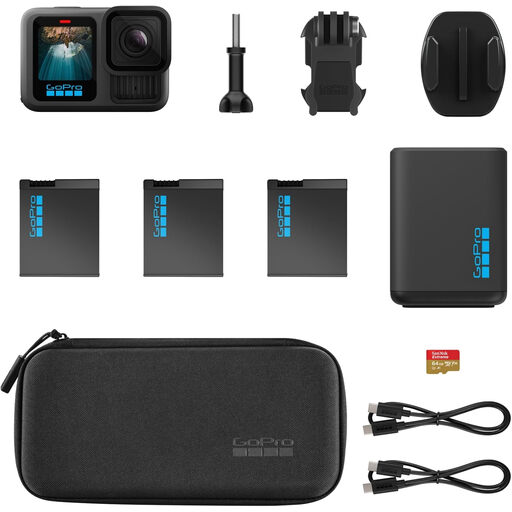
GoPro HERO13 Black Extended Power Bundle
For conventional mounted footage, check that the supplied mounting arrangement fits your chosen position. The Extended Power Bundle includes battery and charging accessories; confirm the contents and obtain a compatible microSD card for your recording plans.
View on Joybuy
 No image available
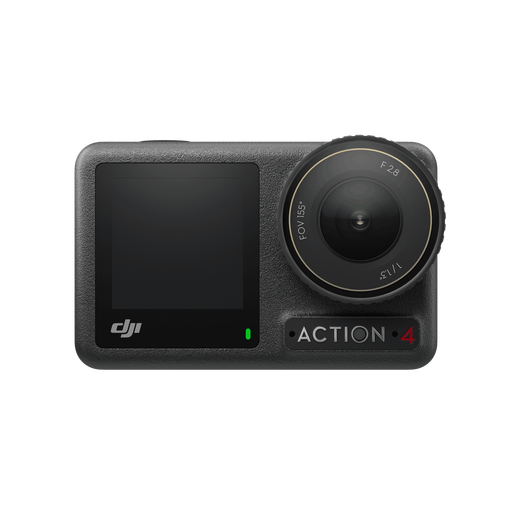
DJI Osmo Action 4 Adventure Combo
For rides or other fast-moving activities, establish how you will mount and aim this conventional action camera. The named configuration states 4K/120fps recording, a 1/1.3-inch sensor and a 155° field of view; check the water-use conditions and compatible storage for your planned mode.
View on Joybuy
 No image available
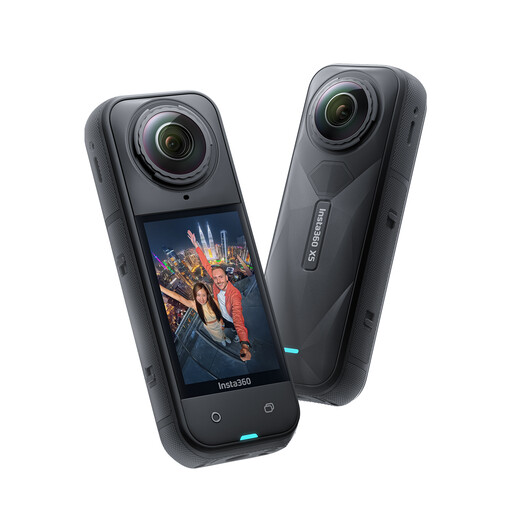
Insta360 X5 Standard Bundle
For a ride where you cannot reliably aim a pointed camera, X5’s 360-degree recording allows reframing afterwards. Insta360 specifies a UHS-I V30-or-faster microSD card and 15 m waterproofing for X5; check the water-use conditions, suitable mount and power arrangements. A selfie stick is sold separately.
View on Joybuy
 No image available
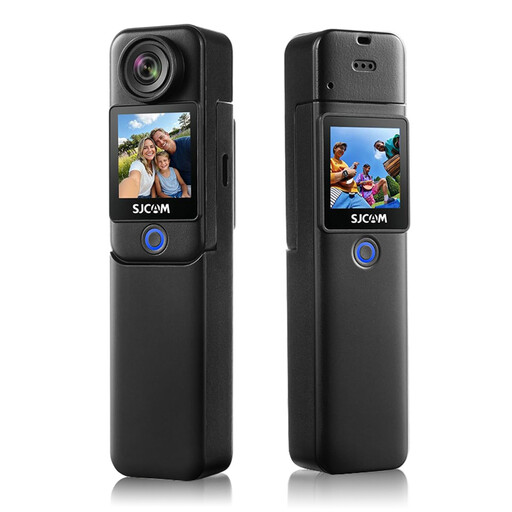
SJCAM C300 4K action camera
For moving outdoor footage, the C300 is described with 6-axis electronic image stabilisation and 4K recording. Its stated 30 m waterproofing depends on using a case; check the case conditions, the exact accessories supplied and a suitable mount for your activity. Confirm the handle and auxiliary-battery arrangement before relying on the stated extended runtime.
View on Joybuy
 No image available
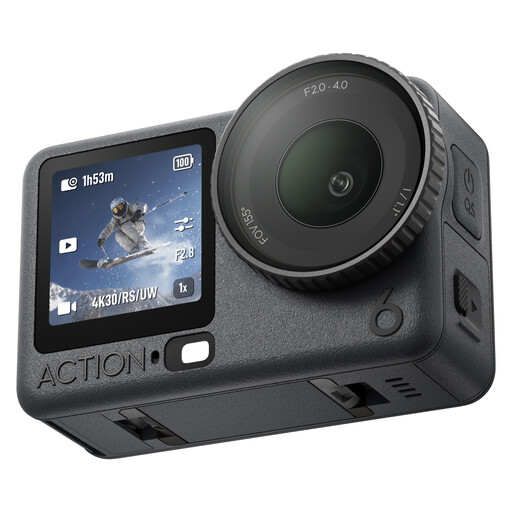
DJI Osmo Action 6 Standard Combo
For water activities, DJI specifies waterproofing to 20 m without a case for Osmo Action 6, subject to its operating conditions. This Standard Combo is named with a 1/1.1″ square sensor and 4K recording; confirm its exact accessories, stabilisation settings and activity-specific mount before relying on it for fast mounted footage.
View on Joybuy
Common questions
How deep can an action camera go without a case?
There is no single depth for every model or activity. DJI specifies 20 m without a case for Osmo Action 6 and recommends its case for prolonged underwater filming or high water-impact pressure; Insta360 specifies 15 m waterproofing for X5. Check the exact model’s operating conditions before entering the water.
Which memory card should I use?
Follow the requirements for your exact camera and recording mode. Insta360 specifies a UHS-I V30-or-faster microSD card for X5, while DJI lists microSD support up to 1 TB for Osmo Action 6. Check the manufacturer’s compatible-card guidance as well as the capacity you need for the outing.
Should I plan spare power for a long ride?
Plan spare power or charging access if your intended recording time could exceed the camera’s runtime in your chosen mode and conditions. GoPro specifies a 1900 mAh Enduro battery for HERO13 Black; check battery compatibility and what your particular bundle includes. Insta360 notes that X5’s quoted laboratory runtimes vary by recording mode and conditions.
Can I use a 360-degree camera underwater?
Yes, if the exact model and setup are suitable for the planned depth and conditions. Insta360 specifies 15 m waterproofing for the standard X5; its separately described Pro Dive Bundle uses a dedicated dive case for a different underwater setup. Check which case, if any, your intended footage and activity require.
What should I check before filming at an organised event?
Check the organiser’s and venue’s filming terms for that event. The Information Commissioner’s Office distinguishes personal activity in public spaces from organisational surveillance: organisations using surveillance systems to process identifiable people’s data must comply with UK GDPR and the Data Protection Act 2018. Consider the intended use of your footage rather than assuming personal filming and organisational recording follow the same conditions.


