
24/7 Customer Support

Free returns

Same-day & Next-day Delivery

Quality Guaranteed

Unlock Your Welcome Offers: FREE Delivery | Up to 80% OFF | Free 30-day JoyPlus trial
Download the APP
Choosing action cameras for vlogging involves more than comparing 4K labels and megapixel numbers. The right camera should match how you record, where you shoot and how much editing you are prepared to do afterwards. A lightweight camera may suit daily travel videos, while a rugged waterproof action camera is more practical for cycling, watersports or outdoor filming in changing UK weather.
Before buying, watch out for these common pitfalls.
A 4K action camera can record detailed footage, but resolution is only one part of the result. Sensor size, lens aperture, stabilisation and lighting also affect image quality. A small sensor may produce noisier footage in a dim café, on a cloudy walking route or during evening travel scenes.
Also check whether a stated resolution is native or interpolated. Some lower-cost models list “4K” while using different processing methods. Look for clear information about frame rates, sensor size and supported recording modes.
A camera described as rugged is not automatically suitable for swimming or diving. Some models are waterproof only when fitted with a protective housing, while others can be submerged without one.
For example, the GoPro HERO is rated to 10 metres without housing, while the DJI Osmo Action 4 is listed as waterproof to 18 metres without a case. The SJCAM C110+ reaches 30 metres with its included waterproof housing, whereas the Komery W6 is explicitly not waterproof. Always check port covers, housing seals and the stated depth before using a camera near water.
A camera may produce sharp video but still create disappointing vlogs if wind noise overwhelms speech. Built-in microphones can be suitable for casual clips, but interviews, walking commentary and livestreams often benefit from microphone transmitter support or a directional microphone.
Battery figures also depend on resolution, stabilisation, temperature and screen use. An action camera with long battery life may still need spare batteries for a full day of filming. Bundles with multiple batteries or a charging case can reduce interruptions, but add weight and cost.
A camera with image stabilisation helps reduce movement caused by walking, cycling or handheld recording. Electronic image stabilisation is common in sports cameras and works well for active footage, although it can crop the image slightly.
A gimbal camera, such as the DJI Osmo Pocket 3, uses 3-axis mechanical stabilisation. This can create smooth movement for walking tours, talking-head videos and travel clips, but the delicate moving mechanism requires more care and is not suitable for water unless specifically protected.
A larger sensor generally gives the camera more light to work with, although final results also depend on lens design and processing. The DJI Osmo Pocket 3 uses a 1-inch CMOS sensor, while the DJI Osmo Action 4 uses a 1/1.3-inch sensor.
Frame rate affects how motion appears. 4K/60fps is useful for fluid movement, while 4K/120fps can be used for slow-motion playback where supported. Some cameras list higher frame rates only in particular modes, so check the full specification rather than relying on the headline number.
High-resolution video uses considerable storage. Confirm whether the camera accepts a microSD card, the recommended card speed and whether internal storage is available. The DJI Osmo Pocket 4 Standard Combo lists 107GB built-in storage, while some entry-level bundles include a 64GB memory card.
For audio, check for microphone input, wireless transmitter compatibility or an included microphone accessory. A creator bundle may offer better value than buying a camera and audio accessories separately, provided you will use the included grip, mount or charging equipment.
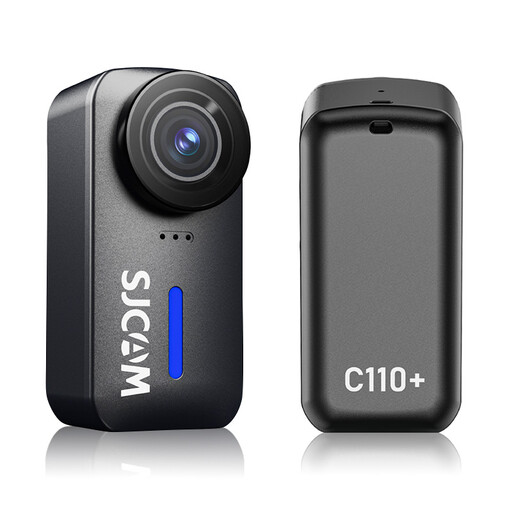
Why This Fits Their Persona: Its compact 82g design, included 64GB card and straightforward shooting modes suit students and first-time vloggers filming cycling, commuting or weekend trips around the UK.
The listing states 4K/30fps and gyro-based EIS, making the recording specifications clearer than a generic 4K label. Its 30m waterproof rating applies with the included housing.
4K recording, 170° lens, Wi-Fi, slow motion and up to 120 minutes at the stated recording setting.
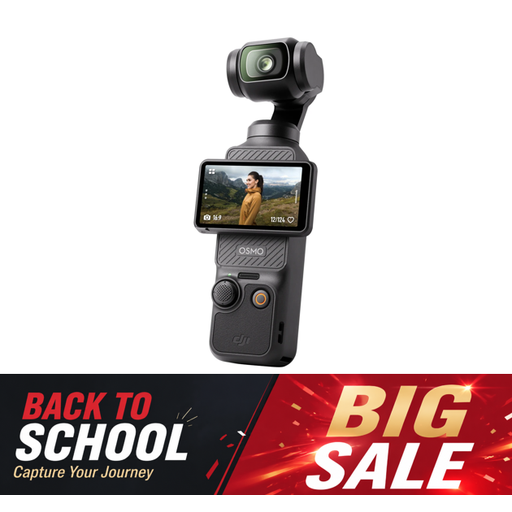
Why This Fits Their Persona: This pocket-sized gimbal camera is suited to creators who prioritise smooth presenter-led footage, travel videos and controlled indoor filming.
Its 1-inch CMOS sensor, 3-axis mechanical stabilisation and rotating 2-inch screen address common low-light, shaky-footage and framing concerns. It is not a waterproof camera.
Supports 4K/120fps, subject tracking and direct connection to two compatible DJI microphone transmitters.
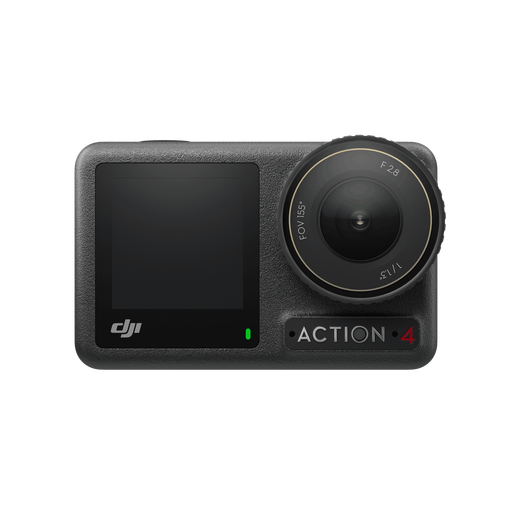
Why This Fits Their Persona: The combination of multiple batteries, a charging case and outdoor protection suits cyclists, hikers, surfers and creators recording for long periods.
The listing separates its 18m waterproof rating from the battery claims and identifies the three included batteries, helping buyers plan for wet-weather and extended filming.
4K/120fps recording, 155° field of view, 10-bit colour and direct support for two compatible DJI microphone transmitters.
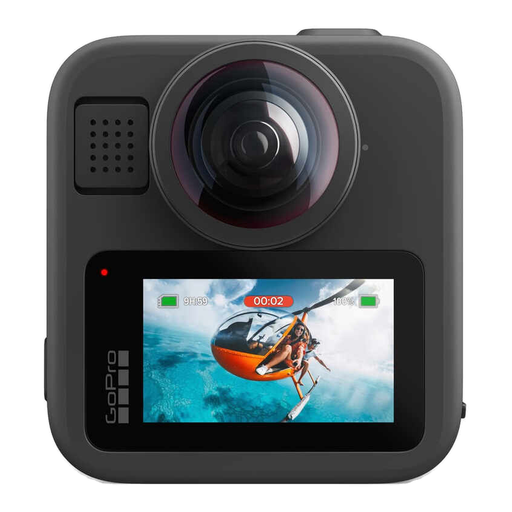
Why This Fits Their Persona: Travellers and action creators can capture the full scene first, then reframe footage for conventional videos, social clips or immersive 360 content.
Its dual-lens design removes the need to frame every angle during fast activity, while horizon lock helps maintain a level view during movement.
Records 8K 360 video at selected frame rates, includes a six-microphone array and supports live streaming in 360 or traditional formats.
We have compiled a complete, real-time list of products that fully satisfy these strict selection criteria and UK safety regulations.
Yes, particularly for travel, walking tours, sports and hands-free recording. For presenter-led videos, look for a front-facing or rotatable screen, subject tracking and good microphone compatibility. A compact video camera with a gimbal may be more convenient for indoor talking-head content.
Recording time varies with resolution, frame rate, stabilisation and temperature. Treat advertised figures as usage guidance rather than a guarantee for every setting. For day trips, consider spare batteries, a charging case or a power bank, while checking that external power use does not compromise waterproofing.
An 8K 360 camera can provide extra detail when reframing a scene, but it usually creates larger files and may require more powerful editing hardware. Choose 360 capture if you value flexible framing, invisible selfie-stick effects or immersive playback. For simple point-and-shoot vlogs, a standard 4K action camera or gimbal camera may involve less editing.