
24/7 Customer Support

Free returns

Same-day & Next-day Delivery

Quality Guaranteed

Unlock Your Welcome Offers: FREE Delivery | Up to 80% OFF | Free 30-day JoyPlus trial
Download the APP
Whether you are filming a cycle commute, a ski trip, a fishing session or a YouTube vlog, the right camera needs to do more than display an impressive resolution on the box. Action cameras vary considerably in stabilisation, waterproofing, battery performance, audio support and ease of use.
As the Joybuy Product Recommendation Officer, I focus on practical differences that can be overlooked in marketing descriptions. A compact camera may appear suitable for every activity, but the wrong design can lead to unusable footage, difficult editing or expensive accessory upgrades.
A 4K action camera records at a high resolution, but resolution is only one part of image quality. A small sensor, poor exposure control or weak stabilisation can still produce noisy, blurred or shaky clips.
Check the frame-rate options as well. 4K at 30fps suits everyday travel and talking-to-camera content, while higher frame rates can make fast movement appear smoother or allow slow-motion editing. Remember that higher settings generally use more storage and battery power.
“Waterproof” does not always mean the camera body can be taken underwater without protection. Some models require a dedicated waterproof case, and the stated depth may apply only when that case is fitted.
Before swimming, diving or filming in salt water, inspect the housing seal and close every port cover securely. Rinse equipment with fresh water after use in the sea and dry it thoroughly. A waterproof action camera is only as dependable as its seals and handling.
A camera can record detailed footage but still produce disappointing vlogs if the audio is weak or the camera is difficult to frame. Also check what is included: memory card, case, battery handle, mounting accessories, microphone or tripod support.
For solo creators, subject tracking and a rotating screen may be more useful than a slightly wider lens. For phone users, a camera gimbal stabiliser may provide smoother movement without requiring a separate camera system.
Look beyond the headline resolution and confirm the exact combinations available. Some cameras support 4K/60fps, while others offer 4K/30fps and higher frame rates at 1080p or 2K.
Storage affects running costs. Check whether the camera includes a microSD card, the maximum supported capacity and the card speed required. High-bitrate 4K recording can quickly fill a card, so carrying spare storage is sensible for travel.
Electronic image stabilisation, or EIS, uses software and sensor data to reduce visible shake. Six-axis gyro stabilisation can be useful for cycling, motorcycling and walking footage, but it may crop the image slightly.
A pocket vlogging camera with 3-axis mechanical stabilisation uses a moving gimbal to physically compensate for movement. This can create smooth walking shots and controlled pans, although the mechanism is more delicate and may not be waterproof. Choose the system according to your activity rather than assuming one approach suits every user.
Battery figures are normally based on particular recording conditions, so treat them as a guide rather than a guarantee. Recording at 4K, using stabilisation, connecting Wi-Fi or filming in cold weather can reduce operating time.
For vlogging, look for built-in microphones, external microphone compatibility or direct wireless microphone connections. A small camera for YouTube should also be easy to hold, mount and transfer files from. For smartphone creators, a foldable gimbal with a built-in tripod can be more convenient than carrying a separate camera and grip.
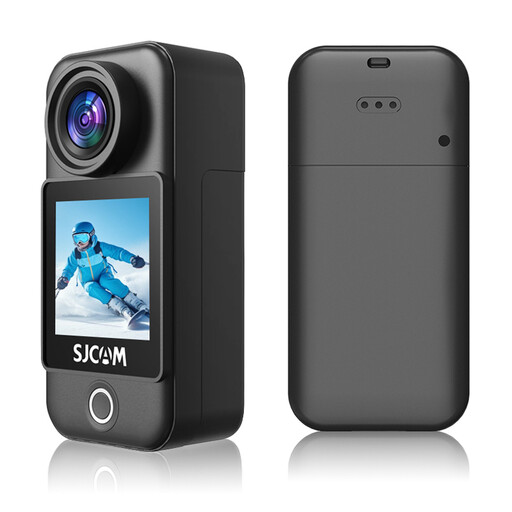
Why This Fits Their Persona: Its 55g body, 1.3-inch touchscreen and included 64GB memory card make it approachable for students, casual users and first-time creators.
The specifications state 4K/30fps, six-axis EIS and a waterproof case rated to 30 metres, rather than relying on resolution alone.
4K recording, 120-minute stated recording time and dual-band Wi-Fi.
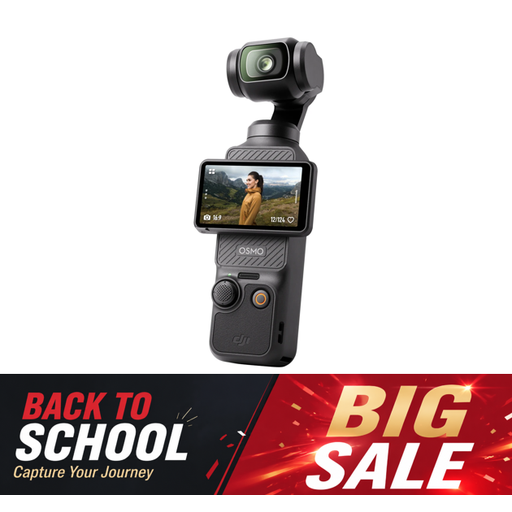
Why This Fits Their Persona: This compact camera for vlogging suits creators who prioritise controlled movement, framing and subject-focused filming for YouTube or travel.
Its 2-inch rotatable screen helps with horizontal and vertical framing, while mechanical stabilisation avoids relying solely on software correction.
1-inch CMOS sensor, 4K/120fps recording, face and object tracking and direct support for DJI microphone transmitters.
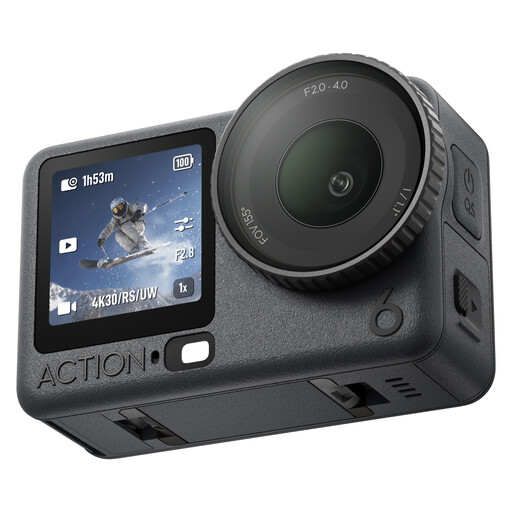
Why This Fits Their Persona: This option is aimed at cyclists, swimmers, skiers and outdoor users who need a rugged waterproof action camera with extended operating time.
The stated 20-metre body waterproofing is clearly different from a case-dependent rating, helping buyers match protection to their activity.
Variable f/2.0–f/4.0 aperture, 50GB built-in storage, up to four hours of stated battery life and support for two microphone transmitters.
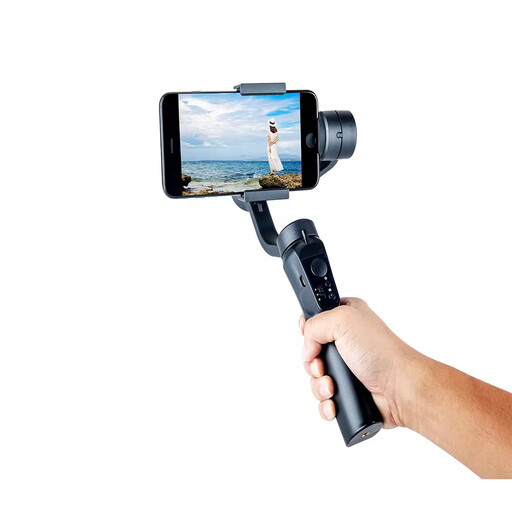
Why This Fits Their Persona: A pocket vlogging camera is not essential if your smartphone already records suitable video and you want smoother movement with minimal extra equipment.
It avoids paying for a second camera when the main requirement is anti-shake support, tracking and easier smartphone filming.
Two-axis stabilisation, face tracking, foldable construction and a stated battery life of up to eight hours.
We have compiled a complete, real-time list of products that fully satisfy these strict selection criteria and UK safety regulations.
Many are suitable for light rain, but protection varies by model. Check whether the camera body is waterproof on its own or requires a housing. Keep port covers closed and dry the device before charging.
Battery life depends on resolution, frame rate, stabilisation, Wi-Fi, screen use and temperature. Compare the stated recording time at the setting you expect to use and consider spare batteries or a power handle for full-day trips.
A gimbal can produce smoother walking footage and support tracking, especially with a smartphone or mirrorless camera. An action camera is generally more practical for cycling, water sports and rough conditions. If you need both portability and controlled movement, a compact gimbal camera may offer a useful middle ground.