
24/7 Customer Support

Free returns

Same-day & Next-day Delivery

Quality Guaranteed

Unlock Your Welcome Offers: FREE Delivery | Up to 80% OFF | Free 30-day JoyPlus trial
Download the APP
By Joybuy Product Recommendation Officer
Choosing adhesive tape for a household repair can seem straightforward until the bond lifts, water gets underneath or the backing tears during application. UK homes and work sites present particularly varied conditions, from damp garages and outdoor decking to heated rooms, plasterboard walls and electrical wiring.
The right tape depends on the job, surface, load and exposure. Before buying, consider these common pitfalls and match the material to the task rather than relying on broad labels such as “multi-purpose” or “heavy-duty”.
Water-resistant duct tape may help with a temporary patch, but it is not automatically suitable for a roof, gutter, pipe joint or continuously wet area. A proper waterproof sealing tape needs a backing and adhesive that can conform to the surface and maintain contact.
For roof flashing, caravan repairs and window edges, butyl tape is generally more appropriate than ordinary cloth-backed duct tape. However, even butyl products require a clean, dry surface and may need protection from rain immediately after installation.
Double-sided tape is convenient for avoiding screws and wall plugs, but its holding capacity depends on the object, surface area, temperature and installation quality. A tape rated for a stated weight should not automatically be used for shelves, large mirrors or overhead items.
Check whether the surface is painted, dusty, textured or coated with a release agent. Wallpaper, freshly painted walls, polyethylene and polypropylene plastics can all present compatibility problems. For heavy or safety-critical objects, use suitable mechanical fixings instead of relying solely on adhesive.
PVC electrical tape is designed to insulate and wrap cables. It is not a substitute for a fuse, cable connector, heat-shrink tubing or a qualified electrical repair. Always isolate the power before working on wiring, and follow the product instructions and applicable UK electrical requirements.
For a hose or pipe, self-fusing repair tape is a more suitable choice because it bonds to itself rather than relying on adhesive gripping the damaged surface.
The adhesive determines how the tape behaves on wood, metal, glass, brick, fabric or plastic. Common options include:
The backing is equally important. Cloth-reinforced polyethylene offers flexibility for bundling and temporary repairs, while aluminium foil-backed butyl tape can help cover and protect sealing areas.
A narrow roll may be easier to position around cables, while wider tape provides more coverage for a roof patch or decking joist. Thickness can affect tear resistance, flexibility and how well the tape bridges small gaps.
For example, a 25 mm clear mounting tape is suited to discrete fixing strips, while 50 mm or 100 mm sealing tape is more practical for broad joints. Measure the repair area before purchasing, particularly when comparing single rolls with multi-packs.
Most adhesive tape performs more consistently on a clean, dry, flat and dust-free surface. Remove grease, loose paint and debris, then allow the area to dry fully. Some products specify a minimum application temperature, while others need protection from rain for a set period.
Read warnings regarding UV exposure, immersion, solvents, oils and painted surfaces. Outdoor tape is not necessarily suitable for permanent underwater use, pressurised systems or structural applications.
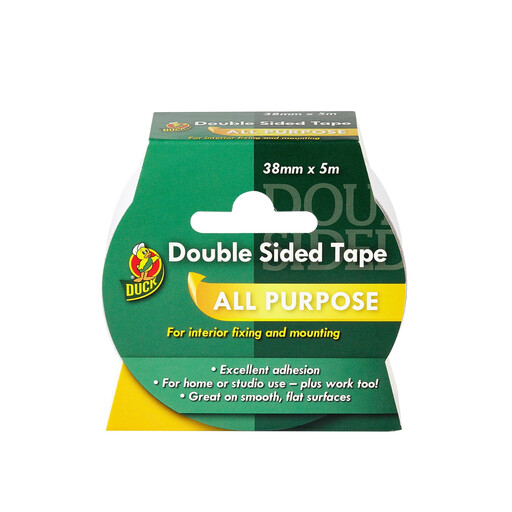
Why This Fits Their Persona: A practical roll for everyday indoor mounting, organising and lightweight fixing in flats, rented homes and workshops.
The product warnings make clear that it is not intended for heavy load-bearing use, helping buyers avoid using general mounting tape for unsuitable objects.
Double-sided adhesive, 38 mm width and a peel-off liner for straightforward application.
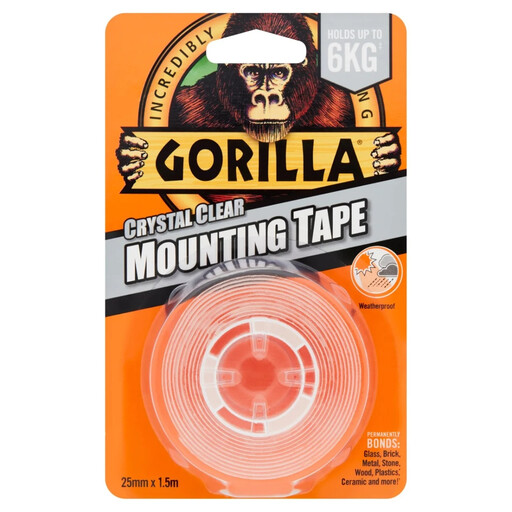
Why This Fits Their Persona: Suitable for homeowners wanting a discreet finish when mounting suitable items indoors or outdoors on compatible surfaces.
Its stated limits exclude wallpaper, delicate surfaces, PE and PP plastics, while the product information specifies a 6 kg capacity per project.
Clear 1.5 m roll, 25 mm width and resistance to water, UV rays and temperature changes.
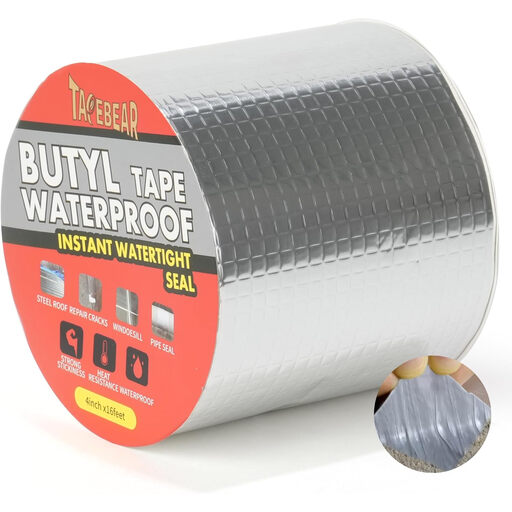
Why This Fits Their Persona: A wide sealing format for caravan, boat, awning, window, roof and pipe maintenance where moisture protection is the main requirement.
Unlike ordinary duct tape, it uses butyl rubber with aluminium foil and reinforcing layers for flexible sealing. It still must be applied to a dry surface and protected from rain for 24 hours.
100 mm width, 5 m length and stated resistance to UV exposure and temperatures from -40°C to 80°C.
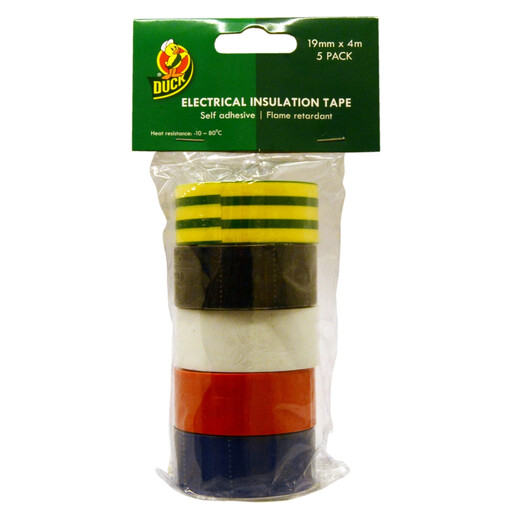
Why This Fits Their Persona: Useful for electricians, maintenance workers and DIY users who need cable insulation, bundling or colour identification.
The product guidance limits it to low-voltage electrical connections and states that it should not be the sole protection for high-voltage systems.
Stretchable PVC backing conforms around wires, while fade-resistant colours support cable marking.
We have compiled a complete, real-time list of products that fully satisfy these strict selection criteria and UK safety regulations.
For outdoor timber, decking joist tape can protect joists and cut edges from moisture, but it does not replace timber treatment, suitable drainage or structural flashing. For floors, carpet tape or vinyl flooring tape should be matched to the floor covering and subfloor; avoid damp, waxed or recently polished surfaces.
For a flexible, temporary wrap around a hose or pipe, self-fusing repair tape may be suitable where the product instructions allow it. For a joint, roof edge or broad surface, butyl sealing tape may provide more appropriate coverage. Isolate water pressure where possible and do not use tape as a substitute for a permanent plumbing repair.
There is no single lifespan. Exposure to UV, rain, frost, heat, movement, dirt and the type of surface all affect performance. Select weatherproof tape with stated outdoor resistance, prepare the surface carefully and inspect the repair periodically.
Ordinary duct tape should not be used as electrical insulation. Use correctly specified electrical insulating tape for suitable low-voltage applications, switch off and isolate the supply first, and seek qualified assistance for damaged mains wiring or uncertain installations.