
24/7 Customer Support

Free returns

Same-day & Next-day Delivery

Quality Guaranteed

Unlock Your Welcome Offers: FREE Delivery | Up to 80% OFF | Free 30-day JoyPlus trial
Download the APP
An adjustable dumbbell set can replace several pairs of fixed weights, making it useful for flats, home offices and compact training areas. However, a low price or quick-change label does not automatically mean a suitable purchase. The important details are how the plates lock, whether the grip remains secure and whether the available weight range matches your training plans.
Before choosing home gym dumbbells, look beyond promotional wording. A practical set should be comfortable to handle, straightforward to store and appropriate for the exercises you intend to perform.
A listing described as “2 x 11 kg” normally refers to two dumbbells, each weighing up to 11 kg. This is different from a 22 kg single dumbbell. Check the weight per dumbbell and the total set configuration before ordering, particularly if you need paired weights for exercises such as presses, rows or lunges.
Also confirm whether the stated weight is the maximum adjustable setting or the fixed weight supplied. This distinction matters when comparing adjustable weights across different listings.
“Quick-change dumbbells” can use dials, click selectors, threaded collars or locking plates. Speed is convenient, but the adjustment must be fully engaged before lifting. A mechanism that is quick to operate but difficult to confirm visually or audibly may be frustrating during a workout.
Look for clear locking instructions and follow them before every set. Never alter weight settings while the dumbbell is moving.
A smooth metal handle can become uncomfortable when hands become sweaty. A non-slip dumbbell grip or anti-slip coating can make handling more secure, but the handle still needs to suit your hand size and preferred exercises.
Storage is another frequent oversight. Large fixed-weight collections take up floor space, while compact dumbbells can sit in a cupboard or beside a desk. Measure the intended storage area and consider whether the dumbbell can be placed safely on a stable, level surface between exercises.
For frequent changes between warm-up, conditioning and strength work, compare the adjustment method carefully. The CELEBRATIONDUN models use a smart click system designed for rapid weight selection. The FEIERDUN sets use 1-second adjustment technology with a double-locking protection system.
Regardless of the advertised speed, check that:
These checks are particularly relevant for full-body workout weights, where exercises may involve changes in direction or position.
Cast iron dumbbells provide a solid, traditional construction. A rubberised or anti-slip coating can help protect the handle and reduce the likelihood of the dumbbell sliding on some surfaces. However, coating does not make a product suitable for being dropped. Use a stable floor and avoid throwing weights after a set.
Wipe the dumbbells with a dry cloth after use, especially if they have been exposed to sweat or moisture. Periodically inspect the adjustment dial, collars and locking parts.
Beginners and users seeking light resistance may prefer a 2.7 kg or 4.5 kg dumbbell per hand. These settings can suit lighter strength training, Pilates-inspired routines and general conditioning. Users following progressive overload programmes may need 11 kg or 24 kg per dumbbell for rows, squats, presses and other demanding movements.
A women's dumbbell set is not limited to one type of exercise or user. Choose by the required resistance, handle comfort and adjustment system rather than relying only on the audience description in a product title.
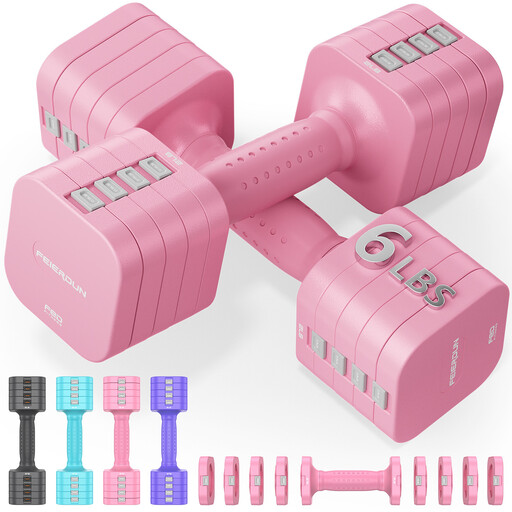
Why This Fits Their Persona: The 2.7 kg per dumbbell format suits people starting light resistance training at home, including users looking for a small footprint or with a preference for shorter, lower-load sessions.
The listing specifies two 2.7 kg dumbbells and a double-locking system, helping avoid confusion about the supplied configuration and plate security.
Cast iron construction, anti-slip coating, 1-second adjustment and compact storage format.
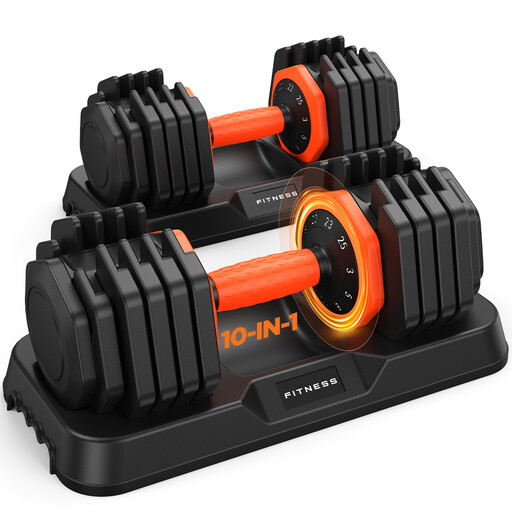
Why This Fits Their Persona: This option suits users wanting a broader resistance level for home, office or gym training without storing multiple fixed pairs.
The smart click system includes an audible engagement check, while the stated 2 x 11 kg configuration makes the per-dumbbell capacity clear.
Cast iron construction, rubberised non-slip grip, smart click adjustment and compact storage.
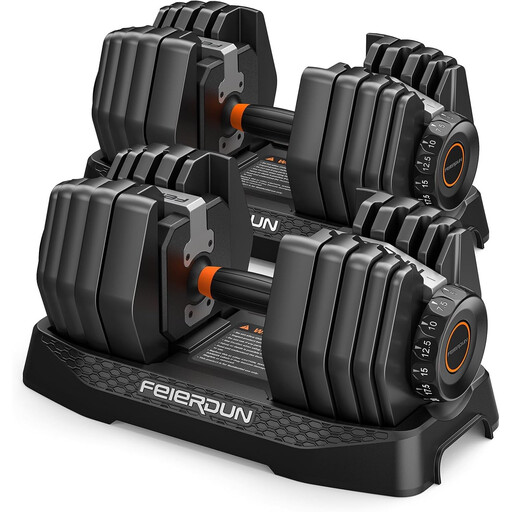
Why This Fits Their Persona: The higher 24 kg per dumbbell capacity is suited to experienced gym users who need substantial resistance for progressive strength routines while keeping equipment compact.
The product specifies the maximum load per dumbbell and requires confirmation of the smart click lock before lifting, addressing capacity and security concerns.
24 kg per dumbbell, cast iron build, non-slip rubberised grip and rapid smart click selection.
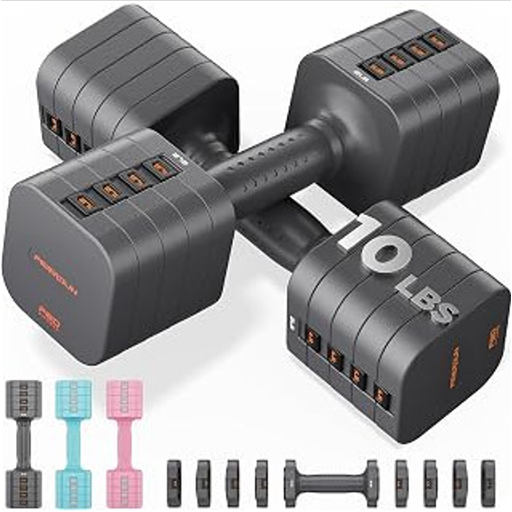
Why This Fits Their Persona: At 4.5 kg per dumbbell, this set provides a middle option for users who have progressed beyond very light weights and want flexible home workout equipment.
The double-locking protection helps keep plates fixed, while the stated per-dumbbell weight avoids the common set-versus-single-weight misunderstanding.
Cast iron construction, anti-slip coating, 1-second adjustment and space-saving design.
We have compiled a complete, real-time list of products that fully satisfy these strict selection criteria and UK safety regulations.
Yes, provided the starting weight is manageable and the adjustment mechanism is secured before each lift. A 2.7 kg or 4.5 kg per-dumbbell option may be more practical for light resistance routines than a set designed for heavier strength work.
Service life depends on construction, frequency of use and maintenance. Keep the set dry, wipe it after training and inspect locks, dials and collars regularly. Do not drop the dumbbells or adjust them while they are in motion.
Unlike powered gym equipment, dumbbells do not use electricity. Ongoing costs are generally limited to storage, cleaning and any replacement components available for the particular model. Check the product information and care instructions before purchase.