
24/7 全天候客户支持

免费退货

当日/次日达

品质保障

开启新人专享福利: 全场免邮 | 低至 2 折 | 免费试用 30 天 JoyPlus 会员
下载 Joybuy
Splitting a small tablet can be awkward when a standard pill cutter leaves uneven halves, powder on the cutting surface or fragments that are difficult to handle. For adults, carers, older people and parents managing prescribed medicines, an adjustable pill cutter for small pills can offer a more controlled way to position different tablet sizes.
However, not every pill splitter is suitable for tiny tablets. Product listings may highlight a sharp blade or large cutting capacity without explaining how securely a small tablet is held. Before buying, focus on the design details that affect positioning, handling and cleaning rather than relying on marketing language alone.
Important: Only split a tablet if the medicine’s patient information leaflet, prescriber or pharmacist confirms that it is suitable. Modified-release, gastro-resistant, enteric-coated and some scored medicines should not be split. Splitting tablets is not a substitute for professional dosage advice.
A wide, fixed slot may accommodate large tablets but allow a tiny pill to move sideways. This can result in an off-centre cut or crumbling. For small tablets, look for adjustable guides or bars that hold the pill in position before the blade is lowered.
A visible stainless steel blade may look simple, but it can be difficult to use safely, particularly for people with reduced dexterity or when a carer is preparing several tablets. A hidden blade design, retractable guard or enclosed cutting area provides a more contained setup.
A product that claims to split many pills quickly is not automatically suitable for every medicine. Batch cutting can be useful for routine preparation, but the tablet still needs to be compatible with splitting and correctly positioned. Check whether the cutter supports the size and shape of the tablets you actually use.
An adjustable pill cutter should provide a clearly stated size range rather than simply using the word “universal”. The VVM models listed here specify compatibility with tablets from 3 mm to 12 mm. That makes them relevant to shoppers looking for a pill splitter for tiny pills, as well as a small pill cutter for larger tablets.
Measure the tablet, including its shape and thickness, and check whether the guides can hold it centrally. A narrow tablet may need different positioning from a round tablet of the same diameter.
A stainless steel blade pill cutter can offer a firm cutting edge, but blade material is only one part of the design. Also check whether the blade is enclosed, whether the guard retracts correctly and whether the device remains stable on a worktop.
Anti-slip strips or silicone feet may help reduce movement during use. They do not guarantee an even split, so apply steady pressure and inspect the result rather than assuming every tablet will divide perfectly.
Tablet dust can collect around the blade, guides and cutting chamber. Choose a cutter that can be wiped clean without complicated disassembly. The VVM product information recommends cleaning the blade and interior with a dry or slightly damp cloth, then ensuring the cutter is dry and the blade fully retracted before storage.
Avoid immersing a pill cutter unless the manufacturer specifically states that it is washable. Keep it away from children, and do not store different medicines loose together in the cutting chamber.
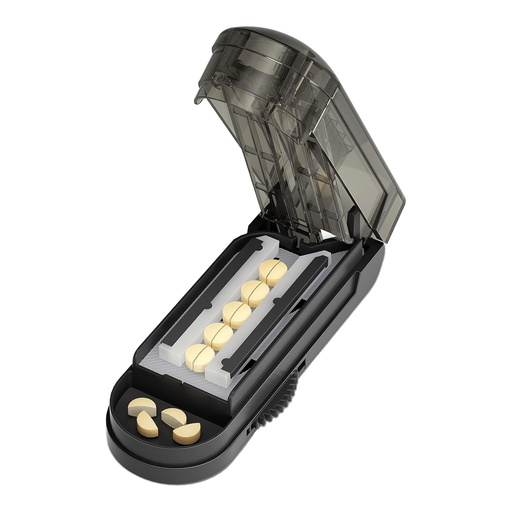
Why This Fits Their Persona: A compact option for someone starting to split approved tablets at home and wanting adjustable positioning without a bulky appliance.
The adjustable slot and guides are specified for 3–12 mm tablets, rather than relying on a fixed universal opening.
Hidden stainless steel blade; plastic and silicone construction; compact 2-ounce listed weight.
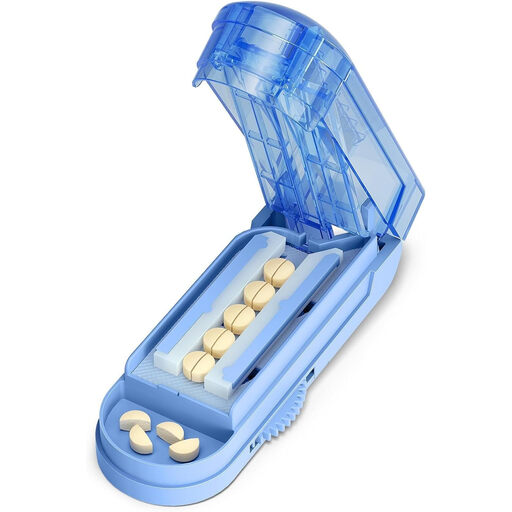
Why This Fits Their Persona: Suitable for buyers who prioritise a contained blade, portable format and a clearly defined adjustment system for regular household use.
The hidden blade and retractable protection address the exposed-edge issue, while anti-slip silicone strips help limit movement.
Adjustable design; stainless steel blade; portable dimensions of approximately 4.2 × 1.5 × 1.2 inches.
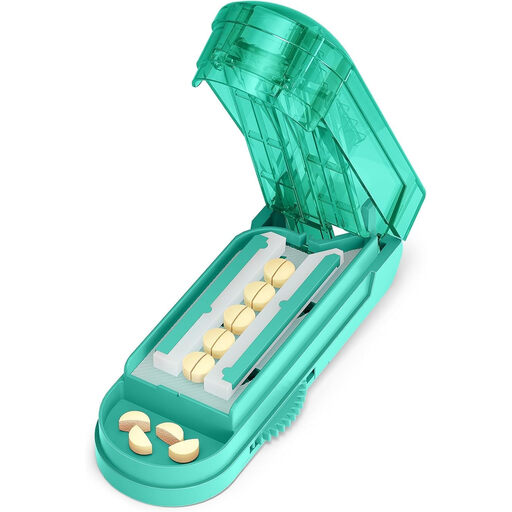
Why This Fits Their Persona: A practical match for carers or households that prepare several approved tablets and want a portable pill splitter for repeated use.
Its product information specifies an enclosed stainless steel blade and multiple-pill cutting capability, rather than an exposed single-use blade.
Listed as capable of cutting multiple pills at once; dry-cloth cleaning guidance; compact 2.08-ounce listed weight.
A cutter can support more consistent handling, but it cannot guarantee equal active-ingredient distribution in every tablet. For medicines where accurate dosing is particularly important, seek advice before splitting or preparing multiple tablets at once.
Some models are designed for small tablets, but suitability depends on the tablet’s diameter, shape and formulation. A cutter specifying a 3 mm minimum size, such as the VVM models above, may be appropriate for tiny pills that fall within that range. Always confirm that the medicine itself is approved for splitting.
Lifespan depends on frequency of use, blade condition, cleaning and storage. Replace the cutter if the blade becomes blunt, the guides no longer hold tablets securely, the casing cracks or the mechanism develops excessive movement. A dry wipe after use and protected storage can help maintain the device.
A manual pill splitter has no batteries, electricity or ongoing operating cost. The practical costs are replacement when the blade or casing wears and, where applicable, buying a separate cutter for different medicines to reduce cross-contamination. For regular use, compare the purchase price with the build quality, adjustment range and cleaning requirements rather than capacity alone.